




A Deep-Rooted Connection to Corrections
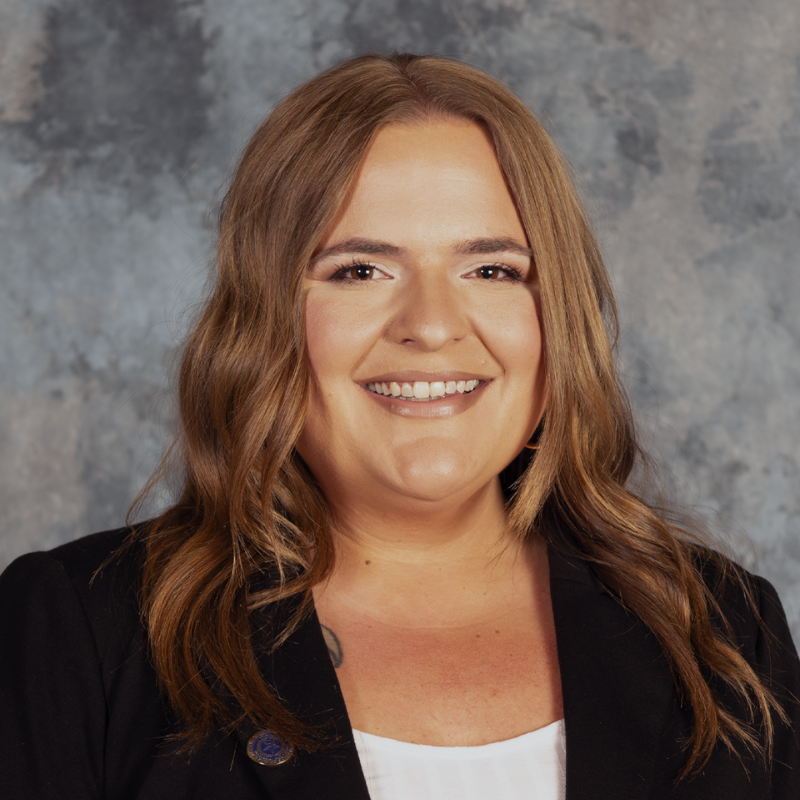
Merci Wood was named the Deputy Division Director of the Texas Department of Criminal Justice’s Rehabilitation and Reentry Division in October of 2025.
Wood began her career with the agency in 2013 as a Clerk II in the Classification and Records Department. Since that time, she has served as Administrative Assistant I, II and III in the Parole Division’s Huntsville Placement and Release Unit. In 2018, she joined the Rehabilitation and Reentry Division as a Case Manager III and has since promoted within the division to Assistant Regional Director, Regional Director and, most recently, Director of Program Coordination and Development.
Wood has consistently demonstrated dynamic and innovative leadership throughout her tenure with the agency. Her extensive experience, program knowledge and unwavering dedication will continue to be a tremendous asset to both the TDCJ and the Rehabilitation and Reentry Division.
Correctional News spoke with Wood about how growing up in a corrections-centered Texas town affected her outlook and career development, how mentors further molded her vision and growth and her place as a woman leader in the industry.
CN: What inspired you to pursue a career in justice/corrections, and did you face any barriers as you started out?
Wood: I grew up in Huntsville, where corrections is part of the community’s identity. With seven facilities in this one tiny Texas town, it’s woven into the spirit and shapes daily life, and for my family, it shaped our careers, too. My grandparents worked in corrections, my parents worked in corrections and now I’m part of that same arc.
Even with that family history, I didn’t step into this work assuming I had it all figured out. I came in young, and that created its own set of barriers. People made assumptions based on my age before they ever saw my capability. Being a young woman in this environment meant I had to establish credibility quickly. I did that by staying prepared, learning fast and consistently delivering results. Over time, the work spoke for itself.
What kept me here was realizing how much impact you can make when you approach this system with intention and a willingness to evolve it. The generational connection gave me exposure, but the work is what gave me purpose.
CN: Have you had any meaningful mentors throughout your career? Have you also been able to mentor or help build a path for others?
Wood: I’ve had a few mentors who shaped my growth in important ways. They weren’t the traditional “take you under their wing” type. Instead, they were the people who challenged me, told me the truth and pushed me to think bigger. Their influence helped me step into positions, situations and leadership with confidence.
Now, I try to provide the same clarity and support for others. I spend a lot of time mentoring emerging staff and recognize that creating pathways and opportunities for others is one of the most meaningful parts of leadership.
CN: How did you build credibility and trust in environments where women leaders weren’t as common?
Wood: Creditability comes with consistency. I focused on understanding the work at every level — knowing the data, how it connected and executing the initiatives that moved the system forward. I didn’t wait for permission to lead; I took responsibility, followed through and showed reliability in high-pressure situations.
Over time, that steadiness is what built trust. People see when you’re prepared, when you can problem-solve and when you don’t shy away from hard decisions. I also stayed authentic by consistently showing up as myself, doing the work well and staying accountable, which earned more trust than anything else.
CN: Have you encountered any misconceptions about women in justice or corrections leadership? If so, how have you challenged them?
Wood: A common misconception is that women lead from emotion rather than strategy. The reality I’ve seen is that women bring clarity, structure and long-term thinking to systems that desperately need it. I challenge misconceptions by focusing on outcomes: building programs, improving processes and strengthening the overall system and the relationships that build them. When people see results, the stereotypes fall apart on their own.
CN: Have you ever been the first woman to hold a specific leadership position? If so, what did it feel like to break new ground?
Wood: I haven’t always been the first woman in every role I’ve held, and that’s never been the measure of my impact. What matters to me is contributing to a culture where women feel supported in leadership at every level. Stepping into leadership at a young age showed others that you don’t have to fit a traditional mold to be effective.
My focus has always been on strengthening the role, modernizing the work and leaving things better than I found them. If that makes it easier for the next woman stepping into the role, whether she’s the first person or the fifteenth, that’s the real impact.
To learn more about other outstanding women who are redefining what it means to be a leader in corrections, read the Women in Corrections feature in the 2026 Edition #1 of Correctional News.