






ACA’s Evolving Spaces Forum Explores Transformations in Correctional Facilities
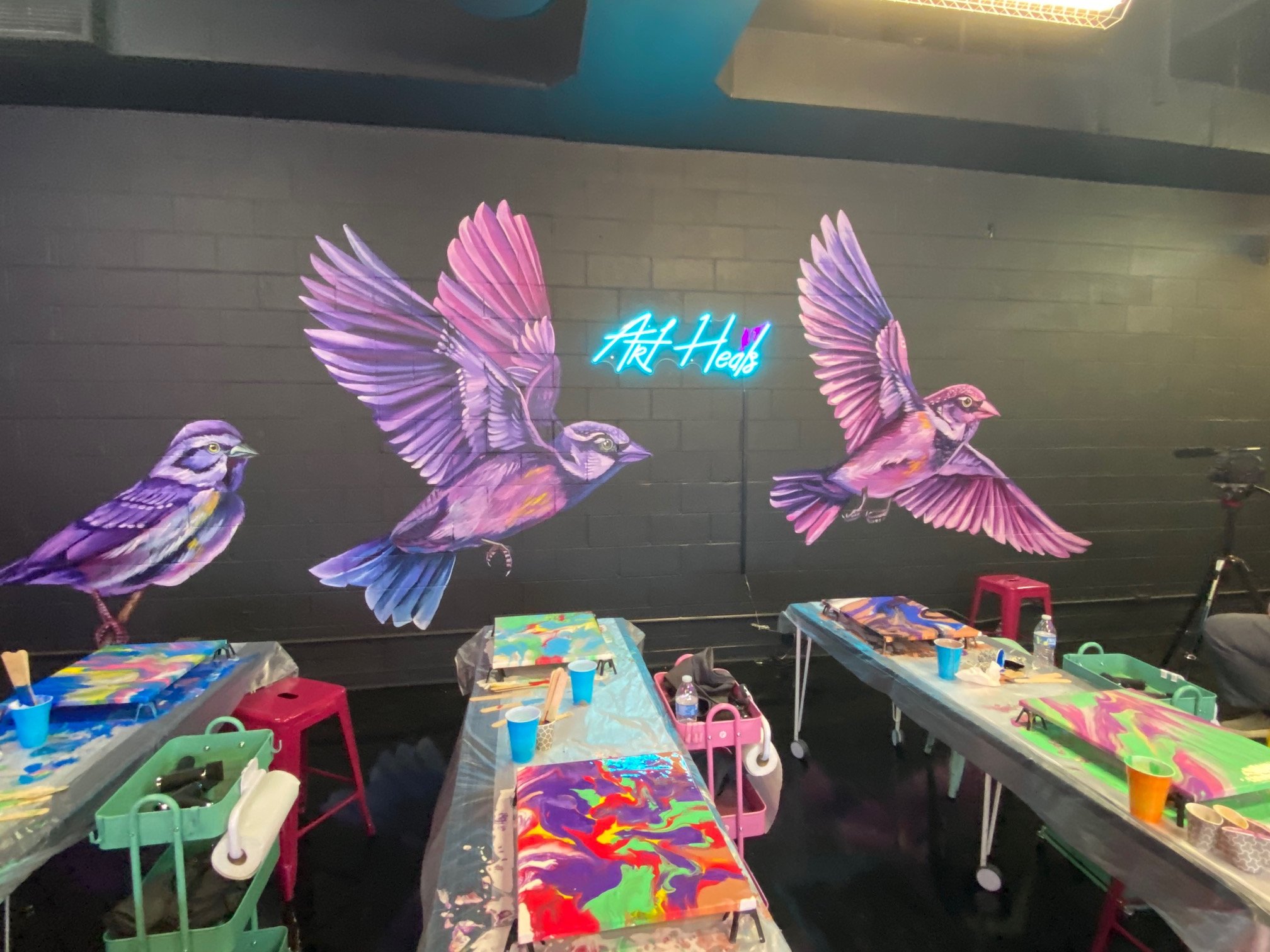
Arizona Department of Corrections, Rehabilitation and Reentry Director Ryan Thornell spoke about how his department utilized community partnerships and outside-the-box thinking to repurpose spaces within its correctional facilities, such as partnering with Art of our Soul to turn a previously unused space into an art studio for incarcerated population and staff. | Photo Credit: Arizona Department of Corrections and Rehabilitation
By Charlie Lange
On Feb. 8, during the final day of the American Correctional Association’s 2026 Winter Conference in Long Beach, Calif., attendees gathered for the annual Evolving Spaces: Creating Spaces that Work Symposium.
Featuring a slate of presentations from correctional leaders and facility designers across the country, the semi-annual session explores the innovative strategies being employed to reimagine and repurpose facility spaces that support mental health and wellness.
This winter’s session was moderated by the two co-chairs of ACA’s Facility Planning, Design and Preventative Maintenance Committee: Richard (Tony) Shaffer, Bureau Chief, Construction, Activation, Maintenance and Sustainability with the Ohio Department of Rehabilitation and Correction; and Donald Henry, Managing Principal of Urbahn Architects.
Reimagined Environments in Arizona
Ryan Thornell, Director of the Arizona Department of Corrections, Rehabilitation and Reentry, opened the symposium with a presentation on how the ADCRR has confronted recent challenges and implemented achievable reforms within its facilities to fuel better outcomes.
Throughout his presentation, Director Thornell stressed two major lessons: understanding the power of the physical environment in prison systems and jails, and realizing the impact of personal agency of staff and the incarcerated population in those spaces.
“We often overlook the role that the environment plays around us — especially when we’re on the front lines of our prisons and jails,” said Director Thornell. “The prison environment really gives us the most impactful opportunity for change in individuals.”
Director Thornell shared advice for viewing spaces through a different lens and repurposing previously unused areas for programming and other productive functions. He highlighted how making small changes, like new paint colors, normative furniture and outdoor spaces, can make a big difference.
Some of the most meaningful transformations discussed by Director Thornell did not require considerable costs or labor, but simply an ability to rethink uses of existing assets. He mentioned repurposing a former warehouse room into a beauty salon used for vocational training, a storage room into a dialysis center for inmate treatment and an empty closet into a staff wellness space.
He also stressed the importance of seeking willing partners from the outside community in achieving positive changes, bringing up partnerships with Arizona State University and Art of our Soul to bring design and therapeutic art instruction to unused program spaces within ADCRR facilities.
Director Thornell said staff members have benefitted from using these spaces as much as the incarcerated population has — directly showing how these environmental changes have paid off across the board.
“Philosophical change or investment in a program only goes so far. Until you change what’s around us, those things don’t stick,” said Director Thornell.
Meeting Mental Health Challenges
Next, Nate Wilson, the Assistant Sheriff of Orange County, Calif., took the stage to discuss the county’s strategies for upgrading its main processing facility to house mental health-challenged and disabled populations.
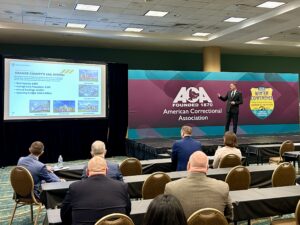
Wilson outlined how recent changes in California state laws moving state-level inmates to county facilities and reclassifying substance-use-related offenders have caused counties to rethink the way their jails are utilized and increased the need for chronic and acute mental health housing within them.
As the number of incarcerated individuals with mental health challenges continues to increase, the Intake Release Center (IRC) in Santa Ana has become the de facto largest mental health institution in the county, according to Wilson.
Built in the late 1980s with modular, pod-style housing units, the IRC needed to be reimagined to properly accommodate the most acute mental health populations and create ADA-compliant spaces. Wilson outlined the nine-step project to achieve these goals, which involved:
- Installing safety and security fencing along all housing unit mezzanines
- Converting six cells and showers to be ADA compliant
- Installing new cell doors equipped with pass-through hatches
- Renovating cells for ligature resistance
- Retrofitting all lighting fixtures to LED
- Installing windowless, ground-level direct supervision guard stations for deputies
- Installing nursing stations, decorated with calming landscape imagery, for 10 nurses at each housing unit
- Repainting walls with therapeutic accent colors and bringing in softer furnishings and artificial plants
- Upgrading telephones, water dispensers and intercoms to comply with ADA standards.
One simple, but major change implemented during the project was the removal of a large cinderblock wall running down the middle of each housing unit, which Wilson said was crucial to creating a more open, communicative space to address mental health issues.
“We want our deputies to be engaged with the population and working with mental health staff as one team to manage the population, and you can’t do that when there are physical walls,” said Wilson.
Wilson also discussed how the sheriff’s office utilized the county’s OC Cares initiative, established to better deliver mental health services and reduce recidivism in the county, to fund the $15.3 million project.
Stay tuned to Correctional News for Part II of the Evolving Spaces Symposium recap, which will summarize the rest of the session’s presentations.