




Santa Clara County Approves $1 Billion Jail Modernization Plan
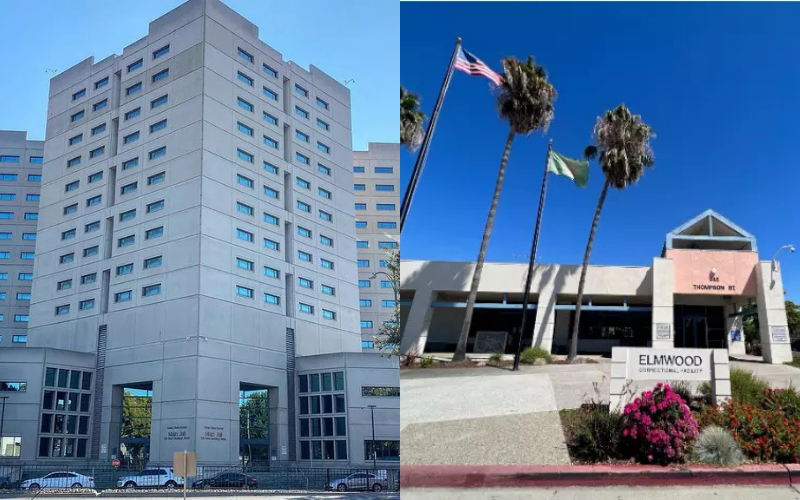
Officials in Santa Clara County, Calif., have approved an approximately $1 billion modernization plan at the county’s Main Jail in San Jose (left) and Elmwood Correctional Facility in Milpitas (right). | Photo Credit: Santa Clara County
- The Santa Clara County Board of Supervisors in California unanimously approved a roughly $1 billion, multiyear plan for the Main Jail in San Jose and Elmwood Correctional Facility in Milpitas.
- Major work would add a 145,000-square-foot medical and behavioral health facility and a 672-bed men’s housing facility at Elmwood, plus a 56,000-square-foot intake and assessment building at the Main Jail.
- The plan would reduce systemwide capacity from 4,872 beds to 3,457, aligning the jail system with projected demand in 2035.
- County leaders said the work is needed to address deteriorating facilities and comply with two federal consent decrees governing safety and conditions.
- Initial phases are expected to rely on lease revenue bonds; as much as $1.5 billion in additional long-term work was not part of the approval.
SAN JOSE, Calif. — The Santa Clara County Board of Supervisors unanimously approved a roughly $1 billion, multiyear plan to modernize the county’s Main Jail and Elmwood Correctional Facility, with an emphasis on medical and behavioral health care, safer housing and more efficient intake.
The plan combines major demolition and construction with a reduction in systemwide capacity, from 4,872 beds to 3,457, based on estimated need in 2035. It also is intended to satisfy court-ordered improvements under two federal consent decrees while county officials continue efforts to reduce incarceration and recidivism.
Supervisors approved the plan despite objections from residents and criminal justice reform advocates who urged the county to direct more funding toward prevention, housing, education and health services. County leaders said they face a parallel obligation to maintain safe, adequate facilities for incarcerated people and staff.
Supervisor Susan Ellenberg framed the vote as a dual commitment to prevention and humane conditions.
“Today is not about an either-or decision,” Ellenberg said at the most recent Board of Supervisors meeting, according to an article from KQED. “We need to do everything we can to prevent people from entering the criminal legal system. When those investments are not successful, our obligation to care for people doesn’t end when they are incarcerated.”
The most extensive work is planned at Elmwood, a 675,123-square-foot campus where more than two-thirds of the buildings are at least 40 years old and some are more than a century old. The county plans to demolish the minimum-security camp known locally as the farm, eliminating 1,130 beds, some of which are already closed because of poor conditions.
Elmwood also would receive a new 145,000-square-foot medical and behavioral health facility with 300 purpose-built beds for people with serious mental illness. The existing medical space lacks a functional infirmary and acute psychiatric unit, requiring some people to be transported to the Main Jail for care. A 540-bed men’s housing unit would be demolished and replaced with a 672-bed facility, allowing some people held in high-security units at the Main Jail to be transferred there.
At the Main Jail, the county plans a new 56,000-square-foot intake, booking and short-term housing building with dedicated areas for medical, mental health and custody assessments. Officials said outdated layouts and insufficient care space have contributed to deaths, assaults and costly litigation.
Supervisor Margaret Abe-Koga said the conditions require more than routine maintenance. “It’s beyond just cleaning the facilities. It’s really quite deplorable,” Abe-Koga said, according to an article from KQED.
Correctional News previously reported in July 2025 that the county was reconsidering whether to renovate or replace its aging jail campuses after abandoning earlier proposals, including a 500-bed, $689 million maximum-security jail plan.
The first phases are expected to span about eight years and likely would be financed through lease revenue bonds. Longer-range concepts extending as far as 15 years include additional demolition, renovations and new women’s and men’s housing at a projected cost of up to $1.5 billion. Those phases were not included in the supervisors’ approval, and county staff said funding is unlikely under current forecasts.
This article is based on reporting by Joseph Geha of KQED, originally published on Aug. 27, 2026.