



Building Better … One Relationship at a Time
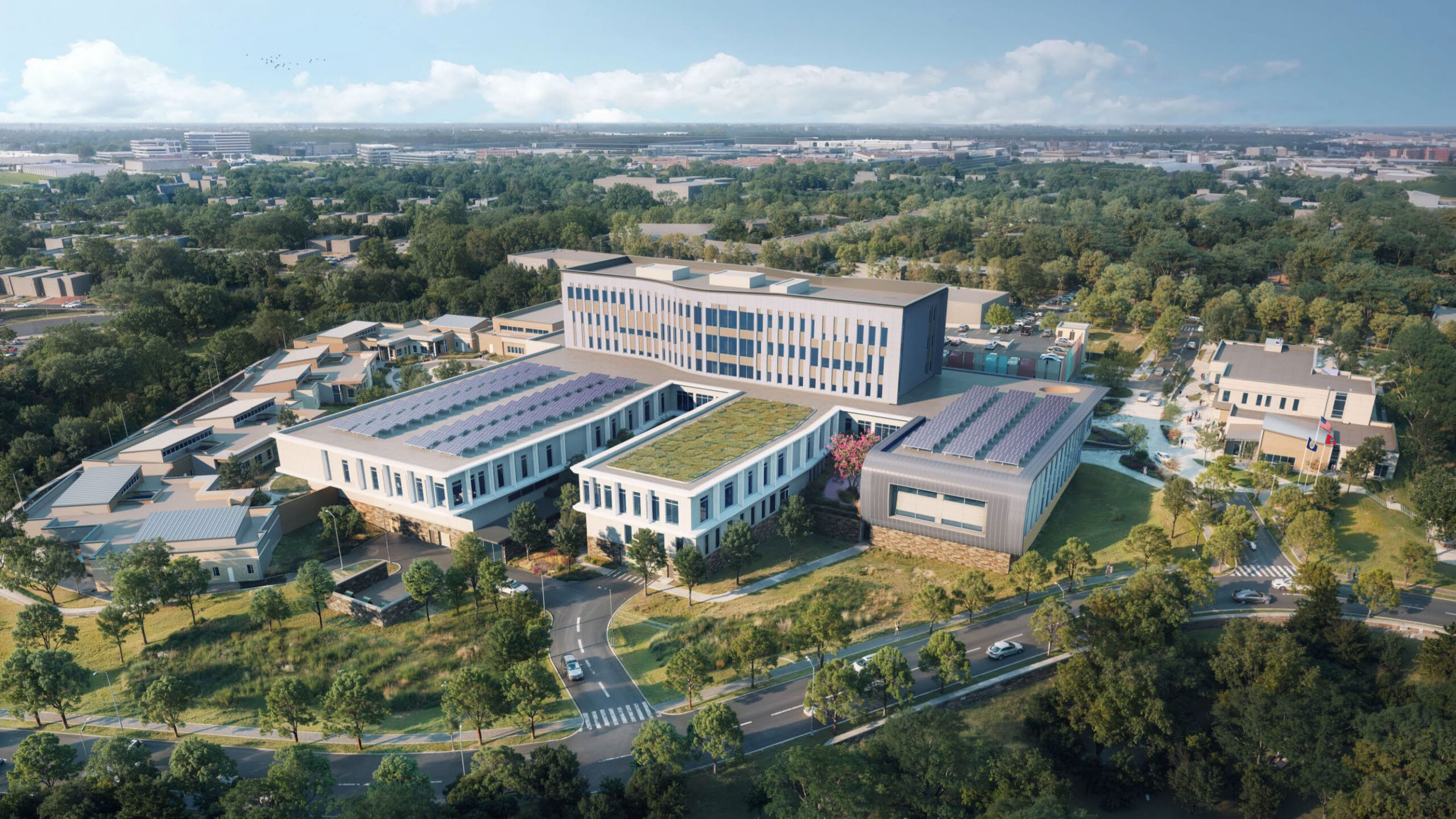
The Nashville Youth Campus for Empowerment, built by BELL, will foster safety, rehabilitation and community. | Photo Credit: BELL Construction
By Lindsey Coulter
The most successful justice projects rarely follow a straight line.
Operational requirements and stakeholder priorities shift, challenging correctional and juvenile justice project teams to adapt throughout design and construction. Success increasingly depends on the ability to collaborate early, communicate often and help owners navigate complex decisions long before construction begins.
That reality is playing out on projects across BELL Construction’s growing portfolio of correctional and justice work. Whether delivering county detention centers, replacement facilities or juvenile justice campuses, the company has built its approach around flexibility and partnership.
A construction leader in the Southeast, BELL provides general contracting, design-build, and construction management services. Since its founding more than 50 years ago, the Brentwood, Tenn., company has led more than 1,000 construction projects.
The Value of Early Engagement
As correctional projects become larger and more sophisticated, project teams are being asked to provide cost and schedule certainty earlier.
Rick Bruining, BELL Construction’s Director of Justice, said the evolution of project delivery methods has required contractors to expand their capabilities well before groundbreaking. As a result, BELL has invested in preconstruction expertise to serve owners. For correctional agencies, which often rely on taxpayer funding and public oversight, realistic budgets from the outset can significantly influence project outcomes.
That was the case on the Putnam County Jail project in Tennessee. BELL’s experience established trust, and its long-term relationships helped secure the construction manager-at-risk contract based on only six pages of planning documents. Despite the limited initial information, the project exceeded expectations.
Alex Roten, Senior Project Manager with BELL, credited the outcome to the company’s specialized corrections experience.
“With our experience in the space and understanding how to give the client what they needed, we were able to work with stakeholders and our subcontractors to make the [Putnam County] project more efficient, which ultimately enabled us to give money back to the county,” Roten said.
Experience Matters in a Specialized Market
The ability to compare multiple delivery and construction strategies has become increasingly valuable as correctional owners seek solutions tailored to their jurisdictions and budgets.
Corrections remains one of the more specialized construction sectors, requiring teams to balance security, operational efficiency, staff wellness and sophisticated technology systems. Roten believes one of BELL’s advantages stems from its deep, hands-on experience with multiple construction methodologies, from CMU to prefabricated steel, metal wall panels and precast concrete cells.
“We don’t approach a project saying ‘We did that type of construction 15 years ago.’ That diversity-based relevance separates us from some of our competitors,” Roten said.
Building Relationships
While technology and construction techniques evolve, BELL leaders emphasize that successful projects remain rooted in relationships and listening to the client. Bruining believes effective communication is particularly important in corrections, where many owners may be taking on the first or biggest construction project of their careers.
“We have to listen more than we talk,” he said. “We have to listen to the client’s needs and understand them.”
Tara Runion, PMP, Senior Project Manager at BELL, echoed that sentiment: “Our mission statement is, ‘Building better, one relationship at a time.’ We value those long-term partnerships with our clients, our trade partners and our team. We approach every project with a collaborative mindset.”
Those relationships often extend beyond a single project. BELL recently secured a major replacement detention facility project in Davidson County, Tenn., after previously completing work for the same client. According to Bruining, repeat work serves as one of the strongest indicators of project success.
Supporting Rehabilitation
Many agencies are rethinking how the built environment can support staff, improve safety and contribute to rehabilitative outcomes.
Bruining has worked on more than 240 correctional facilities throughout his career, and said one of the most rewarding aspects of the work is replacing outdated facilities with environments better suited to contemporary operations.
“I’ve seen and walked through some of the facilities we’re replacing,” Bruining said. “A new facility that’s brighter, cleaner, filled with natural light, and better organized can improve life for staff and incarcerated individuals.”
That philosophy is evident in BELL’s work on the Nashville Youth Campus for Empowerment project, which Runion sees as an opportunity to support broader community goals.
“The whole purpose is to break the cycle for these youth,” she said. “If we can create a safe space that provides counseling and support, I’m really proud of that for Nashville.”
Roten also emphasized the responsibility that comes with managing public-sector projects, where elected officials are often leading the first major construction project of their careers.
“I feel a deep personal responsibility to be a good steward of each project and deliver something the client can be proud of,” Roten said. “Something they can bring to their staff and community that supports safety and creates better environments for the people who work there every day.”
Investing in the Next Generation
Over the past several years, BELL has expanded its justice team, intentionally pairing experienced leaders with emerging professionals. The goal is to ensure that decades of specialized knowledge is passed to the next generation of project managers, estimators and field leaders who will guide justice projects in the years ahead.
Mentorship has become increasingly important as correctional construction grows more intricate. Professionals must understand the technical demands of preconstruction, advanced security technologies, alternative delivery methods
and changing operational expectations, while addressing the needs of each justice client.
That commitment reflects BELL’s focus on building the experience, leadership and long-term capacity justice owners need going forward.
“We’re focused on the future,” Runion said. “We’re continuously investing in people, innovation, operational excellence and delivering the highest-quality justice projects.”
This article was sponsored by BELL Construction and originally published in the 2026 Planning & Construction edition of Correctional News. To learn more, visit www.bellconstructioncompany.com.