





Chicago Beyond’s National Justice Strategy Lab Tackles Correctional Safety Challenges
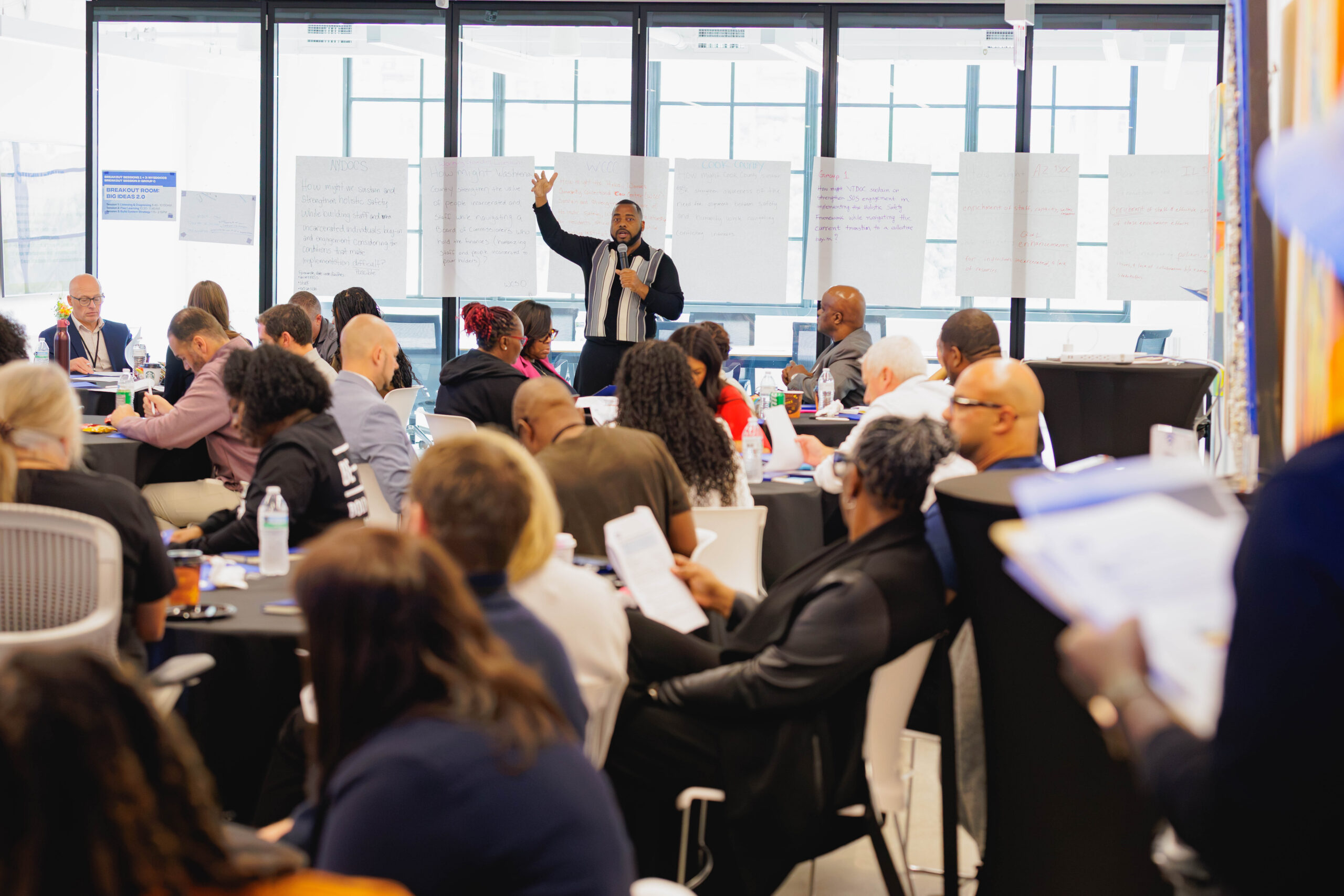
Approximately 50 attendees representing correctional systems, community organizations and people formerly incarcerated participated in Chicago Beyond’s National Justice Strategy Lab, held Sept. 23–24 in Chicago. | Photo Credit (all): Chicago Beyond
By Charlie Lange
Chicago Beyond hosted its inaugural National Justice Strategy Lab Sept. 23–24 in Chicago, bringing together correctional leaders, frontline staff, union representatives, community organizations and formerly incarcerated individuals to address safety challenges across the justice system.
The event grew out of feedback from participants in Chicago Beyond’s previous National Justice Convenings, who expressed interest in more focused, collaborative discussions, according to Nneka Jones Tapia, Managing Director of Justice Initiatives, and Matt Burke, Director of Justice Initiatives at Chicago Beyond.
“What we heard from participants in our two previous Justice Convenings was a desire to take deeper dives together,” said Burke. “We decided to make this a smaller gathering, where participants could come together to collectively problem-solve.”
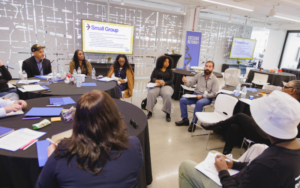
The Strategy Lab featured three breakout sessions centered on Chicago Beyond’s Holistic Safety Framework. Discussion topics were developed with input from the organization’s eight correctional system partners and other stakeholders, reflecting challenges currently facing their facilities and communities.
As discussions progressed, participants identified underlying challenges and explored potential solutions, Jones Tapia said. Each group concluded its session by sharing key findings and proposed strategies with the broader gathering.
“With this Strategy Lab, we were intentional about bringing together several of our partners to really showcase not just the systems change work that we’re doing in jails and prisons, but also how our investments support the justice transformation that we’re hoping to see,” said Burke.
Jones Tapia also emphasized the value of bringing together groups that don’t typically have the chance to interact to work together toward a common goal.
“For too long, correctional systems have operated in ways that separate people, concentrate power and overlook the wisdom and experiences of people closest to the challenges,” she said. “Our National Justice Strategy Lab was about changing that. We brought correctional leaders, frontline staff, people who have experienced incarceration and community partners together not just to have conversations, but to reimagine what’s possible when we share power and build solutions together.”

Beyond the breakout sessions, the event also highlighted progress made by participating agencies and community organizations. An opening-night gallery walk featured photographs from correctional systems nationwide, showcasing the systemic changes that have been implemented in recent years, many of which were done through partnerships between the correctional system and our community partners. Burke described the display as a “visual journey” through the accomplishments that can be achieved through collective wisdom.
“The power of community-building, and that feeling of acknowledgement — recognizing the work, seeing one another, seeing the actual changes that are happening within these different systems — really set the tone from night one,” said Burke.
Burke emphasized that the relationships formed during the Strategy Lab can help sustain the systemic changes happening in jails and prisons after participants return to their respective agencies and communities.
“One of the key parts of our work is helping systems to understand the value of connection,” he said. “We’re all hungry for that connection — and people incarcerated and staff are no exception to that, which is the basic premise behind our Holistic Safety Framework. Real solutions have been actualized through connection.”
“At Chicago Beyond, we believe safety is more than the absence of violence. It’s the presence of meaningful relationships, wellness and shared responsibility,” said Jones Tapia. “We’re not simply trying to improve how correctional systems operate. We’re working to fundamentally change how people see one another, how decisions are made and how safety is experienced by everyone who lives and works within these systems.”
Participants agreed about the power of the connections and conversations generated from the National Justice Strategy Lab.
“This was a unique way of addressing real system issues without rehashing old conversations,” one participant told Chicago Beyond after the event. “It felt like it gave folks a chance to share and discuss and move toward a common goal as opposed to a report out.”