





Correctional News, ICPA Host Webinar on Communications Strategies for Corrections Stakeholders
By Charlie Lange
For corrections professionals, pressure and public scrutiny are facts of life, and the ability to communicate effectively in times of calm and crisis is a mission-critical skill.
A recent webinar hosted by Correctional News and the International Corrections and Prisons Association (ICPA) helped attendees understand their messaging challenges and provided the tools to help corrections leaders staff, plan and communicate solutions.
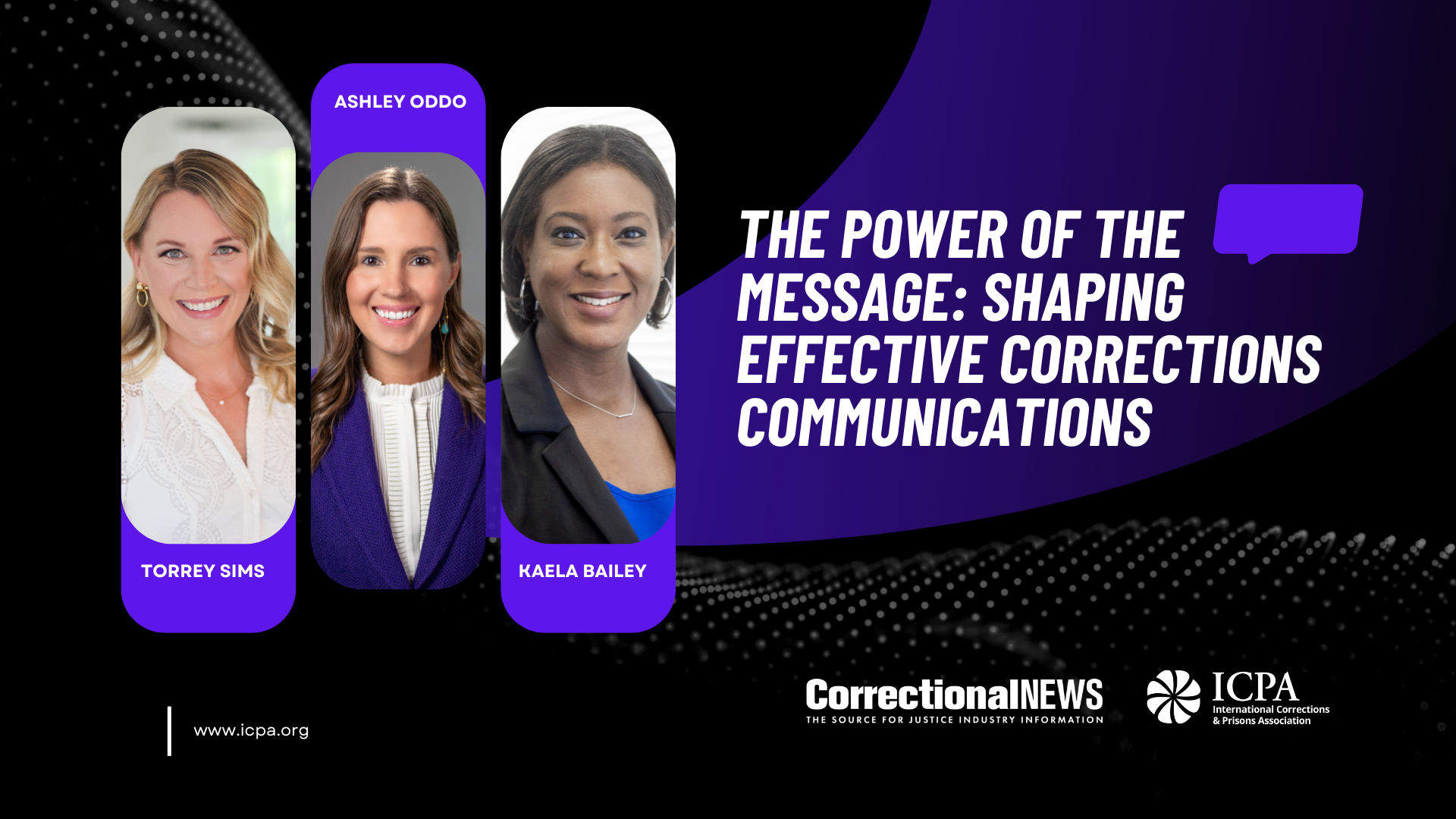
“The Power of the Message: Shaping Effective Corrections Communications” featured insights from Torrey Sims, President of Correctional News; Ashley Oddo, Deputy Director of the Arizona Department of Corrections, Rehabilitation and Reentry (ADCRR); and Kaela Bailey, Architecture Strategic Communications Manager with HDR.
The presenters detailed how utilizing media and communications channels can help organizations adapt to an ever-shifting landscape of departmental leadership changes, evolving laws and regulations, and market acquisitions and transitions.
Not Communicating Is Not an Option
Sims, Oddo and Bailey outlined several key points for effective communication: collaboration, stakeholder engagement, proper messaging and education.
Sims opened the discussion with an example demonstrating the importance of evolving communications and messaging strategies: the Q-tip. As medical guidance shifted against using Q-tips inside the ear, the product manufacturers adjusted their messaging, keeping the product relevant and reframing its use — a valuable approach for corrections professionals as well.
The presenters pointed out that in corrections, communication is not optional — it is operational. Effective communication shapes public trust, supports staff alignment and morale, and influences families, partner organizations and stakeholders on the mission behind the work. In a market like corrections, the mission stays the same, but how stakeholders support and redefine that mission can evolve as risks and expectations change and public understanding falls behind.
“The message around the work can almost be as important as the work itself,” said Sims.
Building a Team and a Plan
Bailey stressed the importance of putting the right people in place on a communications team — from communications managers and public information officers crafting the message, to digital content strategists and graphic designers who make information visually understandable.
Crisis advisors, especially in corrections, can also surround and insulate that core team by owning the narrative and conveying a consistent message across an organization.
Bailey also explained the difference between strategies — the big-picture goals that set the direction of a communications plan — and tactics, which are the specific avenues taken to get that message across. Tactics can include media outreach and press releases, social media content, newsletters, media campaigns and other specific actions.
Presenters stressed that putting proper policies and procedures in place to identify who will speak on behalf of the organization, and making sure messaging is funneled through the right channels, is also critical.
“You’re thinking about your reach, how people are engaging with your message, whether you’re shifting the message the way that you want to, and then what those expected outcomes are. Those will help you understand how strategies and tactics work together,” said Bailey.
Utilizing Different Types of Media
With new media avenues emerging alongside traditional outlets, it is essential to understand how each type of media reaches and influences consumers.
Sims discussed how trade media can be used to dive deeper into a subject matter with an attentive, informed audience that acutely understands the issues at hand. Engaging with local media can help achieve buy-in from communities and create a direct, two-way channel of communication on key issues affecting daily life. National and international media can effectively showcase knowledge and expertise to create or expand upon conversations that affect a larger population.
Presenters added that a growing number of people use social platforms as a primary news source, and the general public is more wary of misinformation than ever. As AI algorithms further complicate the delivery of reliable news, the presenters advocated using social media as a tool for sharing — but not necessarily consuming — information.
Oddo also highlighted the importance of sentiment tracking in social media and understanding not only how many likes a post receives on LinkedIn or Instagram, but whether people are engaging with the content in a positive, negative or neutral way.
Real-World Communications Scenarios
For Oddo, who helps lead a department with more than 34,000 inmates and 10,000 staff, the ability to be flexible and pivot on any given day is critical.
Oddo cited specific instances where the ADCRR leveraged communications strategies to own the narrative surrounding departmental issues and initiatives. For example, inviting the media to tour a new palliative care unit garnered community support for the effort, while communicating about ADCRR’s new digital mail policy helped improve public understanding and sentiment.
Oddo acknowledged that less favorable reputational aspects of the corrections industry are often based on silence; breaking those barriers and being transparent now is more important than ever. As staff are the biggest group of stakeholders, it’s all the more important to secure their buy-in on issues and messaging early and to provide them with the information and confidence to answer questions from the public and media (if appropriate to their role).
“Communicate early, be transparent and find champions within your staff that can help other staff get on board,” Oddo said.
Bailey offered an example of her organization partnering with a Minnesota county to communicate a referendum to fund a justice center project. The team collaboratively developed clear, digestible information that local media could disseminate to help the public understand the implications of the referendum. Armed with comprehensive information before they stepped into the booth, voters passed that referendum, and the project moved forward with funding.
“Once the media is your partner, and the public is well educated on your message, then you can move the needle,” said Bailey.
Future-Proofing Communications Plans
In corrections, every day can present a new challenge, and the ability to pivot is crucial. A flexible communications strategy can be a reference guide to navigating different obstacles — including policy changes, emerging issues and crises that create negative press if not proactively addressed.
The presenters closed with an action item for attendees: to “imagine the unimaginable” and prepare for it today by discussing potential issues with staff, planning and rehearsing messaging scenarios, and identifying and including the right people to respond — before a crisis happens.