




Modular Healthcare, Correctional Focus: A Potential Response to Increasingly Complex Healthcare Demands
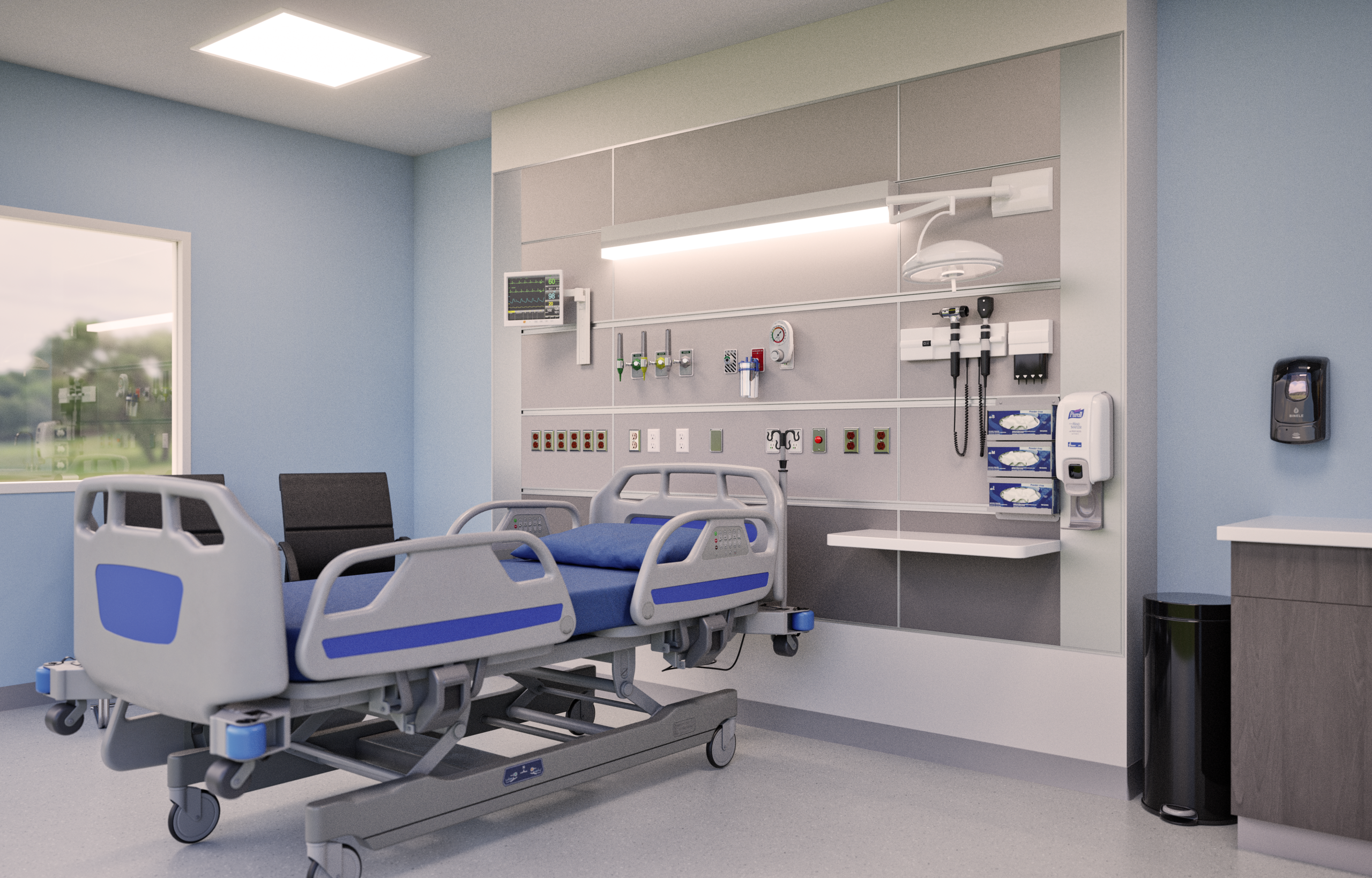
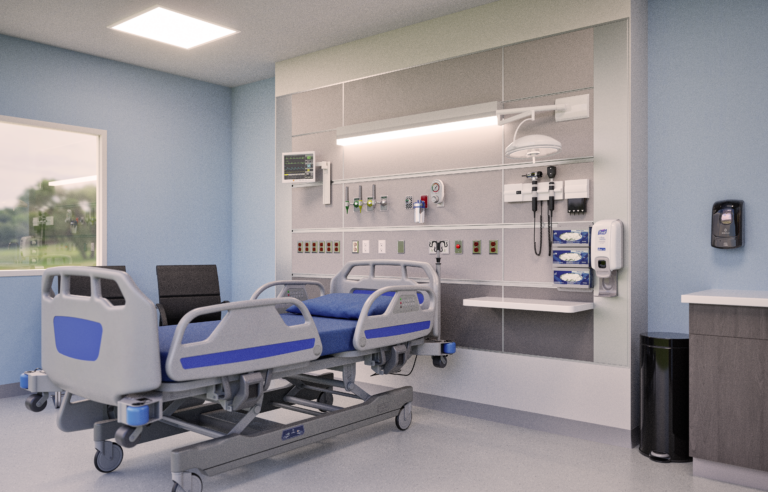
Modular headwalls are designed to keep essential medical equipment organized and easily accessible. | Photo Credit (all): Courtesy of CareAffirm
By Lindsey Coulter
A pressing question for correctional agencies is how to deliver environments that accommodate changing clinical needs while remaining practical to build, maintain and operate over the long term.
“Corrections is becoming increasingly complex and diverse. What was once viewed as a one-size-fits-all system is now recognized as an interconnected landscape of individuals with unique mental health, medical and criminogenic needs,” said Dr. Deanna Dwenger, Chief Behavioral Health Advisor with Elevatus Architecture. “As our understanding of social determinants of health and the school-to-prison pipeline continues to evolve, so too must the environments and systems designed to support those in our care.”
One approach gaining attention is modular construction, which involves manufacturing room-based assemblies in a controlled facility before transporting them to the project site, reducing field coordination and allowing complex healthcare spaces to be developed earlier in the project process. Its effectiveness depends in part on project type, procurement strategy and how early the approach is incorporated into the design.
For CareAffirm, a company specializing in room-based modular healthcare environments, the conversation begins well before construction starts. Rather than manufacturing standardized building components, the company works alongside architects, engineers, contractors and correctional stakeholders during the earliest stages of project planning to develop customized healthcare environments tailored to each facility’s operational needs.
“Our focus is simple — we build healthcare environments and healing environments,” said Eric Waller, Director and Vertical Lead at CareAffirm. “We combine healthcare operational experience, clinical input and design collaboration, then bring all of that together through controlled manufacturing using room-based modular construction. The goal isn’t simply to build faster; it’s to build environments that help healthcare teams deliver better care.”
Bringing Healthcare Expertise to Corrections
Designing clinically appropriate, secure and durable environments requires coordination among healthcare providers, designers, builders and correctional operators. Waller said a common misconception is that modular products dictate facility design.
Instead, CareAffirm joins the project team during feasibility, integrating modular construction into the project’s foundation.
“After more than 25 years of providing the industry-leading modular solution for the justice sector, we saw a clear need to utilize our expertise to help address growing needs for special behavioral health, mental health and traditional healthcare designs,” said Mike Smith, President of CareAffirm’s parent company VITALSpace. “While a logical addition to our portfolio, we knew we needed to tap into our country’s best practitioners and designers to understand how these rooms need to work with and support proven programs.”
Smith added that designing together with these professionals for outcome-based solutions provides cost-effective and mindful healthcare solutions, with reduced downtime due to the durability of the design.
“We’re not a construction company doing modular; we’re a modular company doing healthcare,” Waller noted. “Our role is to help project teams create the room they want. We believe healthcare providers and designers are the experts on patient care, and we’re the experts on building those environments.”
Behavioral Health Creates Common Ground
Behavioral health represents one of the strongest intersections between healthcare and corrections. As agencies care for increasing numbers of individuals with mental health needs while emphasizing rehabilitation, facility design is evolving alongside operational priorities.
According to Waller, facilities are considering how physical environments can support treatment, counseling and recovery while maintaining safety. Behavioral health spaces may benefit from natural light, calming materials and less institutional surroundings, but correctional facilities must maintain security and address population-specific risks.
CareAffirm’s modular environments incorporate trauma-informed planning, biophilic design, integrated lighting and customizable therapeutic spaces to balance security with patient dignity.
“Most organizations know what they don’t want,” Waller said. “They don’t want environments that fail inspections, unsafe spaces, or institutional rooms that overlook the human side of behavioral healthcare. The challenge now is creating environments that remain safe, durable and clinically appropriate while also feeling therapeutic and supporting recovery.”
Standardization Without Sacrificing Flexibility
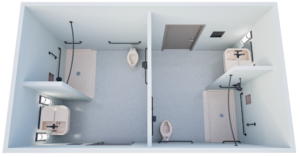
Correctional agencies must also determine the appropriate level of standardization for healthcare environments. Standardized layouts can provide operational benefits, but healthcare delivery also changes over time as treatment models, technology and patient needs evolve.
“Healthcare organizations often struggle to agree on standardization, while corrections has decades of experience operating standardized facilities,” Waller said. “The opportunity now is taking that operational consistency and combining it with healthcare design principles that support both staff performance and patient care.”
Standardized room layouts help clinicians locate equipment and supplies quickly while reducing unnecessary movement. At the same time, CareAffirm designs rooms to remain adaptable as operational needs change, ensuring facilities don’t have to choose between standardization and future flexibility. Additionally, the company’s rooms are constructed with welded 12-gauge galvannealed steel rather than conventional framing, which improves durability, reduces maintenance and supports long-term resiliency in demanding healthcare environments.
What Modular Construction Can Solve
Building modules off-site can minimize weather delays and change orders by resolving design decisions before construction. For facilities that must remain in operation during construction, moving work away from active sites may provide additional logistical advantages.
Those potential benefits, however, depend on decisions being made early. Room-based modular construction requires coordination between the manufacturing process and the broader building design, including architectural, structural, mechanical and electrical systems. Many project teams still associate modular construction with temporary buildings or standardized products that limit design flexibility. CareAffirm instead emphasizes permanent, customized healthcare environments manufactured in controlled factory settings before installation.
“Modular construction is a form of prefabrication,” Waller said. “The intended distinction is that it is not mobile, temporary or limited to generic standardized buildings.”
For correctional agencies evaluating modular construction, the question becomes whether the strategy aligns with the project’s clinical requirements, operational constraints and long-term goals. As behavioral health continues reshaping correctional healthcare delivery, Waller expects closer collaboration between healthcare specialists and justice agencies.
“Correctional agencies are being asked to address increasingly complex healthcare needs while creating spaces that support rehabilitation,” Waller said. “We believe our experience can help them meet those challenges by bringing healthcare thinking into correctional environments in a practical, collaborative way.”
This article was sponsored by CareAffirm and originally published in the 2026 Healthcare edition of Correctional News. To learn more, visit www.careaffirm.com.