




From Access to Progress: How Purpose-Built Technology Supports Education and Rehabilitation in Corrections
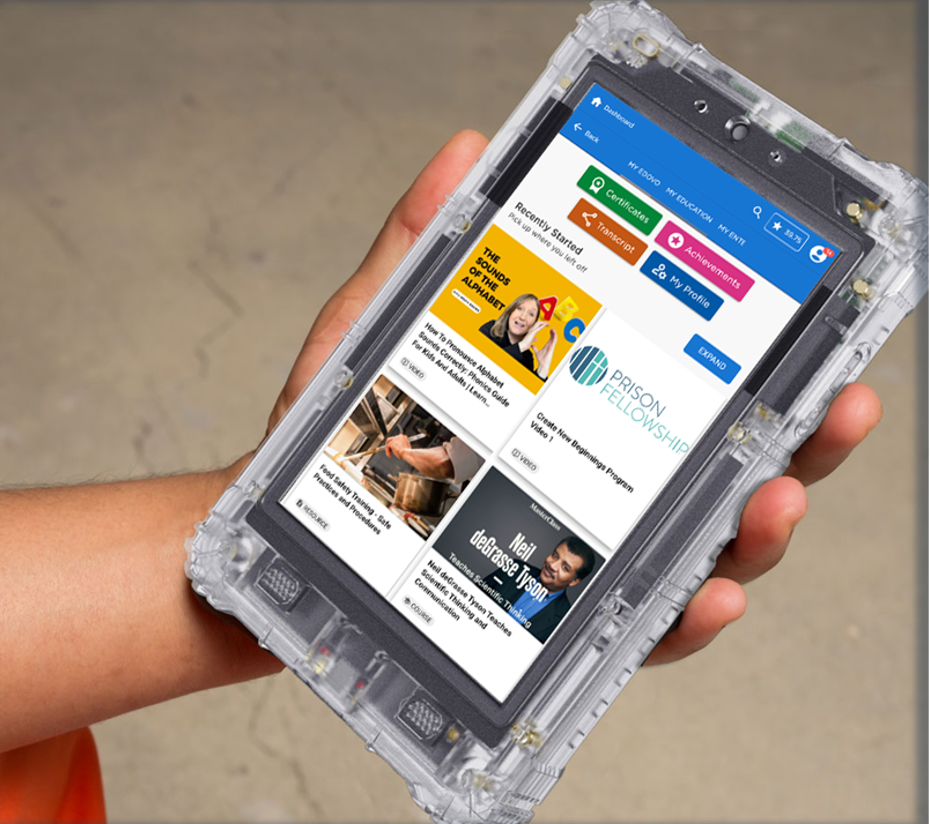
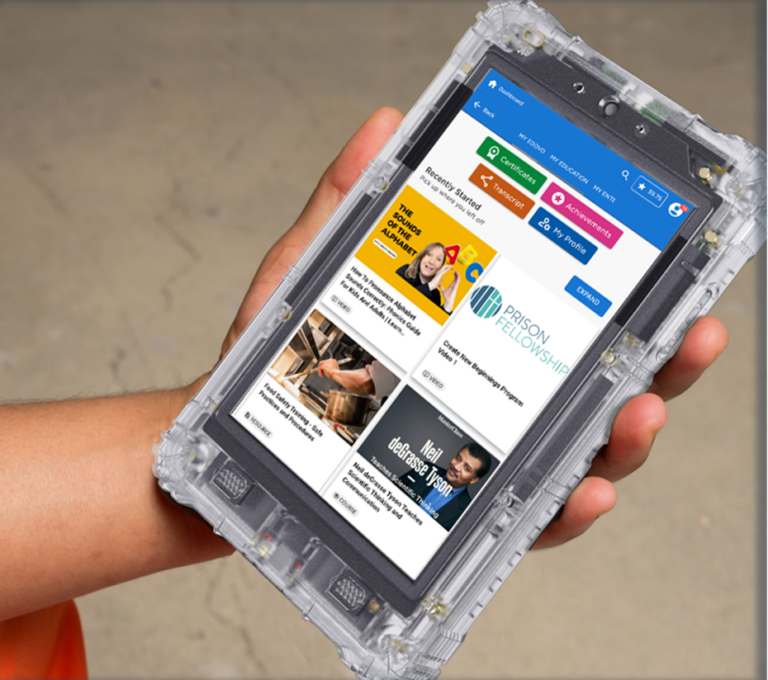
Purpose-built tablets provide incarcerated individuals with secure access to educational courses, vocational training and reentry resources, helping extend programming beyond the classroom and support continued learning and rehabilitation. | Photo Credit: ViaPath Technologies
By Camila Gonzalez
A correctional agency can deploy thousands of tablets and still lack a measurable rehabilitation strategy.
Technology creates access, but access alone is not an outcome. The more important questions are whether individuals consistently engage with meaningful programming, complete structured learning pathways and leave custody better prepared for successful reentry.
Answering those questions remains difficult. Limited classroom space, staffing shortages, movement restrictions and differences among housing units can prevent eligible individuals from participating in programs. Lockdowns and facility transfers may interrupt progress. Paper records and disconnected systems make it difficult to determine who participated, what they completed and whether that engagement contributed to better outcomes.
As agencies face growing expectations to reduce recidivism, misconduct and violence, simply demonstrating that programs are available is no longer enough. Correctional leaders must show that programming is accessible, structured, evidence-informed and measurable — and that the measures themselves demonstrate effective change and anticipated outcomes.
The value of purpose-built correctional technology should therefore be measured not by deployment, but by progression.
Extending Programming Beyond the Classroom
Traditional correctional programming often requires an individual to be in a particular classroom at a particular time. In-person instruction remains essential, but physical capacity and operational realities limit how many people it can reach.
Through purpose-built devices designed for correctional environments, such as ViaPath’s Inspire® tablets, individuals can securely access academic courses, vocational training, cognitive-behavioral programming, substance use recovery resources, legal information and reentry tools across housing units and security levels.
This approach is not intended to replace educators, counselors or correctional professionals. It can extend their reach, maintain continuity when in-person programming is disrupted and support hybrid models that combine instructor-led education with structured, self-paced learning.
For someone working toward a high school equivalency credential, building employment skills, or addressing a substance use disorder, continuity is critical. Progress should not stop because a classroom is full, a facility is short-staffed or movement has been temporarily restricted.
Turning Access into Structured Progress
A tablet is infrastructure, not an intervention on its own. Its rehabilitative value depends on the quality of the programming it delivers and whether that programming is connected to clear goals, appropriate support and meaningful measurement.
Purpose-built technology should connect individuals with structured, evidence-informed pathways that account for their risks, needs, abilities and goals. The principles of risk, needs and responsivity reinforce the importance of matching interventions to the individual, addressing factors associated with behavior and delivering programming with sufficient consistency and intensity.
Digital platforms can organize education, cognitive-behavioral interventions, recovery resources and reentry preparation into defined learning journeys. Participants can work at an appropriate pace, revisit difficult concepts and monitor their progress. Staff can use participation information to identify barriers, reinforce progress and connect individuals with relevant services.
A connected digital environment can also bring together formal education, vocational curricula, behavioral health resources and practical reentry preparation. Instead of offering isolated programs with limited continuity, agencies can provide a coordinated experience that supports the whole person.
This is where access becomes progress.
Measuring What Matters
Purpose-built digital platforms give agencies an opportunity to improve how they evaluate education and rehabilitation.
Many programs still rely on paper sign-in sheets, manually assembled reports or systems that do not communicate with one another. These methods may confirm that a class was offered, but they frequently provide an incomplete view of participation, program dosage, progression and completion.
Digital platforms can help agencies track enrollment, frequency of use, time spent, modules completed and course progression. With appropriate data-sharing and privacy safeguards, agencies may also examine how participation relates to disciplinary incidents, educational achievement, program completion and post-release education or employment.
Quarterly reports can help leaders identify successful programs, declining engagement and resource gaps. These insights can inform program improvements, staff deployment and responsible stewardship of public funding.
This measurement can also reveal whether expanded access is translating into sustained participation. For example, between 2021 and August 2026, incarcerated learners completed more than 20.1 million free educational courses and spent nearly 75 million hours learning through ViaPath’s platforms, which engaged more than 3.3 million unique learners across approximately 730 correctional facilities. These results demonstrate the difference between simply distributing technology and using purpose-built Inspire® tablets to advance an intentional education and rehabilitation strategy.
Agency experience can provide equally important context. Through its Hope University initiative, the North Carolina Department of Adult Correction used facility-level dashboards to compare participation, monitor progress toward educational goals and identify areas requiring additional staff attention or resources. This data-driven approach supported programming that engaged more than 19,700 unique learners and generated over 2.4 million hours of learning across the Edovo and CypherWorx platforms in 2025.
Participation data still require careful interpretation. Completing a digital program does not, by itself, prove that the program caused a particular outcome. However, reliable engagement and completion data, considered alongside established research and agency outcome measures, provide a stronger foundation for decision-making than anecdotes or attendance counts alone.
Supporting Correctional Professionals
Automated enrollment, centralized content delivery and digital progress tracking can reduce the time staff spend distributing materials, maintaining paper records and compiling participation reports. Educators, counselors and case managers can then focus more attention on work requiring professional judgment, including motivating participants, addressing barriers and preparing individuals for release.
Technology can also support consistency across facilities. Agencies can distribute approved content more reliably, set shared program expectations and examine participation across locations without relying on disconnected local reporting practices.
The objective is not to automate rehabilitation. Rehabilitation is fundamentally human work. Purpose-built technology should give correctional professionals and program participants better tools for completing that work consistently, securely and at scale.
Moving From Availability to Accountability
Purpose-built correctional technology should be viewed as more than a communications service. When implemented thoughtfully, it can serve as essential infrastructure for education, treatment and reentry.
An effective model brings together three elements: secure access, structured programming and meaningful measurement. Secure access makes participation possible. Structured programming turns availability into sustained engagement. Reliable data helps agencies evaluate whether that engagement is contributing to progress.
Before evaluating a correctional technology program, leaders should ask three fundamental questions:
- Does it expand equitable access to meaningful, evidence-informed programming?
- Does it create structured pathways that encourage continued participation and completion?
- Does it provide reliable information agencies can use to evaluate progress and improve delivery?
Answering those questions requires coordination among agency leaders, correctional staff, educators, treatment providers and technology partners. It also requires a commitment to evaluating what works and adjusting programs when the evidence supports a different approach.
Purpose-built technology will not reduce recidivism or guarantee successful reentry on its own. It can, however, remove barriers, preserve continuity, support staff and make progress more visible. When secure access, evidence-informed programming, and responsible measurement work together, correctional agencies are better positioned to strengthen facility safety, support successful reentry and provide more individuals with a meaningful opportunity to move forward.
Camila Gonzalez is the Director, Education and Reentry Programs with ViaPath Technologies.
This article was sponsored by ViaPath Technologies. For more information, visit www.viapath.com.