




Where Public Health Meets Public Safety: What Healthcare Design Can Teach Us About Modern Justice Facilities
For decades, justice facility planning centered on security, operational efficiency and durability.

For decades, justice facility planning centered on security, operational efficiency and durability.

Over the past year, as news on projects, people, products and other developments in the corrections field unfolded, Correctional News was there to cover not only what transpired, but what impacts those events could have the industry as a whole.

The correctional workforce in the U.S. facing a crisis. While public discussions often focus on prison reform and inmate rehabilitation, an equally pressing issue is the well-being of correctional officers and other staff, who endure high levels of stress, long hours and frequent exposure to trauma.
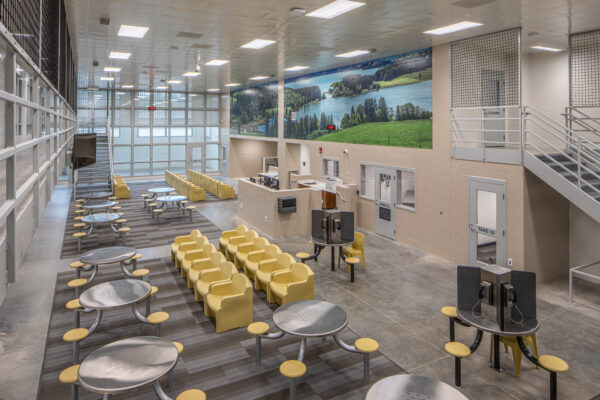
Over the past decade, the Franklin County Sheriff’s Office has embarked on a transformative journey to reimagine its approach to justice.

A new nonprofit organization dedicated to supporting sheriffs and their employees across the country officially launched last week, aiming to provide financial assistance, training and critical resources to law enforcement professionals in need.

Correctional facilities, once designed purely for containment and security, have been undergoing a significant transformation. Historically, carceral environments were stark, institutional spaces that often intensified the trauma stress, and mental health challenges faced by inmates.
On Friday, the Illinois Department of Corrections (IDOC) hosted its first ‘Corrections Wellness for Families’ class for adult family members of frontline employees in the southern region of Illinois.

Corrections agencies nationwide are grappling with critical staffing shortages, leading to potential risks such as increased violence and the departure of experienced personnel.