



Modernizing Corrections for a Safer Florida

Photo: The latest correctional tablets, like EVOTAB and Officer T80 from Securus Technologies, incorporate essential features such as tracking and safeguards against unauthorized use. Photo Credit: Securus Technologies
By Steve Casey
During my four decades in Florida public safety, from managing jail facilities to overseeing operations and logistics, I’ve witnessed our profession evolve dramatically. This is top of mind as the Florida Sheriff’s Association hosts the National Sheriffs’ Association conference in Fort Lauderdale this month. The challenges facing corrections—recruitment, staffing, retention, efficiency and safety—are significant. Across our state and nation, dedicated officers show up daily to manage these complex facilities with professionalism and grit. Supporting and retaining these crucial men and women is paramount.
To attract and retain top talent, today’s officers need tools that elevate safety and streamline daily responsibilities. While the field has long relied on tradition and grit, the strategic introduction of technology is proving its capacity to transform operations and enhance safety for both facilities and communities. Agencies that proactively embrace and invest in this innovation are setting the standard for modern, effective public safety.
The long-standing direct-supervision model, where one officer oversees dozens of incarcerated individuals, has taught us a clear truth: Investing in resources, programming, and structured activities directly leads to more manageable and safer facility environments. My firsthand experience confirms that active engagement is the cornerstone of safety, order and productivity, effectively countering the detrimental effects of idleness.
When we view correctional facilities as more than holding spaces and instead as pivotal environments for cultivating lasting change, we create an opportunity to foster self-sufficiency and build long-term community stability. I’ve seen how intentionally deployed technology is transforming these spaces, delivering vital vocational training and educational programming that empowers individuals to build skills, gain confidence and successfully reenter society.
When deployed safely, tablets replace idle time with purpose, providing incarcerated individuals with platforms for learning, communication and case management. This empowers staff to support safety, structure and engagement, and critically, equips individuals with essential tools for employment and becoming tax-contributing members of their communities upon reentry. The cause and effect are clear: Investing in rehabilitation through technology directly leads to more self-sufficient citizens and stronger local economies.
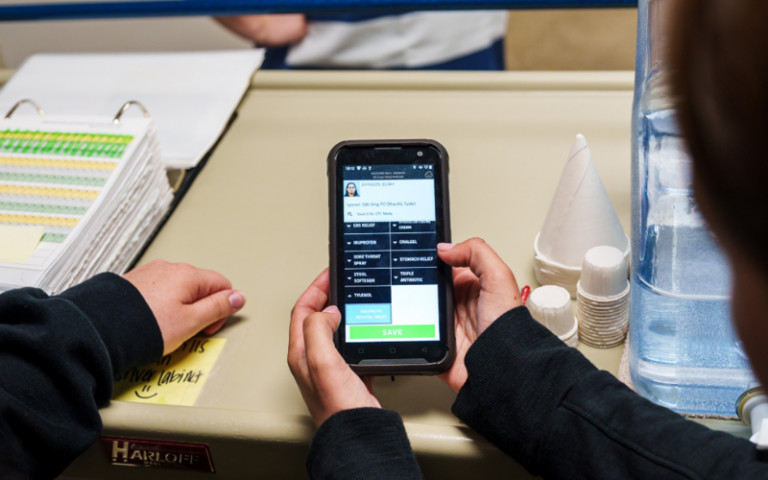
The benefits of technological integration extend profoundly to our officers, directly impacting safety and operational efficiency. Staff-specific tablets now provide real-time access to critical information regarding individuals, incidents and facility operations, enabling faster, safer decision-making. Beyond operational improvements, technology serves as a vital lifeline for officer well-being, offering access to wellness resources and support systems that significantly improve job satisfaction and retention. This commitment to officer support through technology is fundamental to maintaining a highly effective and dedicated workforce.
As technology presents such significant opportunities, we must ensure that any system deployed within a correctional facility is secure, closed and tamper-proof. The latest correctional tablets, like EVOTAB and Officer T80 from Securus Technologies, are purpose-built for this environment, incorporating essential features such as tracking and safeguards against unauthorized use. With the right infrastructure, technology effectively solves problems without introducing new risks, ensuring a secure and reliable operational framework for everyone.
It’s time for all stakeholders—agency leaders, local officials, policymakers and advocates—to fully recognize the transformative power of technology in corrections. Florida’s substantial corrections budget, exceeding $2.2 billion and supporting more than 90,000 incarcerated individuals, represents a powerful opportunity. We must continue to strategically invest a portion of this budget into smart technological tools that undeniably improve working conditions for officers and enhance overall facility operations. These targeted investments are crucial for creating safer correctional environments that ultimately benefit everyone by fostering greater stability and productivity within our communities. By prioritizing technology, we can build a public safety system that truly serves those both inside and outside facility walls.
Steve Casey, a senior advisor to the National Sheriffs’ Association and former executive director of the Florida Sheriffs Association, brings a strong technical background in criminal justice support services—including staff development, investigations, media, legislative affairs and security.