






Global Insights from the International Corrections & Prisons Association Annual Conference
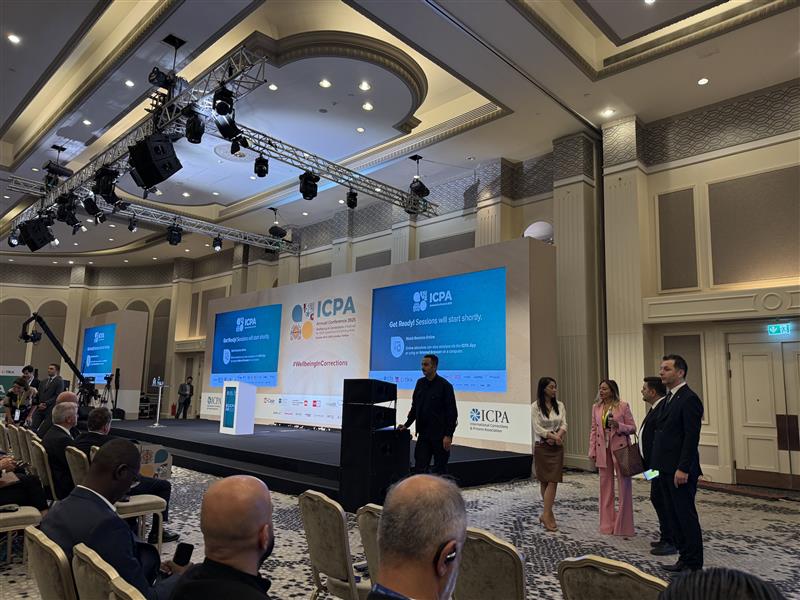
Photo: The International Prisons and Corrections Association’s (ICPA’s) 2025 Annual Conference 2025 was held Oct. 26-31 in Istanbul, Turkïye. | Photo Credit: Courtesy of Bob Hampe
By Bob Hampe
After more than a decade of attending International Corrections & Prisons Association (ICPA) conferences, I continue to be inspired by how this community reimagines the purpose and practice of corrections. This event is always an inspiring marketplace to get my synapses moving and generate new ideas.
This year’s conference was held in Istanbul, Türkiye, an exceptionally vibrant and active city full of history, architecture and cats. (Fun fact: Istanbul is famous for its large population of stray cats; they are everywhere and are viewed by locals as communal pets.)
ICPA’s theme this year was: “Well-Being in Corrections: Initiatives for Staff, Systems and Communities.” This resonates deeply with me, both personally and professionally. From Türkiye’s own penal transformation efforts to research from Canada, Finland and the United States, one message was clear: The convergence of trauma — past and present — affects everyone inside the walls.
Being trauma-informed is no longer enough; systems must become trauma-responsive and trauma-specific to support rehabilitation and long-term workforce health.
Human Rights & Rehabilitation Around the World

Türkiye’s approach to modernization and staff development in corrections reflects a system grounded in dignity and education. The Turkish penal enforcement system is undergoing comprehensive transformation, closing old, inadequate prison facilities and replacing them with modern institutions meeting national standards. The focus is not just on physical infrastructure, but on creating meaningful, humane prison environments that balance rehabilitation and human dignity.
The system integrates production and vocational workshops where thousands of inmates participate every year, gaining work skills, confidence and a pathway to reintegration. Electronic monitoring, digital supervision and video visitation systems are expanding, making the system more transparent and effective. Special attention is also given to vulnerable groups such as women and children, with gender-sensitive projects and early diversion programs for juveniles.
Finland also shared data-driven insights from a national health study designed for challenging-to-reach populations that considered cognitive and behavioral traits like ADHD that affect how inmates complete surveys, while Canada presented longitudinal research confirming what many already feel: correctional work carries immense psychological and organizational strain.
Other presentations throughout the conference focused on areas of concern as well as opportunity for correctional professionals across the globe, including:
Staff Well-Being: Across borders, high rates of PTSD, burnout and suicide risk have been documented among correctional workers. However, promising solutions emerged, including confidential support systems, leadership training, peer “battle buddy” networks (a support system originally used in military contexts where individuals are paired to provide mutual support, encouragement, accountability and assistance) and recognition of officers as true first responders.
Technology & Design: AI tools, digital workflows and humane facility environments are beginning to reduce administrative stress and improve fairness. As keynote speaker Dr. Stephanie Covington, a clinician, author and organizational consultant, reminded us, cultures of safety must be built through choice, trust and empowerment — not as projects, but as practice.
Community & Storytelling: Several sessions explored how public narratives around corrections must evolve from punishment to shared responsibility. Nations like Japan and Uganda show that community-based reintegration reduces recidivism and builds social health.
The overall message was that the future evolution of corrections will be defined by our collective willingness to treat well-being as mission-critical — for staff, for those in custody and for the communities waiting beyond the walls. Walking away from ICPA 2025, I’m reminded why this gathering matters. It’s not just about technology or policy — it’s about empathy, courage and systems that heal instead of harm.
Bob Hampe is President and Chief Executive Officer for Actall and a member of the Correctional News Industry Knowledge Council.
ICPA Announces 2025 Correctional Excellence Awards
The the annual conference, the ICPA also presented its 2025 Correctional Excellence Awards, honoring individuals and organizations for their contributions to advancing professional, humane and evidence-based correctional practices. Awards and awardees included:
- The Head of Service Award recognizes heads of service who have made outstanding contributions to advancing professional and humane prison and corrections in their country. This year’s award was presented posthumously to Peter Severin, former ICPA President and Commissioner for Correctional Services in New South Wales, Australia, who passed away in August.
- The Staff Welfare Award was presented to the National Trade Union of Prison Police (Sindicatul Național al Personalului din Penitenciare) in Romania for their project “Advancing Staff Well-being in Correctional Services,” which has driven standardized HR policies, improved training programs and established the first nationally recognized framework for job strain in the correctional field. As a result of SNPP’s efforts, 85% of Romanian prisons have adopted fair shift systems for corrections staff.
- The Correctional Healthcare Award was presented to the Kosovo Correctional Service for their “Comprehensive Care and Rehabilitation” initiative. Through reformative, evidence-based programs developed with national and international partners, including tailored rehabilitation programs for persons in custody and a specialized healthcare institution within the Dubrava Correctional Centre, KCS has reduced its recidivism rate to 12%.
- The Outstanding Contribution to the Association Award was awarded to the Northern Ireland Prison Service for its Hydebank Wood Secure College, which offers academic, vocational and life skills programs with a trauma-informed, person-centered approach for young people in custody.
- The Research Award was awarded to the Prison and Probation Service, Finnish Institute for Health and Welfare, and Health Care Services for Prisoners, Finland for the “Finnish Prison Population Study – Health and Wellbeing of Prisoners (WattuIV).” Described in the recap above, this comprehensive examination of Finland’s prison population revealed extensive information about the health and well-being of persons in custody while highlighting opportunities for improved care continuity.
- The Reducing Reoffending Award was presented to the Singapore Prison Service for their “Women’s Programming for Reducing Re-offending,” a holistic, gender-responsive approach addressing both immediate rehabilitation needs and long-term reintegration challenges. Through this program, SPS reduced women’s two-year recidivism by more than 6% and lowered the population of women in custody by more than 300 between 2018 and 2022.
- The Outstanding Correctional Service Employee Award was presented to Sherri Rousell, District Director for Central Ontario District with Correctional Service of Canada. Rousell’s 25 years of service includes frontline roles to senior leadership within the Central Ontario District of the Ontario and Nunavut Region, demonstrating leadership grounded in experience, empathy and respect.
- The ICPA President’s Award is a unique honor recognizing outstanding contribution to corrections and criminal justice. This year’s award was presented to Dr. John P. May, MD, founder and leader of Health through Walls in the U.S., for his exceptional contributions to healthcare in corrections. Under Dr. May’s leadership, Health through Walls has delivered direct patient care, training, resources and support across prisons in Haiti, the Dominican Republic, Jamaica, Malawi, the Central African Republic and Mozambique.