





Bridging Behavioral Health and Justice, Part II: The Metrics Behind Successful Facility Design

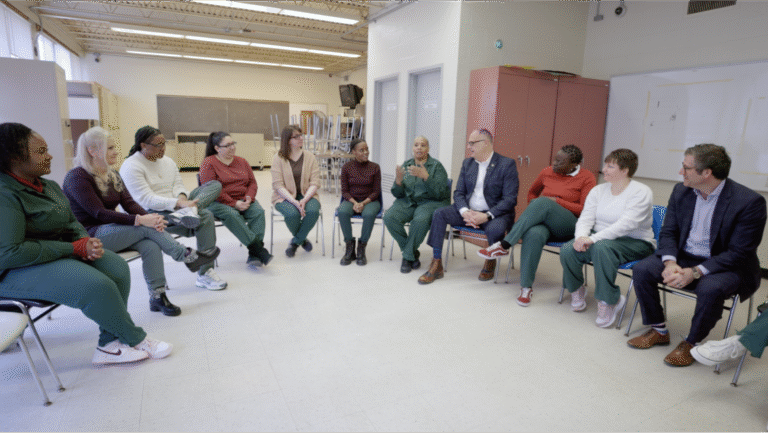
Incorporating natural light, softer fixtures, wellness spaces and common areas that allow both collaboration and privacy into behavioral health facilities can lead to quantifiable positive outcomes. | Photo Credit: Treanor
By Jeff Lane, Treanor
Part I of this article on focused on how behavioral health facility planners balance safety and care considerations, and how embracing therapeutic design principles instead of reinforcing punitive environments can improve outcomes for inmates and staff alike. In Part II, the author will discuss strategies for incorporating data collection and designing for future facility growth and program evolution.
Building Environments that Support Data Collection
A growing priority in behavioral health facility projects is the ability to collect meaningful health and safety data. Stakeholders increasingly want to quantify outcomes — such as reductions in violent incidents, self-harm or anxiety levels — to demonstrate value. At the Pueblo Behavioral Health Center, leaders sought to measure reductions in recidivism, tracking how many individuals returned to the justice system after release.
Unlike traditional hospitals, correctional environments face unique challenges in capturing and analyzing data. Yet with careful design, facilities can support workflows that make data collection possible. By creating spaces that reduce patient stress, support staff operations and enable consistent record-keeping, facilities can generate evidence of success. These metrics, in turn, become persuasive tools for securing funding and expanding services.
The ability to point to tangible improvements — fewer violent incidents, lower recidivism, reductions in self-harm — helps stakeholders make the case to funding agencies. In systems where most facilities are decades old and ill-suited to today’s needs, data-backed evidence can be the catalyst for broader investment. With evidence in hand, leaders are better positioned to plan for what comes next: long-term growth and continuity of care.
Planning for Growth and Continuity of Care
Flexibility is not just a design feature; it is a healthcare imperative. Behavioral health and justice facilities operate in rapidly shifting policy and funding landscapes. To remain viable, they must be capable of growth and adaptation. This means incorporating shell space and infrastructure for future expansions — such as detox or behavioral health wings — that can extend care from crisis stabilization to long-term treatment.
At Pueblo, the facility included shell space that could accommodate future services without disrupting existing operations. Similarly, the Treatment and Recovery Center project in Douglas County, Kansas, project initially focused narrowly on a short-term detox program. Without plans for a continuum of care, the design risked limiting long-term impact. Embedding flexibility ensures facilities can expand to meet evolving needs, reducing recidivism and improving outcomes over time.
The vision set during pre-planning directly shapes the future trajectory of a facility. Short-term thinking limits options; long-term vision enables adaptability. Facilities designed with foresight can pivot as funding becomes available, policies shift and communities demand more comprehensive behavioral health services. Taken together, these lessons underscore a clear set of takeaways for readers and decision-makers alike.
Pre-planning through a healthcare lens is essential — even if formal licensure is not immediately in play — because those early decisions set the stage for future options. Architecture itself can serve as a clinical tool: design choices like natural light, wider corridors or warmer finishes directly influence patient behavior and staff outcomes. Decisions made at the outset about stakeholder alignment and program direction shape long-term success. When environments are designed to capture and analyze meaningful data, leaders are equipped with the evidence they need to demonstrate value and advocate for funding. Above all, flexibility is not an aesthetic preference but a healthcare imperative, allowing facilities to adapt as policies, community expectations and treatment models evolve.
Beyond Containment, Toward Care
As behavioral health increasingly intersects with public safety, pre-planning emerges as the linchpin of successful facility design. By aligning stakeholders, embedding clinical design standards, supporting data collection, and planning for growth, these spaces can transcend their carceral origins. They become centers of care, recovery and reintegration — places where individuals in crisis receive treatment rather than punishment.
The foresight that shapes early design decisions can also reshape the trajectory of communities. Just as Part I of this article began with the challenge of jails absorbing behavioral health needs they were never designed to meet, Part II closes with the recognition that thoughtful pre-planning offers a more hopeful alternative.
In a system often defined by its limitations, design rooted in healthcare values offers something rare: a path forward. When justice and healthcare converge, the built environment has the power not just to contain, but to heal, restore and transform lives.
Jeff Lane, AIA, is a principal with Treanor’s Justice Design studio.