




Design Changes Outlined in Latest Oahu Jail Plans
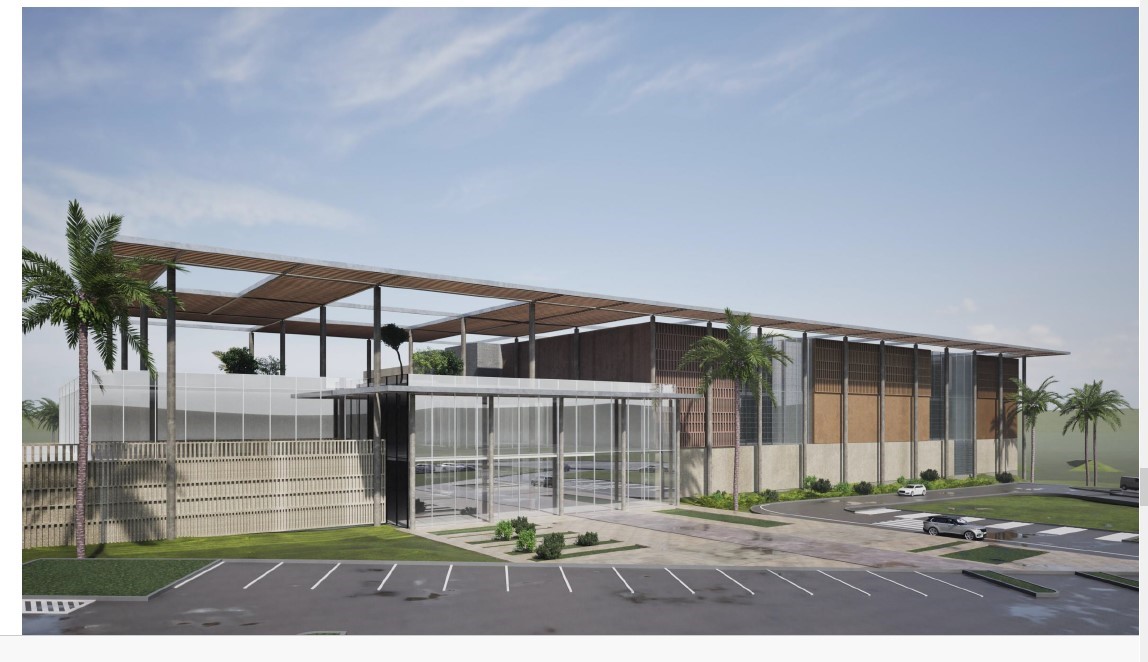
The latest plans for a new jail in Oahu, Hawaii, call for an integrated facility with space for education, vocational skills training and other rehabilitative programming. | Photo Credit: Hawaii Department of Rehabilitation and Corrections
By Charlie Lange
Earlier this month, officials in Hawaii announced the latest changes to the design of the new jail facility that will replace the aging Oahu Community Correctional Center (OCCC) in urban Honolulu. The updated plans for the new jail include more than 1,000 beds and will prioritize rehabilitation programs while responding to community feedback, according to project representatives.
The most notable design change is the removal of a new Community Transition Center (CTC) from the project site. Instead, the state will expand the existing Laumaka Work Furlough Center (LWFC) in nearby Kalihi to house the CTC’s programs and residents. Officials say this shift streamlines the layout of the new jail and better aligns with community preferences gathered through outreach and community studies in the neighboring Aiea and Kalihi communities over the past two years.
While some in the Kalihi area reportedly expressed support for the facility, Aiea residents were concerned about the lack of public transportation at the proposed site of the transition center. Although the transition center component has been relocated, planners say the design of the new jail remains focused on improving conditions for rehabilitation, reentry and treatment programs, which the current OCCC facility lacks the space to support.
Opened in 1975, the OCCC is the largest jail facility in the state of Hawaii, with an average daily headcount of 925 inmates. That number is approximately 152% over the jail’s design capacity of 628, placing a severe strain on the facility’s infrastructure and staff.
Since the COVID-19 pandemic, the OCCC also has housed an older, more criminally involved and violence-prone population, which presents a greater security risk to Hawaii Department of Corrections and Rehabilitation staff and the public at large.
With these challenges in mind, the state is seeking to transform its unified correctional system to focus on rehabilitative, restorative and reentry-focused practices in an effort to reduce recidivism and promote safer communities. Another goal for the new jail is to keep incarcerated individuals connected to their cultural values, especially for Native Hawaiians and Pacific Islanders who are disproportionately represented within the population.
While the current OCCC layout is based on a village model that is less efficient for operations and safety, the new jail is proposed to be a more integrated, singular facility. It will incorporate evidence-based opportunities for self-improvement such as education, vocational skills training, faith- and culture-based activities, a library, substance-use disorder treatment, counseling, mental health therapy and re-entry services. The new jail will also incorporate natural daylight, acoustic controls, thermal comfort and adequate space.
“The programming objectives remain the same,” said Hawaii Department of Rehabilitation and Corrections Director Tommy Johnson. “The new facility is being designed with adequate space to implement programs that reduce recidivism and prepare people for successful reentry.”
Planning for the new Oahu jail began in earnest in 2016, when the state launched its site selection process. Since then, the state has focused on developing a master plan for the OCCC and performed a series of outreach campaigns, market assessments and funding analyses.
While conceptual designs for the new facility from architecture firm AHL have been approved, the state has not yet finalized the jail’s schematic design. However, project officials say that the shift away from the CTC as part of the main jail complex will simplify the overall structure and allow planners to focus more on housing, rehabilitative spaces and support services within the secure perimeter.
The latest public cost estimates from 2023 stood at $937 million, though project officials have indicated that costs could escalate by $3.5 million per month through 2027. The project is being approached as a public-private partnership (P3), which will enable private entities to provide potential alternative sources of project funding to supplement the state’s funding commitment.
While a request for proposals has not yet been issued, officials say adaptability will be built into the agreement so that the facility can adjust to changes in population levels and security classifications over time. They also reiterated that privatizing jail operations is not in the project plans, and that the state will retain control and responsibility for correctional and rehabilitation services.