




Bringing “Little Scandinavia” to the U.S.
By Jordan M. Hyatt, J.D., Ph.D., and Synøve N. Andersen, Ph.D.
True reform can be difficult to achieve in corrections. Whether hindered by budgetary or legislative constraints, constantly rotating leadership, lack of public support or deep-seated, department-wide resistance to change, ambitious attempts to transform systems are all-too-often tabled for a continuation of the status quo.
But at one correctional facility in Pennsylvania, administrators and staff took a risk on an innovative new approach to incarceration — and are seeing the benefits unfold in real time.
In April, Correctional News released “Changing Minds, Changing Lives,” the second episode of its new Corrections Connections docuseries, filmed inside the Little Scandinavia unit at SCI Chester in Pennsylvania.
The episode shows how leaders with the Pennsylvania Department of Corrections and SCI Chester implemented Nordic principles of confinement inside the facility — and how initial apprehension has evolved into a near-unanimous buy-in between administration, staff and Little Scandinavia unit residents.
Built for Engagement
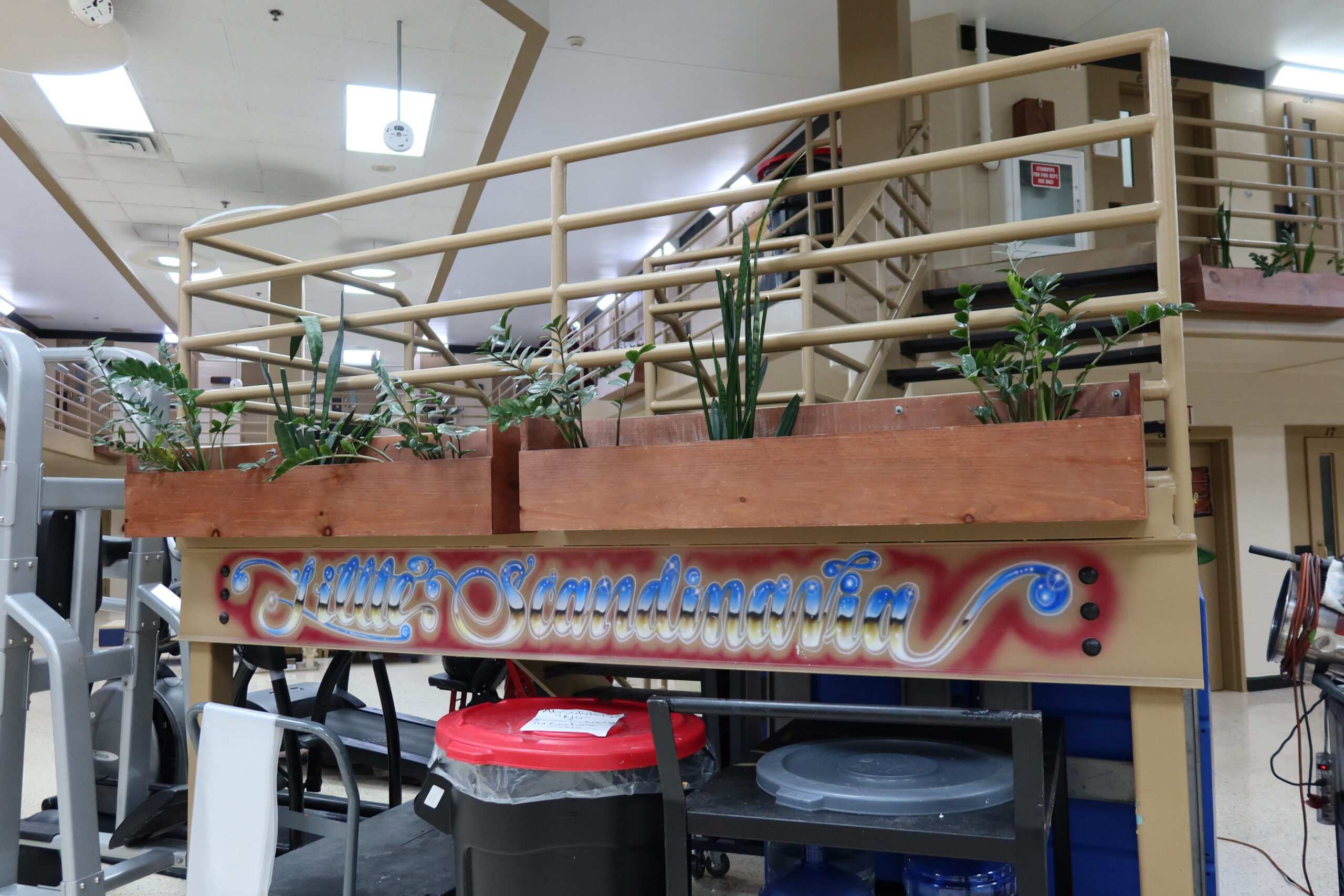
Little Scandinavia is a specialized housing unit at SCI Chester developed through a partnership between the Pennsylvania Department of Corrections, the Scandinavian Prison Project — an international and interdisciplinary team led by researchers from Drexel University and the University of Oslo documenting the implementation, impact and continued development of the project — and correctional authorities in Sweden (Kriminalvården) and Norway (Kriminalomsorgen). Since opening in May 2022, the unit has served as a test of whether core elements of Scandinavian correctional practices can be adapted within a general population unit in an American prison to improve institutional climate and outcomes.
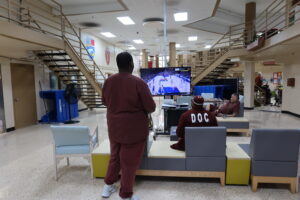
The unit differs from standard housing in both design and operation. Physical changes include single-occupancy cells, a fully equipped commercial kitchen and a reconfigured common space intended to support more normalized daily routines and interactions.
These features are not secondary. They are meant to foster a different social environment — one that promotes dignity, responsibility and engagement among residents and staff.
Perhaps more consequential than furniture is the introduction of an adapted “contact officer” model. Staff assigned to the unit received in-depth experimental learning opportunities in Norway and Sweden as well as additional training in Pennsylvania, preparing them for a more active, relational role.
Rather than focusing exclusively on surveillance, unit staff are expected to engage residents in daily activities, support problem-solving and contribute to a more constructive unit culture. This reflects an emphasis on dynamic security — maintaining safety through relationships.
Research-Driven Principles
This effort is also grounded in research, seeking to produce policy-relevant data. To assess the unit’s impact, placement is determined through a lottery-like process. This design minimizes selection bias, increases fairness and enables a more credible estimate of Little Scandinavia’s effects.
The evaluation draws on multiple data sources. Central to this effort is the Prison Climate Questionnaire, a survey administered every six months to all incarcerated individuals at SCI Chester. To date, thousands of participants have completed a survey, reporting on prison conditions and their perceptions of punishment, enabling unique longitudinal analyses. Additional data are gathered through in-depth qualitative interviews with staff and incarcerated people and via administrative records.
Assessing Efficacy
Preliminary findings indicate meaningful improvements across several domains. The Little Scandinavia unit has recorded the lowest level of misconduct among general population units since the study began. Early estimates suggest a meaningful reduction in violent incidents and a decrease in overall misconduct. Reduced exposure to violence contributes to a safer environment for residents and staff and supports greater institutional stability.
Survey data reinforce these patterns. Residents report more positive perceptions of living conditions and stronger relationships with both peers and staff. Measures of autonomy, sleep quality, emotional well-being, and physical health all show improvement. Overall satisfaction with the unit — regarding both the environmental and the staff — higher than in housing.
Focus on Reentry, Staff Wellbeing
There is also evidence of increased engagement around reentry. Residents assigned to the Little Scandinavia unit report more frequent discussions with staff about release planning. They also express greater confidence in their ability to succeed after release, suggesting that the unit may influence both in-custody experiences and future orientation.
These effects extend to staff. Those officers working on the unit report lower levels of stress and more meaningful interactions with peers and residents, indicating improvements in the quality of work life. This aligns with the broader premise of the model: that institutional climate is co-produced and that changes in staff roles are central to sustainable reform.
Room to Grow
Taken together, the early evidence suggests that targeted changes to physical space, staff practice and organizational culture can produce measurable improvements in safety, well-being and prison climate. While ongoing analysis will assess longer-term outcomes, including post-release trajectories, initial findings from the Little Scandinavia unit point to the importance of environment and relationships in shaping the interconnected correctional experiences for those who live and work in prisons.
Jordan M. Hyatt is a Professor of Criminology in the Department of Criminology and Justice Studies and the Director of the Center for Public Policy at Drexel University.
Synøve N. Andersen is a Professor of Sociology in the Department of Sociology and Human Geography at the University of Oslo and a Faculty Fellow at the Center for Public Policy at Drexel University.
Watch the full Corrections Connections docuseries episode from Little Scandinavia, and read the rest of the 2026 Public Safety & Detention edition of Correctional News.