




From Containment to Continuity, Part II: How Care, Reintegration and Workforce Resilience Turn Correctional Design Into a Public Health Strategy
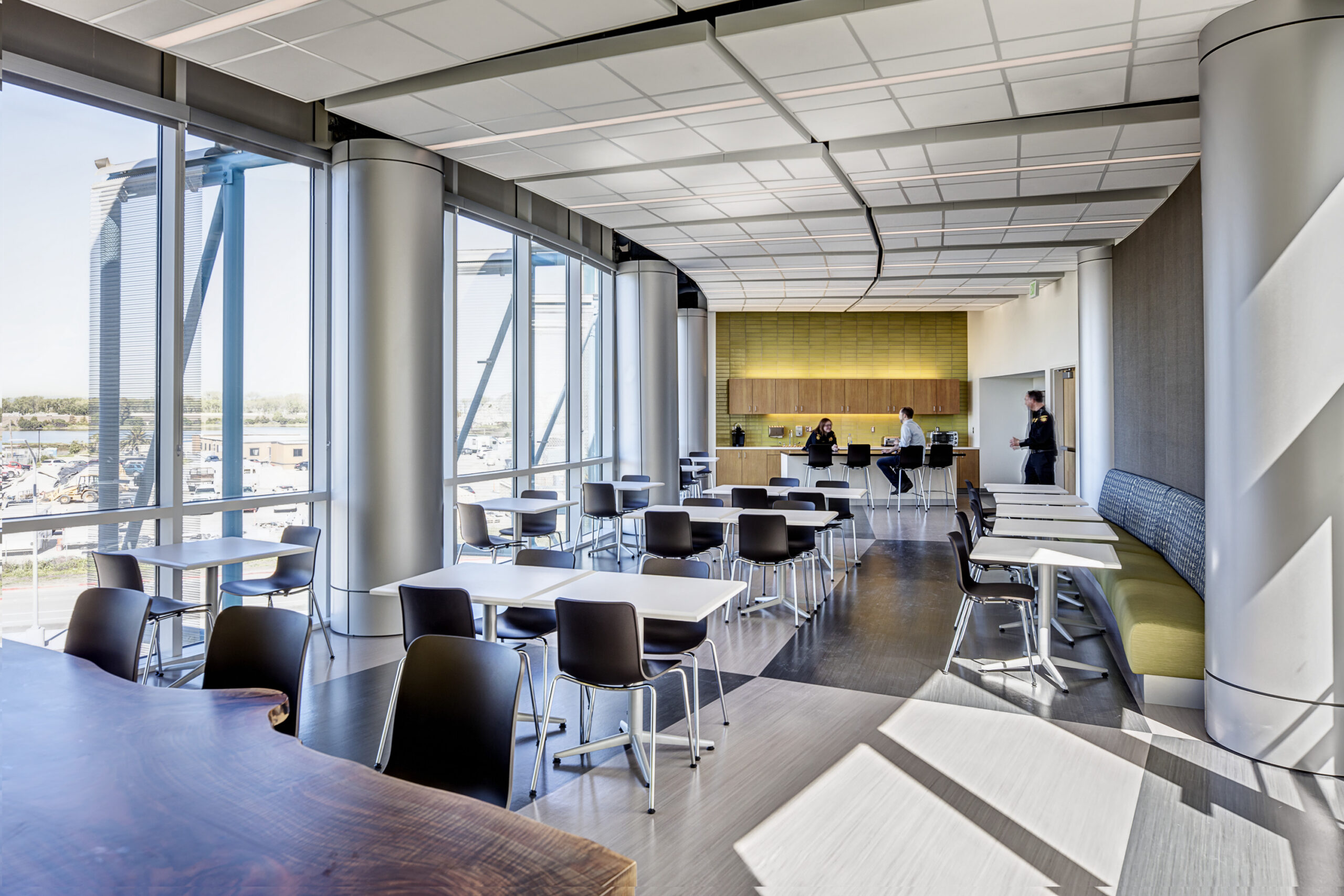
In many legacy facilities, recovery is treated as an incidental rather than an operationally necessary activity. Emerging models recognize that correctional workplaces extraordinary psychological demands on officers, clinicians and support staff, requiring environments that support decompression, restoration and sustained performance throughout a shift. | Photo Credit (all): Courtesy of HOK
By Kristen Markos
Designing correctional facilities as public health infrastructure requires more than improving conditions inside housing units. Once wellness and safety lay the foundation, facilities must connect their physical environments to measurable outcomes in care, education, reintegration and workforce stability. That broader responsibility extends from intake and treatment through release and into the community, creating a continuum that supports both the people in custody and those responsible for their care.
Designing for Care and Measurable Outcomes
Correctional architecture has historically been evaluated by durability and compliance. A public health approach demands a different metric: outcomes. Do spaces reduce self-harm? Do they improve treatment engagement? Do they support smoother transitions back to the general population and community life?
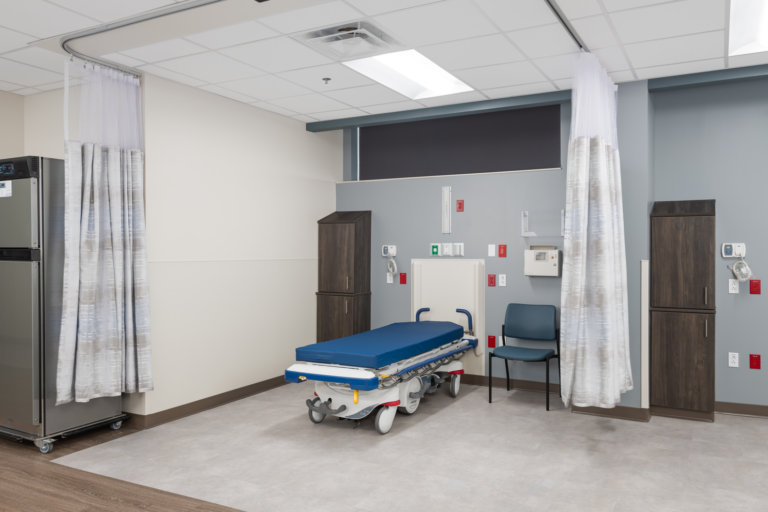
Care-driven design integrates intake triage spaces, telehealth rooms and co-located clinical assessment suites that connect directly to community providers. Increasingly, care models are also extending to staff themselves. Rather than relying exclusively on off-site employee assistance programs, some emerging facilities are exploring confidential on-campus support spaces for counseling, peer support and post-incident processing. Embedding these services within the facility acknowledges the cumulative psychological demands of correctional work while helping reduce burnout, attrition and long-term workforce instability. It acknowledges aging populations and rising dementia rates through single-level layouts and organic walking paths that support orientation.
It also extends to material innovation. Manufacturers are now developing reinforced wall systems capable of meeting high-impact detention standards while allowing abuse-resistant gypsum board rather than exposed concrete. Advanced glazing systems with thermal breaks improve comfort without compromising security. These developments reflect a broader shift: when designers move beyond standard materials and layouts, they enable new models of care delivery.
The same principle applies to environmental performance. Circadian-supportive lighting strategies, particularly for night-shift staff, are increasingly being explored to improve alertness during work while reducing long-term fatigue and turnover in some of the most difficult positions to fill.
Engagement, Education and Reintegration
A final dimension of correctional infrastructure is engagement. Facilities that promote transparency, education and participation reduce stigma and improve reintegration. Therapy malls, family visitation areas and civic-facing entry sequences signal accountability rather than fortress-like exclusion.
Some models extend even further, incorporating shared community assets such as gyms or clinics that serve both incarcerated populations and the public.
Equally important is the role of education and vocational training as required, not optional, components of daily life. Without them, individuals remain idle — reinforcing instability rather than preparing for reentry.
Engagement is not a luxury; it is a reentry strategy.
Continuity Beyond the Facility
Reentry does not begin at release — it must be embedded throughout the correctional experience. Without continuity of care, individuals are often discharged with minimal resources, limited support networks and significant barriers to employment and housing.
Effective models establish direct connections to community-based providers before release, including behavioral health services, job placement programs and transitional housing.
This continuum may include structured step-down environments or reentry centers that provide stability during the transition back into society. Without this infrastructure, the system often recreates the conditions that led to incarceration in the first place.
Supporting the Workforce
Any correctional facility operates through its staff. Therapists, nurses and officers cannot effectively care for others in environments that are dark, isolating or psychologically taxing. For decades, correctional facilities have largely been designed around endurance with long corridors, centralized supervision and a culture of simply pushing through difficult conditions. A more contemporary approach recognizes workforce resilience as mission-critical infrastructure, acknowledging that retention, performance and safety are inseparable from the physical environment in which staff operate. In many outdated facilities, staff operate under constant stress, exposure to violence and poor environmental conditions — factors that contribute to burnout, addiction and long-term mental health challenges.
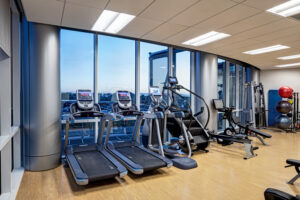
Modern facilities incorporate respite areas close to supervision, allowing staff to decompress and refocus on the task at hand quickly. Some emerging facilities are also reconsidering the staff experience from arrival to departure. Calm arrival sequences, daylight access and separation between high-acuity spaces and recovery areas can help reduce chronic stress accumulation over time. Small, distributed retreat spaces near housing clusters allow personnel to briefly reset without fully stepping away from operations, making breaks more realistic and therefore more likely to occur. These areas of respite include staff-focused amenities such as meditation rooms, fitness areas, outdoor seating areas for staff meetings and gatherings, and support infrastructure that improves retention and overall well-being.
Staff wellness is inseparable from occupant wellness — and workforce stability directly affects long-term outcomes.
Leadership culture can also be reinforced through architecture. Facilities that locate administrative and leadership spaces near everyday staff circulation, rather than isolating them in separate zones, can foster greater transparency, accountability and trust, factors increasingly tied to retention and organizational stability.
Correctional Architecture as Civic Infrastructure
The next generation of correctional facilities will not be defined solely by softer finishes. Their success will be measured by reduced recidivism, improved mental health stabilization, stronger staff retention and smoother reintegration into community systems. Guiding principles for behavioral health–centered facilities can be organized around four interdependent pillars:
- Wellness — engaging all senses to support stabilization
- Safety — protecting without dehumanizing
- Care — aligning spatial planning with measurable outcomes
- Engagement — fostering education, transparency and reintegration
To these, a fifth principle must be added: continuity — ensuring that care extends beyond the facility and into the community.
When correctional architecture is conceived as part of a larger public health ecosystem — aligned with housing continuity, behavioral health treatment, and workforce development — it becomes more than a place of confinement. It becomes a strategic intervention point within society’s most complex systems.
It also becomes a workforce strategy. In an era of staffing shortages and growing behavioral health acuity, facilities that support recovery, emotional regulation and long-term career sustainability may increasingly distinguish themselves not only by their outcomes for residents but also by their ability to recruit and retain highly qualified professionals. In that evolution, correctional facilities shift from instruments of containment to instruments of possibility.
Kristen Markos, AIA, is a Behavioral Health Practice Leader with HOK.
This article is the second in a two-part series; read Part I here.