




The Vision Behind Ohio’s Juvenile Justice System Transformation
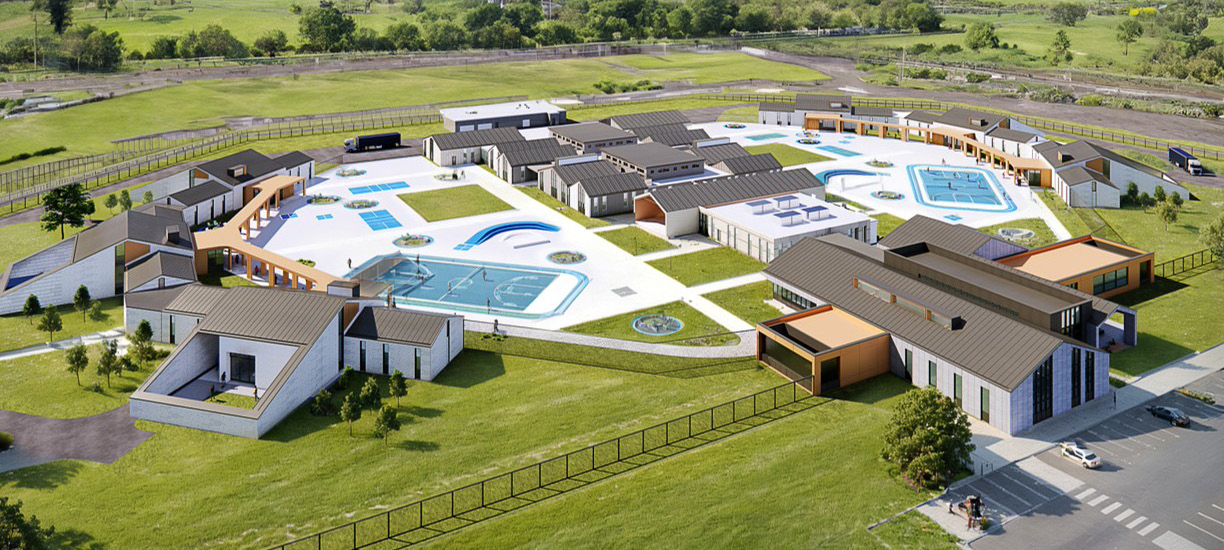
A rendering of one of the new juvenile facilities in Grafton, intended to hold up to 36 youth. | Photo Credit (all): HDR
By Amy L. Ast
In late 2023, Ohio Gov. Mike DeWine established the Juvenile Justice Working Group (JJWG) to conduct a thorough and holistic review of the state’s juvenile justice system. Composed of an esteemed panel of experts, judges, community advocates and juvenile-justice professionals, the working group was given a clear mandate: examine what is working, confront what is not and chart a path toward a safer, more effective future for Ohio’s youth and communities.
Those efforts delivered a definitive call to action with 26 recommendations, including the first recommendation calling for a sweeping “system transformation.” The data and research reviewed by the JJWG point to an unmistakable truth: the massive, congregate-care institutional facilities of the past are no longer aligned with what science and experience tell us about helping justice-involved youth achieve their full potential. To truly transform and save lives of these young people, the Ohio Department of Youth Services (DYS) must shift away from an institutional framework and move decisively toward a smaller, safer and more therapeutic model of care.
The Catalyst for System Transformation
For decades, the physical layout of juvenile corrections has leaned heavily on large, centralized facilities. Take, for example, the roughly 30,000-square-foot DYS Cuyahoga Hills Juvenile Correctional Facility, which was built more than 50 years ago with an open-bay setting that was common in adult prisons at the time. Throughout Cuyahoga Hills’ long history, the understanding of adolescent brain development and behavioral health has profoundly evolved. We now know that the physical environment itself plays a monumental role in service delivery and youth outcomes.
Large, institutional structures can inadvertently escalate tension, create bureaucratic distance and complicate safety management. Additionally, a vast majority of the youth committed to DYS arrive with complex, significant histories of trauma — challenges that have only intensified in the post-pandemic era. When high-risk, high-needs, violent young people are placed in massive, crowded environments, treatment disruptions and behavioral conflicts become far more difficult to manage — especially if a facility is facing staffing shortages.
True system transformation means recognizing that juvenile justice is distinct from adult corrections. Our mission is not merely confinement; it is habilitation, education and healing. To accomplish this, we are fundamentally shifting the relationship between our physical plants and our treatment practices. We are moving away from environments that are institutional in character and design, replacing them with smaller, campus-style environments intentionally structured to facilitate trauma-informed and trauma-responsive care.
Why Smaller is Safer and More Effective
The core priority driving this transformation is simple yet supported by overwhelming evidence: smaller is safer. Moving to a decentralized footprint of smaller facilities allows us to completely reengineer the daily dynamics of a secure care environment.
First and foremost, smaller facilities establish a dramatically lower ratio of youth to staff. In a scaled-down setting, juvenile corrections officers can move past a posture of simple supervision and engage in high-level mentoring and personal interaction. This lower ratio allows for positively targeted interactions tailored to each youth’s specific case plan, behavioral needs and educational requirements. When staff and youth can build healthy, respectful and authentic relationships, more of the underlying triggers of institutional violence are significantly diminished.
Additionally, smaller environments minimize the risk of large-group conflicts and treatment disruptions. Staff can maintain a clearer line of sight, recognize escalating behaviors early and intervene using deescalation tactics before a crisis occurs.
Beyond youth dynamics, smaller models optimize facility operations by reducing rigid bureaucratic hierarchies. Facility leaders and supervisors become highly visible and responsive to frontline staff, driving a unified institutional culture centered on staff wellness and programming structure. Simply put, when the environment is more manageable, the entire ecosystem becomes safer for staff and youth alike.
Groundbreaking Progress: From Blueprint to Reality

This transformation is actively taking place in Ohio. DYS is systematically moving forward with a master plan to replace its large-scale facilities, starting directly with the replacement of the oldest site, Cuyahoga Hills.
The state has fully funded and approved a new approach consisting of four standalone, 36-bed centers located in Grafton and Bedford. This design by HDR allows us to maintain the necessary security infrastructure of a locked facility while segmenting the population into specialized, therapeutic housing units based on age, developmental maturity and specific court-ordered treatment needs.
In May 2026, we marked a momentous milestone in this journey with the official groundbreaking ceremony for the two new youth centers in Grafton. This event represents the dawn of DYS’ system transformation. The Grafton facilities will serve as the premier blueprint for the future of Ohio’s juvenile justice network, completely replacing the traditional, institutional character of old facilities with campus-like, trauma-responsive environments designed explicitly for rehabilitation.
The strategic plan is to replicate this smaller-facility model in future state budgets for the remaining two juvenile correctional facilities. Replacing antiquated institutions with modern, smaller facilities ensures that our system will have some of the most advanced, evidence-based secure care environments available.
A Safer Ohio, One Community at a Time
Every step we take toward smaller facilities is designed to support a larger ecosystem of care. True habilitation begins at intake but must extend seamlessly into the community. By utilizing smaller footprints, we can keep youth closer to their home communities, making it substantially easier to involve families in the treatment process and coordinate directly with local behavioral health systems, courts and reentry partners.
DYS is incredibly grateful for the leadership of Gov. DeWine and the detailed insights provided by members of the JJWG. Their recommendations gave DYS the opportunity to be bold, to innovate and to challenge decades of status-quo correctional design.
The Grafton groundbreaking proves that Ohio remains a national leader in juvenile justice reform and that public safety and youth habilitation are not competing priorities — they are completely interdependent.
Creating environments where staff are supported and youth can truly work on their needs and relationships will help break down barriers for better outcomes. Ultimately, as a result, we are fulfilling the agency’s mission and purpose: to transform and save the lives of young people where they can contribute to creating a stronger, safer Ohio.
Amy L. Ast is the Director of the Ohio Department of Youth Services and a member of Correctional News’ Editorial Advisory Board.
Editor’s Note: This article was originally published in the 2026 Planning & Construction edition of Correctional News.