





Georgia DOC Expands Contraband Interdiction Strategy Through Advanced Wireless Security Technology
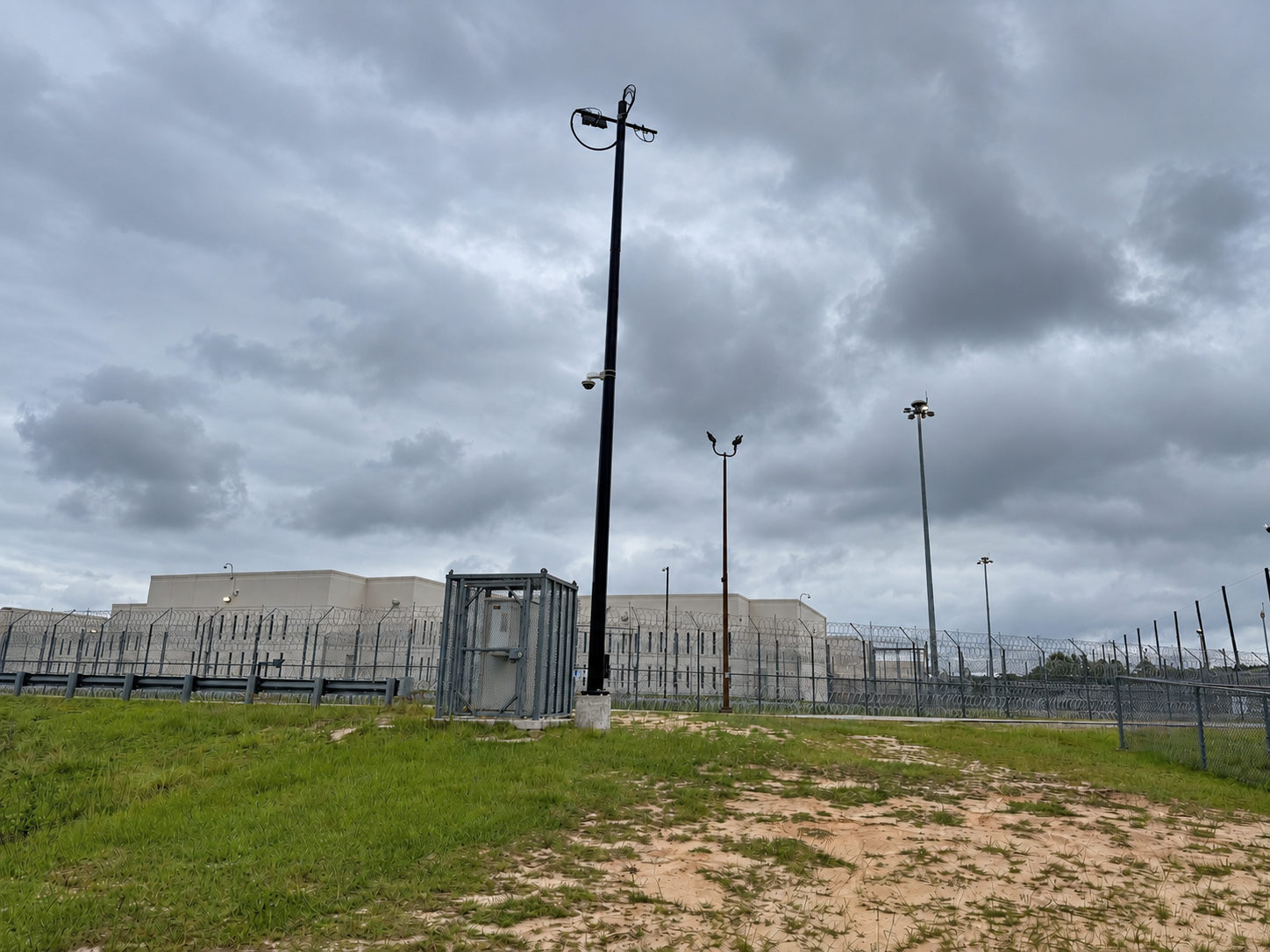
The Georgia Department of Corrections (GDC) has deployed PROscan correctional cellular interdiction technology from SDF at 18 GDC facilities, with additional sites planned through 2026. | Photo Credit (all): Courtesy of SDF
By Lindsey Coulter
Correctional agencies across the country are facing one of the most persistent threats in modern corrections: contraband cell phones and unauthorized wireless communications. Unauthorized communications are now tied to organized crime, drug trafficking, witness intimidation, extortion, fraud, staff corruption and threats beyond prison walls.
The Georgia Department of Corrections (GDC) is addressing that threat through a statewide strategy focused on technology, intelligence and long-term security. In partnership with SDF, GDC has implemented the largest correctional cellular interdiction deployments in North America, using SDF’s PROscan (Prison Roaming Operator and Secure Cellular Authentication Network) technology to identify, control and disable unauthorized wireless communications.
The deployment is operational at 18 GDC correctional facilities, with additional sites planned through 2026. Since implementation, the system has helped identify and deny service to more than 13,000 unauthorized wireless devices, with hundreds more being identified and addressed each month as new facilities become operational.
“Contraband phones are not just isolated devices anymore,” said GDC Commissioner Tyrone Oliver. “They are connected to organized criminal activity both inside and outside the facility. When agencies gain the ability to identify those devices, analyze communication patterns and respond in real time by using technology like SDF’s PROscan, it changes the entire security equation.”
Facilities are also confronting drone-assisted deliveries of drugs, weapons, cell phones and other prohibited items. Traditional searches, investigations, mail screening and perimeter security remain important, but unauthorized wireless communications require a continuous, technology-based response.
Investing in a Smarter Security Infrastructure
GDC officials began researching and piloting cellular interdiction technologies as part of a broader effort to improve operational efficiency and strengthen facility security. After evaluating multiple providers, the department moved forward with an initial order of six systems before later expanding the deployment statewide. Today, the PROscan system has been installed at 18 correctional sites, with expansion planned for more facilities. The scale of deployment reflects growing confidence in the operational value of wireless intelligence and communications control.
That distinction is critical. Facilities must stop illicit communications without disrupting legitimate users, staff operations, emergency calls or lawful communications outside the facility. PROscan gives agencies a precise way to identify unauthorized devices, isolate them and deny service while maintaining critical communications that must remain operational.
“Our Secure Cellular Authentication Network was designed specifically for the correctional industry,” said Oren Pelleg, Chief Executive Officer of SDF. “We are proud to support GDC and to work closely with AT&T, T-Mobile and Verizon to deliver a secure, effective and scalable solution for correctional facilities.”
It is critical for correctional agencies seeking to balance security operations with public safety requirements. Signal jammers are prohibited by law, and they create problems because they disrupt critical communications and emergency communications. Agencies from small to large, like GDC, are looking at intelligent systems like PROscan that can identify unauthorized devices, isolate them and deny service without negatively impacting legitimate operations.
GDC has also incorporated collected contraband device data into broader intelligence and fusion-center operations, with support from GHOST by VIA Science, allowing wireless activity to be evaluated alongside other correctional intelligence sources creating actionable intelligence and improving public safety.
“Wireless interdiction is no longer just about stopping a phone call,” Commissioner Oliver said. “The intelligence value becomes equally important. Agencies can use the information provided by tools like PROscan to proactively identify criminal networks, investigate staff corruption concerns and better understand operational risks that may otherwise stay hidden.”
Each disabled contraband phone can disrupt criminal communications, limit illegal coordination, reduce intimidation efforts, interfere with trafficking operations and provide intelligence that helps officials understand larger threat patterns. The deployment also helps GDC move from a reactive search-and-seizure model to a proactive model based on visibility, trend analysis and faster response.
Planning for Long-Term Facility Security
As correctional systems modernize aging infrastructure and develop new facilities, wireless communications management is increasingly being considered alongside cameras, perimeter controls, access control, fire alarms and emergency communications systems.
“Any new prison or jail project needs to evaluate wireless interdiction the same way it evaluates cameras, gates or fire alarm systems,” Commissioner Oliver said. “Wireless communications are part of the operational environment now. If facilities are not planning for that during design and construction, they are going to face more difficult and more expensive challenges later.”
The GDC deployment required facility coordination related to power and equipment placement. Facilities generally require multiple tower and antenna installations at each site. For project teams, that coordination creates additional considerations related to infrastructure planning, equipment hardening and long-term operational scalability.
Partnership and Operational Support
The GDC project demonstrates that successful interdiction programs require more than equipment. They require provider and carrier coordination, installation support, training, data reporting, system maintenance and ongoing operational engagement.
“Correctional agencies need partners like SDF, that are willing to invest time and resources into the relationship,” Commissioner Oliver said. “Technology deployments in corrections are not one-time events. Facilities evolve, threats evolve and operational needs evolve. The vendor relationship has to evolve with them.”
While large-scale deployments often receive the most attention, many agencies continue to face budget limitations that complicate technology adoption. To address those concerns, SDF has developed multiple solutions, including temporary and fixed assessment systems, which can be acquired via service agreement or direct purchase, supporting an agency with varying operational needs and funding structures.
“Contraband phones remain one of the most significant security threats facing correctional agencies today,” said David Gittelson, Vice President of Business Development at SDF. “After over 15 years of working in the industry, it is exciting to see the progress SDF has made in less than 24 months helping agencies identify, control and disable unauthorized wireless communications.”
From assessment-based deployments to full PROscan implementations, Gittelson says that SDF’s goal is to provide every agency with a practical path toward improved security, regardless of facility size or budget. “As the only fully vertically integrated provider of cellular interdiction solutions, SDF is uniquely positioned to support that mission,” Gittelson said.
“As the industry moves forward, correctional facilities are going to become increasingly technology-driven,” added Commissioner Oliver. “The goal is not simply to add more technology, but to create safer environments for staff, inmates and communities through smarter and more connected systems.”
This article was produced in collaboration with GDC and sponsored by SDF. It was originally published in the 2026 Design & Construction edition of Correctional News. To learn more, visit www.sdf-tech.com or contact David Gittelson at [email protected]