






From Program to Platform: The Evolution of Falcon, Inc.
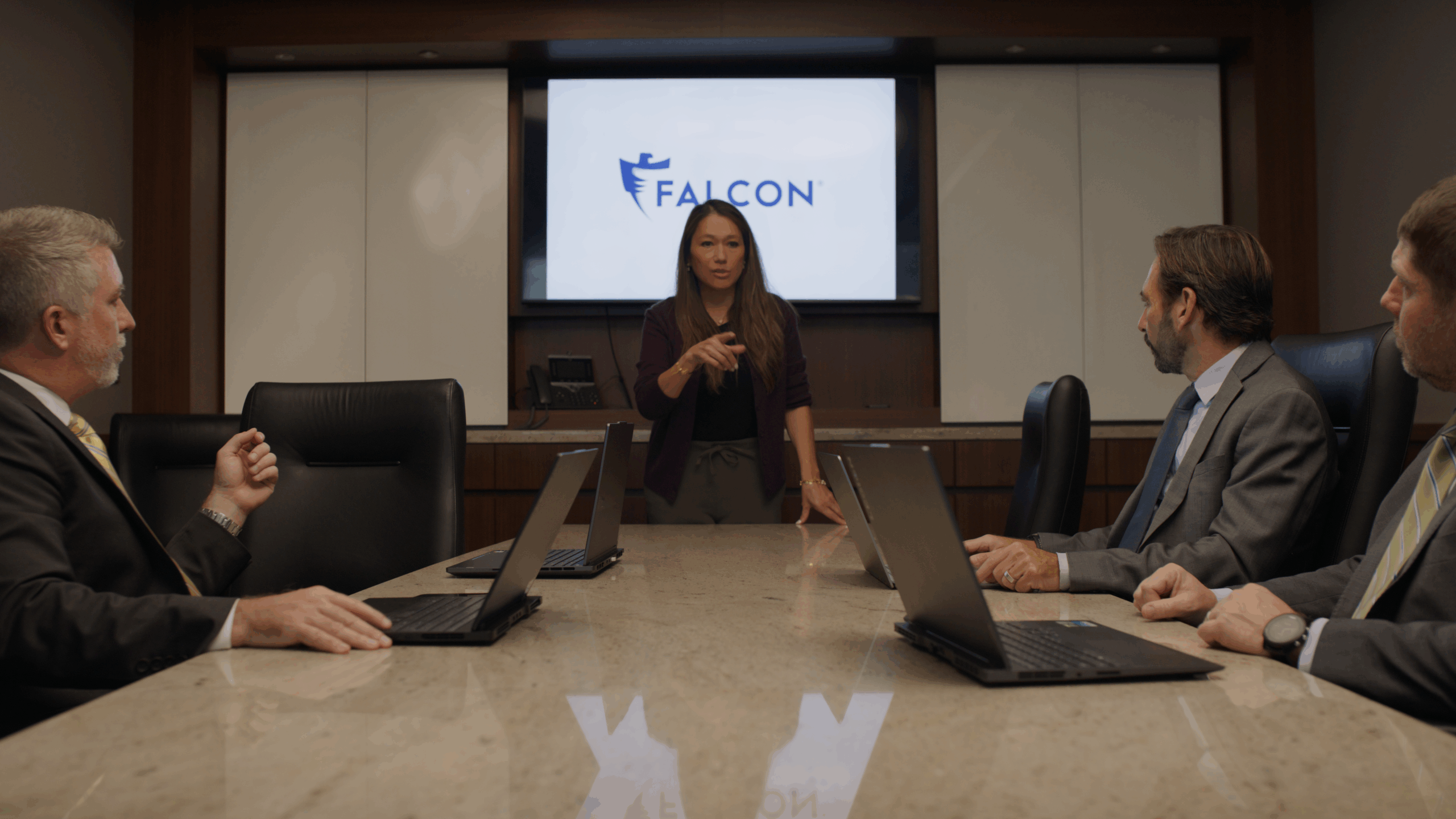
Dr. Falcon has built a team of former sheriffs, commissioners and secretaries that are peers of jurisdiction decision-makers. | Photo Credit: Falcon, Inc.
By Lindsey Coulter
Dr. Elizabeth Falcon, Psy.D., CCHP-MH, MBA, is a nationally recognized Correctional and Forensic Psychologist with more than 20 years of experience developing, implementing and managing behavioral health programs. As Chief Executive Officer and Founder of nationwide consulting and management firm Falcon,Inc. — which brings together leaders in healthcare, behavioral health, security and correctional practices to address medical, mental health services and security — Dr. Falcon has carved out a critical niche within the justice and corrections industry.
“My journey into correctional mental health was driven by a calling to make a difference,” Dr. Falcon said. “I’ve long been passionate about supporting incarcerated individuals living with mental illness, and I’m captivated by the complex interplay of psychological and sociological forces that shape criminal behavior.”
In founding the company in 2017, Dr. Falcon had specific goals: to elevate mental health, healthcare and security practices in the industry. Over time, that vision evolved from improving individual programs to systemic transformation.
“We’re not just consultants; we’re partners in entire system reforms,” she explained. “We help facilities rethink healthcare, correctional practice, safety and humanity, which all intersect, and we bring together experts who understand both the clinical and operational or institutional sides of the work.”
This sort of innovative thinking has always been at the heart of the company’s mission, and in April, Falcon, Inc. launched Falcon Technologies, a new venture born from the idea “that when clinical and operational brilliance converge with cutting-edge technology, we can revolutionize solutions for the field and how correctional systems operate,” according to Dr. Falcon.
The company’s Suicide Predictive Framework Tool aims to transform how facilities detect and respond to suicide risk, and next year, Falcon Technologies will launch its Violence Predictive Framework Tool, designed to proactively identify signs of aggression and prevent violence before it escalates. The team is also actively collaborating with Virtual Reality and Augmented Reality experts to tackle staffing challenges.
“Falcon Technologies is just not simply developing tools — we’re building a future where technology, data-driven intelligence and human-centered work can go hand in hand to create safer, more responsive environments,” Dr. Falcon said.
Correctional News spoke with Dr. Falcon about the evolving mental health landscape, moments of measurable change and progress, and determining program efficacy.
CN: How do you evaluate whether a new treatment or intervention model is ready to be implemented in a correctional setting?
DR. FALCON: Evaluating a new treatment or model for a correctional setting starts with a deep dive into peer-reviewed research, outcomes data and real-world case studies. But beyond this, I assess operational fit: Can it be adapted inside a correctional facility? Does it work within the confines of a jail or prison? Will it resonate with staff on the ground? Can it be implemented effectively without disrupting workflow or creating additional work for an already overburdened workforce? Is it sustainable? Lastly, is it scalable? I also look at facility and staff readiness for a new model and training capacity, because even the best model will fail without buy-in and proper implementation.
Before full rollout, I often pilot the program in a controlled setting, tracking key metrics identified both by me or my company and the client. If the data shows promise and the model aligns with the facility’s culture and resources, then it’s ready to scale. I believe that success in implementing a model isn’t just about having a good model; it’s about finding what fits the specific facility, works in the current environment, and can be carried out effectively by staff inside the facility.
To read more about Dr. Falcon’s strategies for shifting industry mindsets, as well as some of her most important personal and professional milestones, read the rest of the interview in the November-December Healthcare edition of Correctional News.