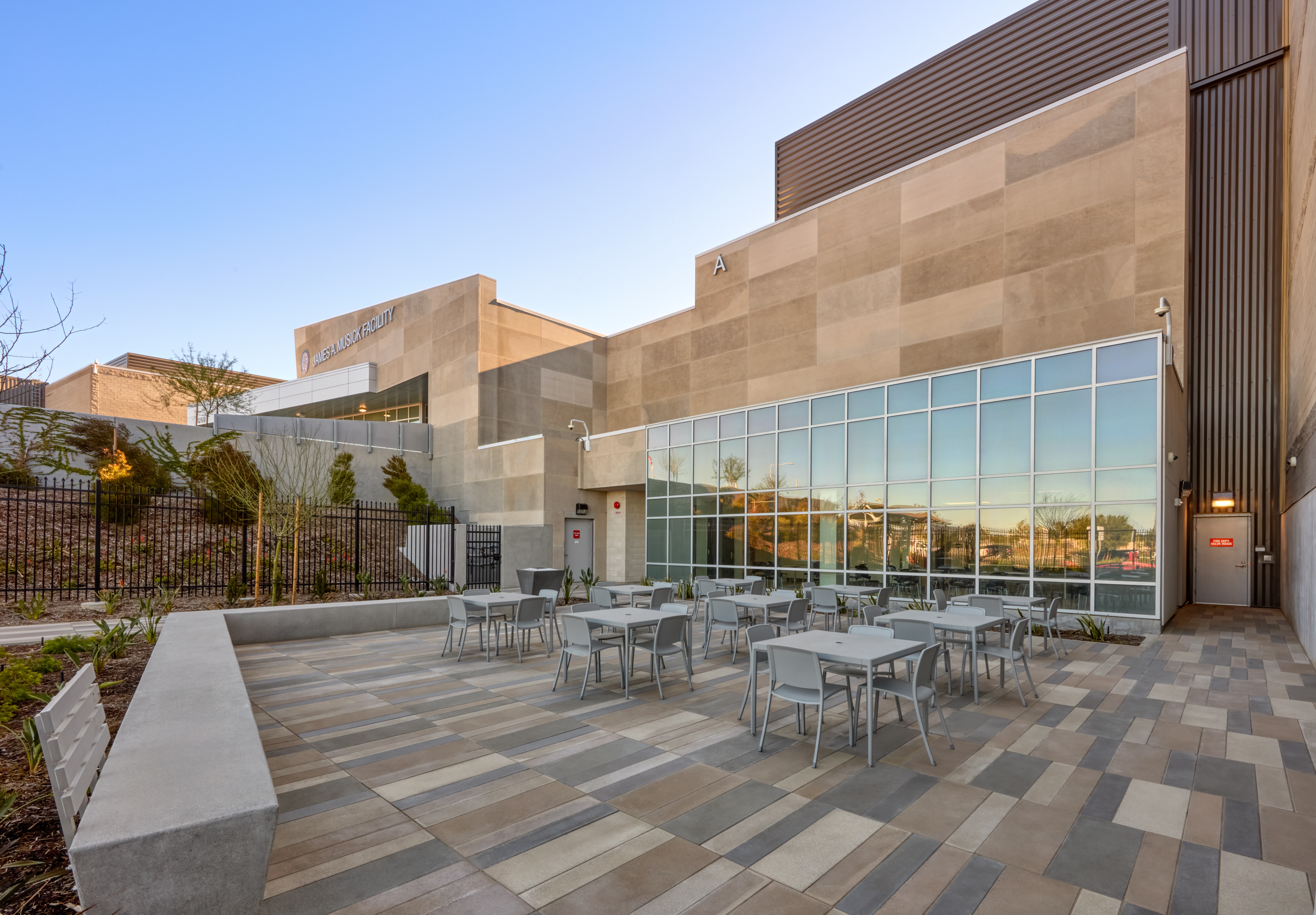
James A. Musick Facility Named First-Ever Facility of the Year by Correctional News Readers
By Lindsey Coulter
Correctional News is proud to announce the James A. Musick Facility in Orange County, Calif., as the winner of the inaugural Readers’ Choice Facility of the Year award.
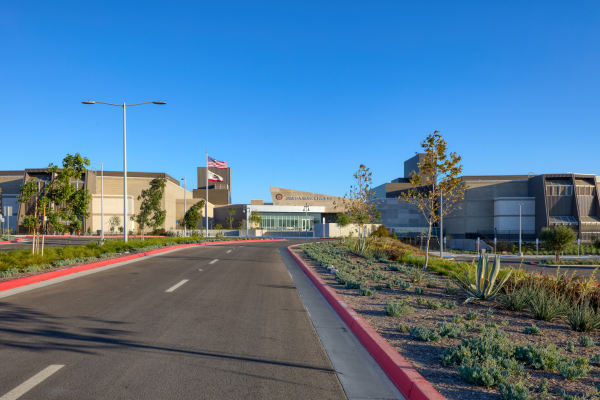
The project, which was first featured in the May/June issue, received 1,480 of 3,757 total votes, reflecting strong industry recognition for a facility that has drawn national attention since opening in late 2024. At 324,000 square feet, the Musick Facility represents Orange County’s largest public safety construction project to date and marks a fundamental shift in how the county approaches incarceration, care and long-term operational planning.
The $290 million, 896-bed complex replaces a decades-old collection of temporary structures with a permanent campus emphasizing rehabilitation, mental health services and humane incarceration. The project includes two housing buildings, an administrative center, a maintenance warehouse and a central plant. HDR joined the project as architect after construction documents were complete, while Bernards Brothers served as general contractor. Funding was provided through AB 900, SB 1022 and county resources.
Beyond its scale, the Musick Facility has emerged as a case study in how targeted design changes, operational priorities and collaboration can reshape a correctional environment without restarting the design process.
A New Operational Model Takes Hold
After its first full year of operations, the Orange County Sheriff’s Department is already reporting measurable improvements tied directly to the facility’s design.
“The facility design has exceeded expectations,” said Commander Mark Alsobrook. “The delivery of services such as inmate programming, healthcare, meals and visitation to the housing units limits foot traffic throughout the facility. This has allowed us to maximize out-of-cell time and participation in rehabilitative programming.”
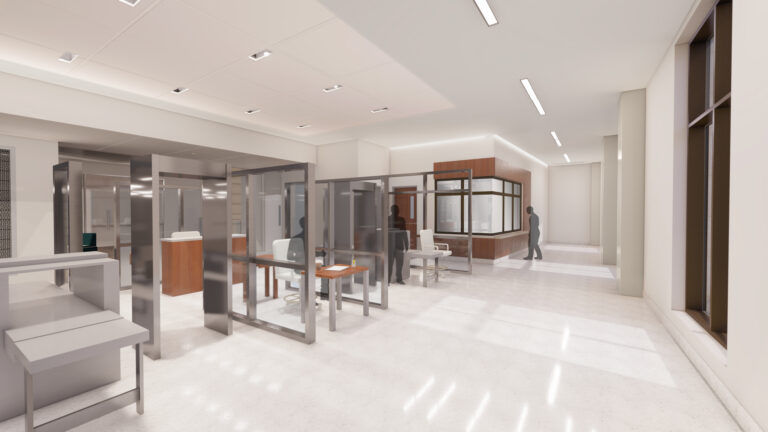
The Musick Facility introduced a hybrid direct-supervision model that blends traditional indirect supervision — with correctional staff in control booths — and direct supervision, placing deputies within housing units. Services that once required inmate movement across the facility are now delivered directly to housing units, reducing circulation and improving safety.
“Also, staff engagement has increased significantly resulting in the elimination of ‘jail politics’ and increased safety for staff and residents,” said Greg Yi, Section Manager for the Orange County Sheriff’s Department Facilities Planning team.
According to Yi, the operational changes have also shifted community perception. Public opposition initially delayed the project, but feedback has evolved as the facility has become operational.
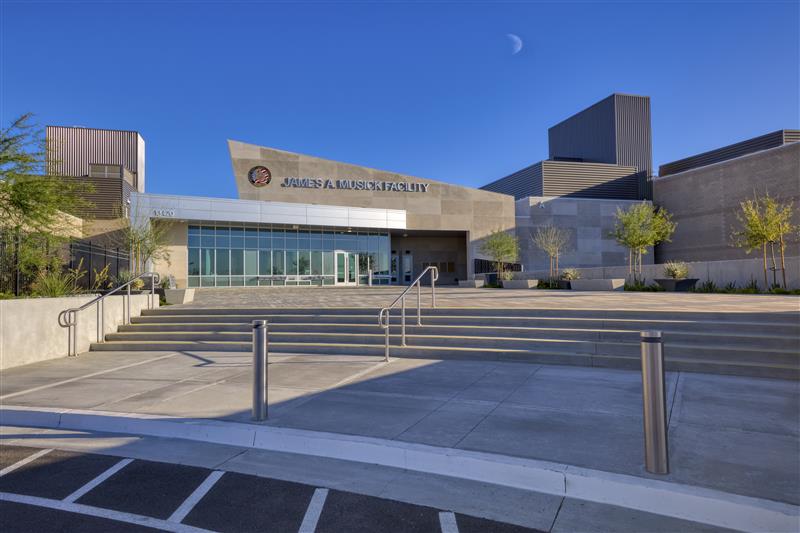
“We went from ‘not in my backyard’ to receiving positive feedback from the surrounding communities,” Yi said. “This success stemmed from prioritizing the architectural design to blend in with the existing communities and not look like a jail.”
Where inmates were once housed in tents and converted trailers, the new facility presents a campus-like environment using complementary materials, colors and textures. Landscaped green buffer zones provide separation from neighboring development without a harsh, high-security appearance.
The approved master plan allows the Musick campus to expand up to 2 million square feet as future needs arise, including a Sheriff’s station, additional housing, inmate programs and visitation buildings, a worker-housing complex, commissary and laundry facilities.
Designing Within Fixed Parameters
The Musick project evolved under uncommon circumstances. HDR joined after construction documents were completed, stamped and ready for construction. Rather than reopening the design, the team focused on targeted interventions that could improve safety, operations and occupant well-being while preserving schedule and budget.
“I think the biggest one I would say is the direct supervision model,” said Swapnil Ukey, Project Manager at HDR. “Orange County didn’t have that in their previous facilities, and they were very specific about having that as part of this project.”
Budget constraints shaped nearly every decision. With costs already under scrutiny, the team evaluated where efficiencies could be achieved without undermining long-term performance or treatment goals.
“When you do that, that’s where you are trying to cut down on things that are not as important in the scheme of things when it comes to cost,” Ukey said. “But as designers, we know they are very important to the well-being and treatment aspect of the individuals who will be housed in these facilities.”
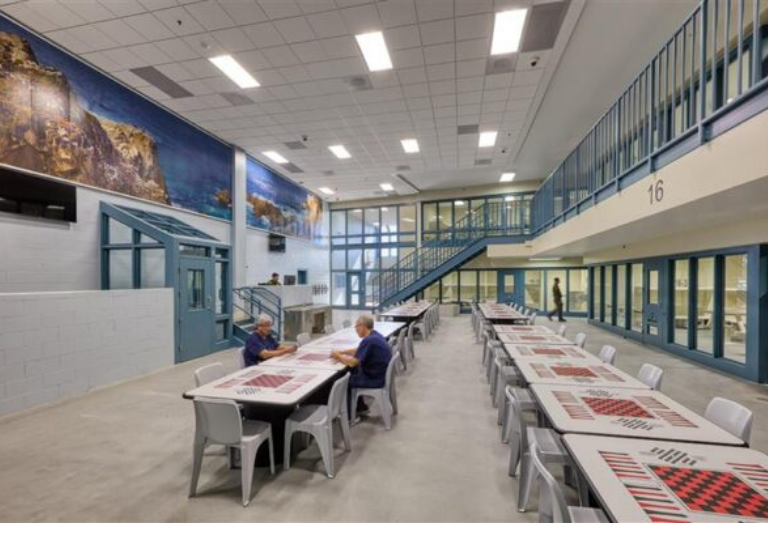
Within those limits, HDR introduced normative and behavioral health elements that had not been part of the earlier design. Murals became a defining feature of the housing units, with each unit incorporating imagery from California landscapes, including mountains and coastal scenes.
“Every housing unit has a different mural or an image from California,” Ukey said. “Just adding those little things as part of the design really enhanced the space.”
Daylight access was another priority. Outdoor recreation yards were placed adjacent to dayrooms, allowing natural light to penetrate deep into occupied spaces without increasing square footage.
“The 100% construction documents were done and stamped, ready to go,” Ukey said. “We stepped in at a point where we didn’t want to redo the whole thing, but we also didn’t want to compromise the design.”
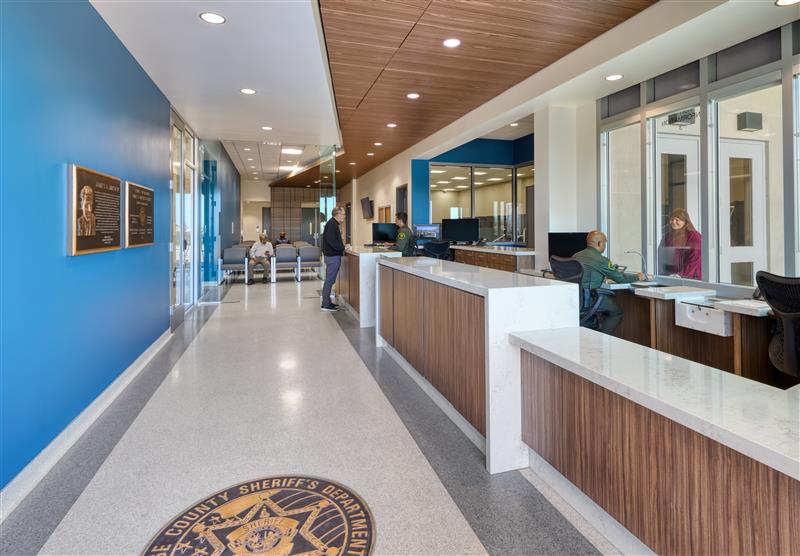
The project team also expanded its focus on staff facilities. County leaders emphasized that the administration building needed to support employees for decades, prompting upgrades to daylighting, materials and finishes in offices, training rooms and break areas.
“The staff piece was very important to Orange County,” Ukey said. “They wanted to make sure the administration building gave their staff the best facility they could have for the next 10, 20 or 30 years.”
Built for Longevity and Growth
Although no formal lifespan was established, the facility is expected to perform for at least 50 years, guided by a master plan that envisions a campus exceeding 7,000 beds.
“One of the unique things of that design is that it already considers future expansion,” Ukey said. “Some of the supporting spaces were sized and planned with that master plan in mind.”
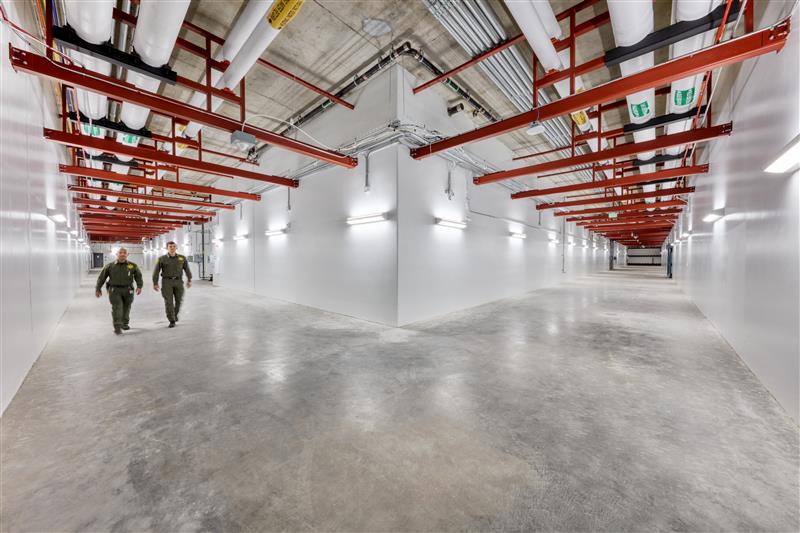
That planning includes infrastructure largely unseen by occupants. Underground tunnels were constructed beneath the facility but remain unconnected until future housing units are built. Ultimately, the tunnel system is intended to support food service and operational circulation across an expanded campus without disrupting surface activity.
Durable materials, upgraded utilities and realigned internal roadways further support long-term performance and phased growth.
Solving Problems in Real Time
One of the most consequential challenges emerged late in construction: smoke control. Although a smoke exhaust system had been specified in earlier documents, it failed to perform as required once installed. Without a compliant system, the facility could not open.
“In theory it was going to work, but in the field it didn’t,” Ukey said. “Without the smoke exhaust, the building wouldn’t have opened. The fire marshal wouldn’t have signed it.”
HDR developed an in-field redesign that resolved the issue without halting construction. The solution has since become a reference for similar projects.
“That’s not how we would have designed it from scratch,” Ukey said. “But because of that unique challenge, we were able to come up with a solution that actually worked and can be used again.”
The project was bid in mid-March 2020, just as COVID-19 shutdowns began nationwide. Supply chain disruptions and material delays followed, extending the schedule but not derailing progress.
Now fully operational, the Musick Facility stands as an example of how adaptability, collaboration and focused design interventions can transform a correctional facility — even when the starting point appears fixed.