



Rethinking Steel in Today’s Correctional Facilities
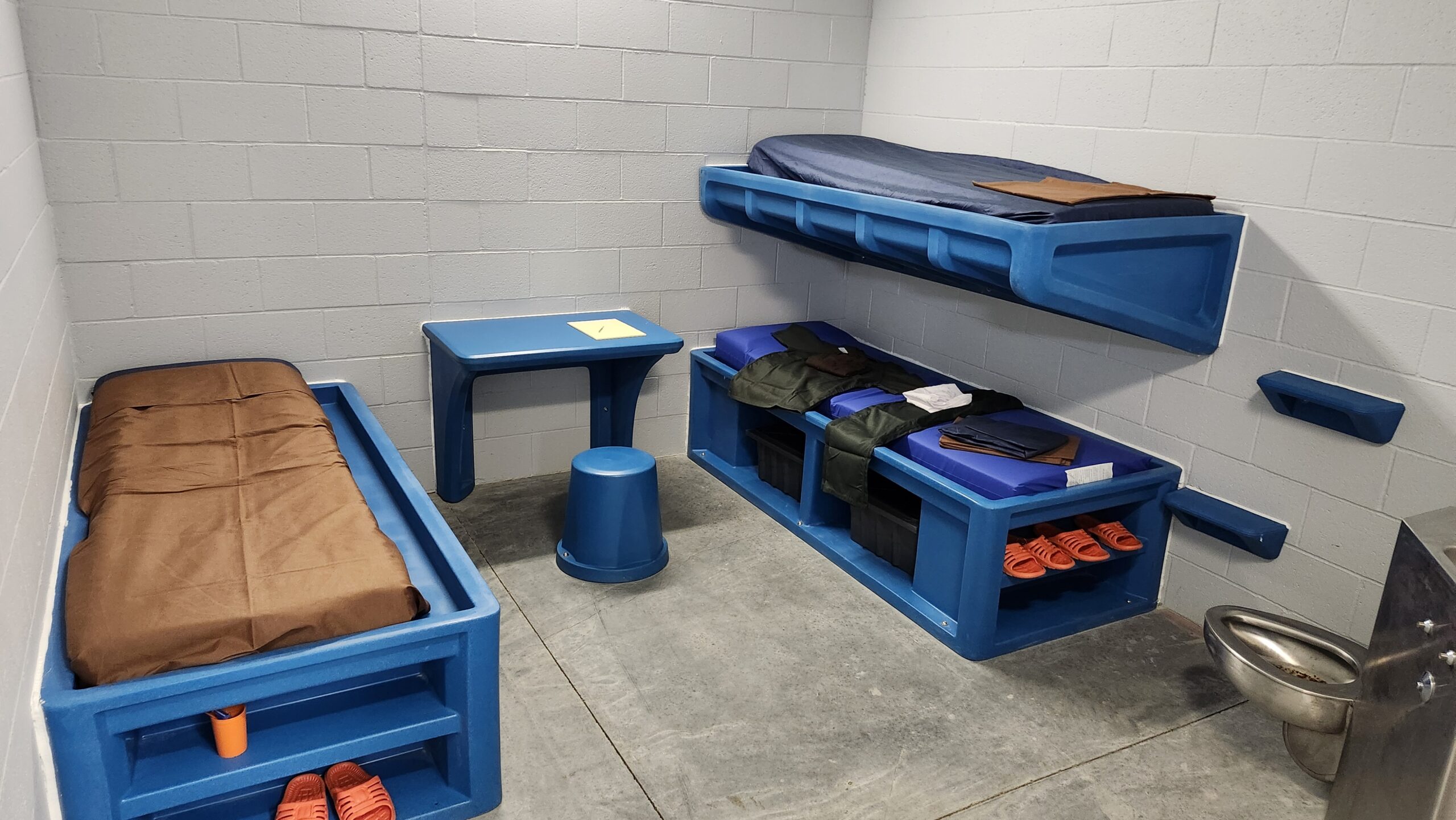
Furniture can be one of the more cost-effective areas to improve in a correctional facility, delivering real operational benefits without the scale of investment required for major building systems. | Photo Credit: Cortech
By Kevin Claffy
For much of modern corrections history, facilities were built around steel. It represented strength, permanence and control. For decades, it solved real problems in demanding environments. In many ways, steel earned its place.
But what worked for durability does not always work for safety, staffing and liability today. Steel solved yesterday’s problems, but today’s problems are different.
Most facilities are now managing higher turnover, more complex populations, tighter budgets and greater legal exposure. In that environment, furnishing decisions are no longer just about what lasts the longest. They are about what reduces incidents, improves day-to-day safety and lowers long-term risk.
Too often, furniture decisions are treated as secondary to “bigger” building systems. In reality, they shape more daily behavior than almost anything else in a housing unit.
How Operating Conditions Are Changing
For decades, steel dominated correctional interiors because it solved the problems facilities faced at the time. It was durable, predictable and built for environments focused primarily on control and containment.
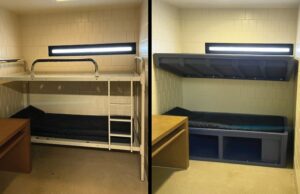
In many cases, that approach made sense.
Today’s facilities face chronic staffing shortages, constant onboarding of new officers, frequent audits and increasing legal scrutiny. Many agencies are also expanding programming and treatment models, including initiatives like the JUST Program in DuPage County, Ill. These programs reflect a broader focus on rehabilitation, accountability and long-term outcomes.
Administrators are balancing safety, liability, training and retention with limited resources. Many of these challenges surface quietly over time, and then all at once during a busy shift.
Excessive noise, frequent repairs, blind spots and worn components do more than affect how a space looks. They affect how people work. They contribute to incident reports, overtime and staff fatigue. They create small problems that slowly become big ones.
As a result, facilities are reevaluating how materials and layouts support daily operations, not just how they perform on paper.
Why Normalized Environments Matter
In corrections, “Normative environments” simply refer to spaces that feel more orderly and familiar, and less chaotic and institutional. They are designed to reduce unnecessary stress, improve predictability and support consistent supervision.
Normalizing an environment is not about lowering standards or relaxing expectations. It is about creating environments that help staff maintain consistency and control without constant intervention.
Most facilities invest heavily in security systems, mechanical systems and building infrastructure. Those investments are essential. They are also largely invisible in daily operations.
Furniture is different. It is one of the first things people notice. It is one of the things they interact with most. It shapes how a space feels and how it functions.
It is also one of the more cost-effective areas to improve. When selected thoughtfully, furnishings can deliver real operational benefits without the scale of investment required for major building systems.
How Facilities Evaluate Products Today
As operating conditions have changed, so has how most facilities make purchasing decisions. It is less about specifications on paper and more about what holds up on a real shift.
Today, most administrators and supervisors look at furnishings through questions like:
- How often does this end up needing repair?
- Can it be taken apart, altered or turned into something dangerous?
- Does this make supervision easier or harder?
These questions usually come from experience. The facilities that I work with can tell you exactly where contraband comes from and what they would change if they could.
Products that create safety risks or frequent failures carry costs that go far beyond the purchase price. They affect staff confidence, consistency and exposure to liability.
When selecting products, facilities are managing risk, daily pressure and what the building will demand from them over time.
What We See in the Field
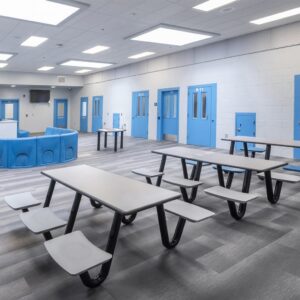
Across many systems, metal components are routinely dismantled and repurposed into improvised weapons. Each incident creates real risk for staff and triggers reports, investigations, repairs and added strain.
This is not rare. It is part of the reality many teams deal with.
Environments that rely on one-piece molded furnishings significantly reduce these risks and limit opportunities for misuse.
Materials that limit sharp edges and help control noise often contribute to calmer housing units. Furnishings that are easier to clean, inspect and secure reduce maintenance demands and inspection issues.
Equally important, spaces that feel organized and intentional are easier to supervise. When layouts and furnishings support visibility and movement, officers spend less time managing avoidable problems and more time focused on safety and accountability.
These outcomes rarely show up in early design meetings. They become clear during inspections, audits and busy shifts.
Choosing the Right Tool for the Job
The conversation today is no longer about choosing steel or avoiding it.
The more productive question is how each area of a facility can best support safety, staffing and long-term operations.
Some applications continue to warrant steel. Others benefit from modern molded, non-metal solutions that better align with current operational needs. In many facilities, different housing types, security levels and populations require different approaches.
The most effective environments are the result of careful evaluation, operational input and long-term planning. What matters is deliberate decision-making, not default specifications.
Building for the Long Term
Rethinking steel is not about dismissing proven approaches. It is about adapting them to current challenges.
Facilities that perform well over time are those that remain open to learning, responsive to changing conditions and disciplined in how they manage their environments.
Steel solved yesterday’s problems. Today’s problems require broader thinking.
When spaces are designed to reduce friction and make supervision easier, the effects are lasting. Staff experience improves. Incident rates stabilize. Maintenance demands decrease. Consistency increases.
Those outcomes benefit staff, administrators, inmates and the agencies responsible for daily operations and long-term outcomes.
Facilities evaluating these issues can explore our correctional furniture here.
Kevin Claffy is a second generation leader at Cortech, a leading manufacturer of normative furnishings that works with correctional facilities nationwide.