




Arizona, Michigan DOCs Announce New Mail Procedures
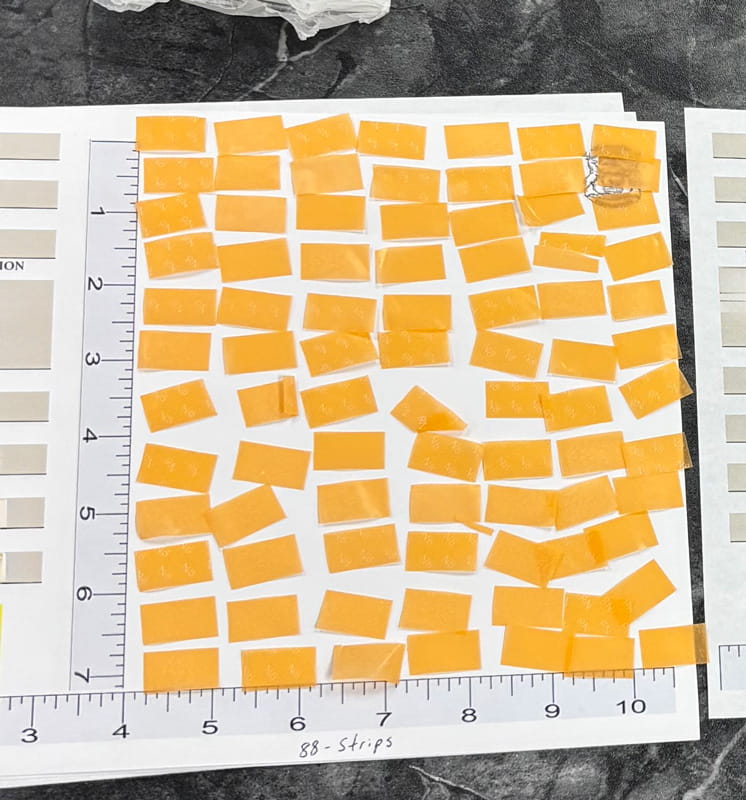
Photo: Contraband, such as these drug-containing paper strips, can be smuggled into correctional facilities via physical mail. | Photo Credit: Michigan Department of Corrections
The Arizona Department of Corrections, Rehabilitation and Reentry (ADCRR) and the Michigan Department of Corrections (MDOC) recently announced new procedures for handling and distributing mail to incarcerated individuals at their facilities.
With these moves, the two states will become the latest in the U.S. to ban or restrict physical mail in an effort to combat the introduction of contraband in jails and prisons.
In Arizona, the ADCRR will move to a digital mail platform for all incoming mail (except for legal mail, parcels, publications and official government mail), effective Dec. 15. Mail intended for inmates in the ADCRR system will be sent to a digital mail processing center in Dallas, Texas, where it will be sorted, scanned in color and uploaded to an inmate’s secure tablet, where it can be permanently saved. The ADCRR will provide access to digital kiosks or will print mail in black and white so that inmates who do not have a working tablet are still able to access their mail.
Once the new policy goes into effect, ADCRR will offer a one-month grace period where improperly sent mail will continue to be processed and distributed in Arizona facilities. After Jan. 15, 2026, all improperly sent mail will be returned to sender.
The Department said in a statement that the changes are being made to help reduce contraband and increase safety and security in ADCRR facilities.
“While no single effort can completely stop the transmission of dangerous contraband into Arizona’s prisons, ADCRR is committed to implementing every feasible measure to improve the health and safety of our incarcerated population, visitors and staff,” the statement read.
In Michigan, MDOC will be implementing a new policy effective Jan. 6, 2026, requiring all confidential and legal mail sent to incarcerated individuals to be provided to them as a photocopy, with the original mail shredded.
When announcing the new policy, MDOC pointed to recent cases of individuals using fake confidential mail, including mail used by attorneys and other organizations, to smuggle drugs into facilities through paper, stickers and other mailable items. By preventing original mail from making its way to inmates, MDOC says it will curtail these illegal efforts.
“Illicit drugs have fundamentally changed over recent years to include synthetic sprays and strips which are easily added to paper and concealed in mail,” said MDOC Director Heidi E. Washington. “These drugs pose a great risk to our staff and those living in our facilities; this is a commonsense policy that will reduce the chance of sickness and death by those who come in contact with these substances.”
Last year, MDOC implemented the TextBehind DOCS system, a new technology to confidentially manage and verify privileged mail being sent to inmates. MDOC says that it will keep that system in place along with the new photocopying policy to provide multiple layers of security.
The North Carolina Department of Adult Correction has also been utilizing TextBehind technology to scan non-legal mail at its facilities since 2021. Other states that have enacted policies in recent years to digitize incoming mail for incarcerated people include Florida, New Mexico, Missouri, Pennsylvania and Texas.