





How Should Corrections Think About TV? Advice for Administrators, Architects and Builders
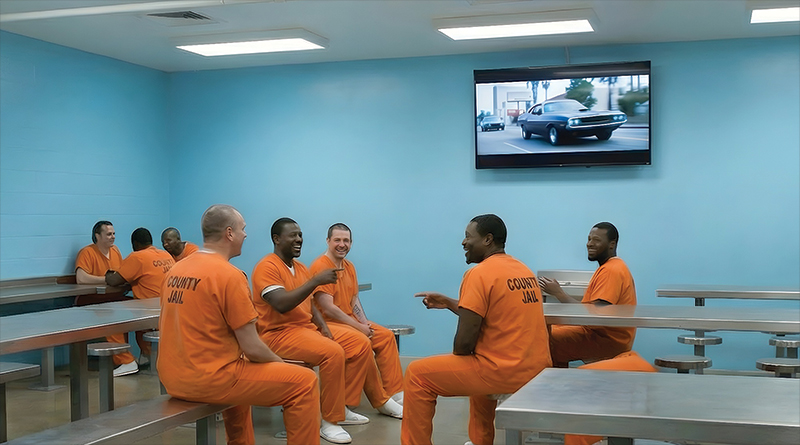
Broadcast television is still an integral element of the correctional environment, providing entertainment for the incarcerated population, but that system is rapidly changing. | Photo Credit (all): Courtesy of West Pond
By Thomas Herzog
A Familiar System Is Changing
For prisons and jails, TV has been a dependable utility for decades: a simple system of coaxial cables, splitters, amplifiers and an antiquated head-end device tucked behind a locked door.
That familiar configuration is about to transform in a meaningful way, driven by a triad of consumer, business and technology changes that are unfolding right now. It’s important for correctional officials to understand what is changing, the unique exposure for corrections and what stakeholders should do now to prevent expensive retrofits, loss of content options or security gaps.
“Corrections television is no longer just about entertainment — it is an opportunity to inform and to educate,” said Steven Hastings, Chief Executive Officer of West Pond. “With the right technology, TVs have become an affordable, dependable and secure platform to communicate with the incarcerated, with staff and with visitors according to need.”
Consumerism
Recent data on consumer trends show that linear broadcast television is still very much relied upon, even as streaming grows. However, findings suggest that consumers increasingly expect content to be available seamlessly across platforms rather than through separate systems.
This trend is already evident in corrections, as facilities seek streaming services for movies and sports events — just like people do when viewing at home. Tablets have this capability but may not be an option for a correctional system on a tight budget, or for those with limited bandwidth. A smart TV linked to the internet sounds like a solution but presents security risks to the network that outweighs any benefits of the smart TV, such as unmonitored access to the internet for the incarcerated.
The Digital Transformation of Business
The broadcast television industry is rapidly moving from RF to digital infrastructure. As smart-TV platforms enable a dynamic shift from an entertainment-only system into a new model that can deliver education, enhance communication and promote health and wellness, cable and satellite TV providers are shifting their business models to include more streaming services.
Senior living centers, hospitals and hotels are already making the transition to align TV services with broader digital-service platforms to enhance resident services, increase engagement and improve operational efficiency.
Can corrections TV evolve similarly? We think so.
Emerging Technology
Technology has emerged that can transform corrections television into a managed, secure digital service, providing facility operators the ability to select what TV services to broadcast and when. No longer just a utility, this technology can transform a correctional TV system into an enterprise-class service delivery network for messages, treatment, education and public safety initiatives.
The consequence of these changes is not simply “better picture quality” for the incarcerated. Thoughtful planning and proper system design can provide correctional systems with flexibility and control over their TV systems that they associate with enterprise class systems like telecommunications and IT, but only if done correctly.
Making Sense of It All
Unlike homes, facilities cannot simply “buy a new box” when technology or compatibility changes. Unlike hotels, facilities cannot treat TV distribution as a guest amenity that can be quietly swapped out behind the scenes.
Correction-oriented television solutions need to emphasize secure network designs, hardened displays/enclosures, remote management capabilities and include device and content controls. These are not attributes of off-the-shelf television solutions.
What is Needed?
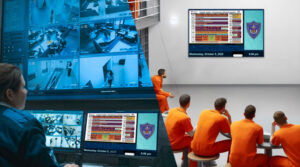
A correctional TV system should have the capability and flexibility to capture free over-the-air broadcasts, cable or satellite TV as desired, as well as free curated content from sources such as YouTube. The system should have the ability to seamlessly add subscription-based media, and it should provide the ability to create and customize TV channels internal to the department for programs such as education, treatment and religious services. It should also allow for the centralized management and control of both devices and media content.
Many of the corrections TV systems in operation today do not meet these criteria, in part because they were designed and managed as an off-the-shelf utility. Security was not an issue since the distribution technology was a one-way broadcast, but this is changing.
A Smart Corrections TV System
Seldom does a solution emerge ahead of a problem. Fortunately, that is precisely what West Pond Enterprises has developed with its FlexStream Corrections TV Solution. The system is powered by West Pond’s proprietary smart headend TV technology. When coupled with West Pond’s control modules and content filtering software, it stands alone as the most secure, dependable and affordable corrections TV solution within the United States.
A smart headend is not just a device placed in the equipment rack in a communications room. It is a software-defined, network-aware control pointthat unifies TV operations for everything a facility shows on its screens (and optionally delivers to secure tablets or kiosks). In corrections, a smart headend becomes the policy engine for who can watch what, where and when — while insulating the facility from external changes in standards and rights.
If the old headend was plumbing, the smart headend is traffic control. It does not just move signals; it decides which signals go where, how they are secured, which lanes they use and what happens when something breaks. That shift is captured within the FlexStream Solution — a hybrid architecture that gives correctional leaders options they never had in the coax-only era.
Moving Forward
Correctional departments, prison and jail architectural firms, and builders are not experts in broadcast TV. Fortunately, they do not have to be. West Pond Enterprises is a company that is focused on prison and jail TV systems and can help any organization navigate the path forward.
Thomas Herzog is a corrections consultant and a retired Deputy Commissioner with the New York State Department of Corrections and Community Supervision.
This article was sponsored by West Pond Enterprises and originally published in the 2026 Public Safety & Detention edition of Correctional News. To learn more, contact West Pond Enterprises at westpond.com/about/contact-us/ or call (978) 562-4306 ext. 507.