






Accessibility Is Helping Define the Future of Modern Corrections
By Chad Emmons
Correctional leaders today are balancing a familiar challenge: delivering more services, supporting increasingly diverse populations, managing staffing pressures and improving outcomes while operating within finite resources.
As agencies modernize their facilities and expand access to education, communication, healthcare and rehabilitative programming, many are discovering that accessibility is not a separate initiative. It is a foundational capability that strengthens how the entire facility operates.
The most forward-looking agencies no longer view accessibility primarily through the lens of compliance. Instead, they are using it as a tool to improve communication, increase participation in programming, reduce operational friction and ensure that every individual can fully engage with the services designed to support successful outcomes.
In many ways, accessibility is becoming a measure of operational maturity. Facilities that build accessibility into daily operations are often better equipped to deliver programs consistently, respond quickly to individual needs, support staff efficiency and create a more reliable experience for everyone who enters their care. Rather than retrofitting accommodations after barriers emerge, they are proactively designing systems, technology and workflows that expand access from the start.
That shift is playing out across correctional systems nationwide. Louie Pereira, ADA Coordinator for the Monterey County (Calif.) Sheriff’s Office, recently described how technology has transformed communication for deaf and hard-of-hearing individuals in his facility. Through video remote interpretation, a live American Sign Language interpreter can now be reached through a secure tablet, kiosk or mobile device at any hour of the day.
A request that once depended on scheduling, coordination and availability can now be addressed immediately. The result is not only improved access for incarcerated individuals but a more efficient process for facility staff.
The impact extends well beyond communication. As correctional systems continue investing in digital infrastructure, accessibility tools are helping agencies expand educational opportunities, improve participation in programming, support healthcare delivery, increase independence and create more consistent access to services across populations with varying abilities and needs.
The agencies seeing the greatest success are approaching accessibility as part of a broader operational strategy. Three themes consistently emerge among leaders who have made meaningful progress.
Accessibility Needs Local Leadership
Successful accessibility programs begin with clear ownership.
Leading agencies designate facility-level leaders responsible for coordinating accessibility efforts, identifying barriers, collaborating across departments and ensuring that individuals can access programs and services equitably.
This leadership does not necessarily require a dedicated office or standalone department. More often, accessibility responsibilities are integrated into the role of an experienced operational leader who understands the facility, knows how departments interact and can work collaboratively to solve challenges before they affect service delivery.
Local ownership matters because accessibility challenges are rarely identical from facility to facility. The leaders closest to day-to-day operations are often best positioned to identify opportunities, develop practical solutions and build the partnerships necessary to make accessibility part of how a facility functions rather than a process managed from a distance.
As Marc Guillaume, Director of ADA Programs at Securus, noted, “If disability were a demographic, it would be your largest minority group.” For correctional leaders focused on education, communication, rehabilitation and successful reentry, that observation carries important implications.
Accessibility Works Best When It’s Built Into Technology
The most successful agencies are moving accessibility upstream — embedding it directly into the technology infrastructure that supports daily operations.
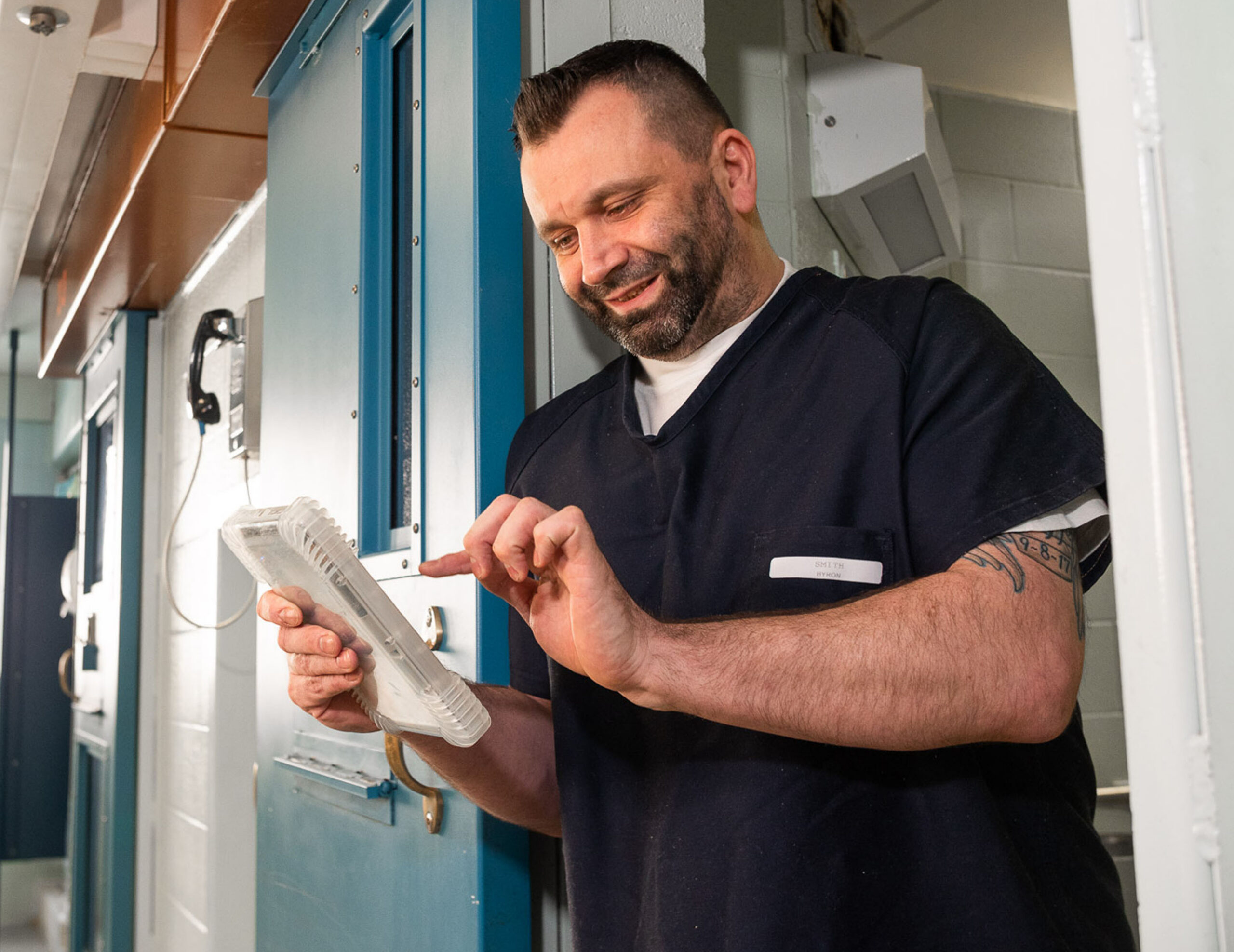
Tiffany Fackler, ADA Compliance Manager with the Washington State Department of Corrections described how secure tablets deployed throughout the system allow incarcerated individuals to independently activate accessibility settings without submitting requests or waiting for approvals.
What appears to be a small design decision creates meaningful operational benefits. Individuals receive support immediately, while staff can focus their attention on requests that genuinely require assessment and intervention.
Modern corrections technology increasingly includes accessibility features such as video relay services, speech-to-text functionality, text magnification, enhanced audio controls, screen-reader compatibility and accessible educational content. When these capabilities are built into technology from the beginning, accessibility becomes part of the user experience rather than an exception process.
Equally important, those tools must operate within the security requirements unique to corrections. Agencies increasingly need solutions that deliver both accessibility and institutional safety — without requiring tradeoffs between the two.
Technology Creates Capability — People Create Access
Even the best technology cannot create access on its own. The agencies making the greatest progress consistently emphasize staff education, shared ownership and cross-functional collaboration.
An officer who understands why an accommodation exists and how it supports facility operations is more likely to address a need efficiently. Without that understanding, a simple request can become delayed, redirected or unnecessarily complicated.
That is why accessibility leaders increasingly view training as an operational investment rather than a compliance exercise. Successful programs engage healthcare teams, educators, classification staff, operations leaders, technology providers and frontline personnel in a shared understanding of how accessibility supports both individual needs and broader agency goals.
When accessibility becomes everyone’s responsibility, access becomes more consistent.
Looking Ahead
Accessibility is often discussed as a compliance requirement, yet many correctional leaders are finding something more significant.
When accessibility is integrated into leadership structures, technology investments, training programs and operational processes, it strengthens communication, improves service delivery, supports rehabilitation and helps agencies make better use of limited resources. In other words, it becomes good corrections.
The agencies leading in this space are not simply meeting a requirement. They are building more capable, more responsive and more effective facilities — positioning themselves to better serve staff, incarcerated individuals and their communities for years to come.

Chad Emmons is a business development director at Aventiv Technologies. A recording of the webinar discussion that informed this article, “Improve Access, Reduce Risk, Rethink Accessibility in Corrections” can be viewed here.