




Water System Failure at Montana State Prison Serves as a Wake-Up Call
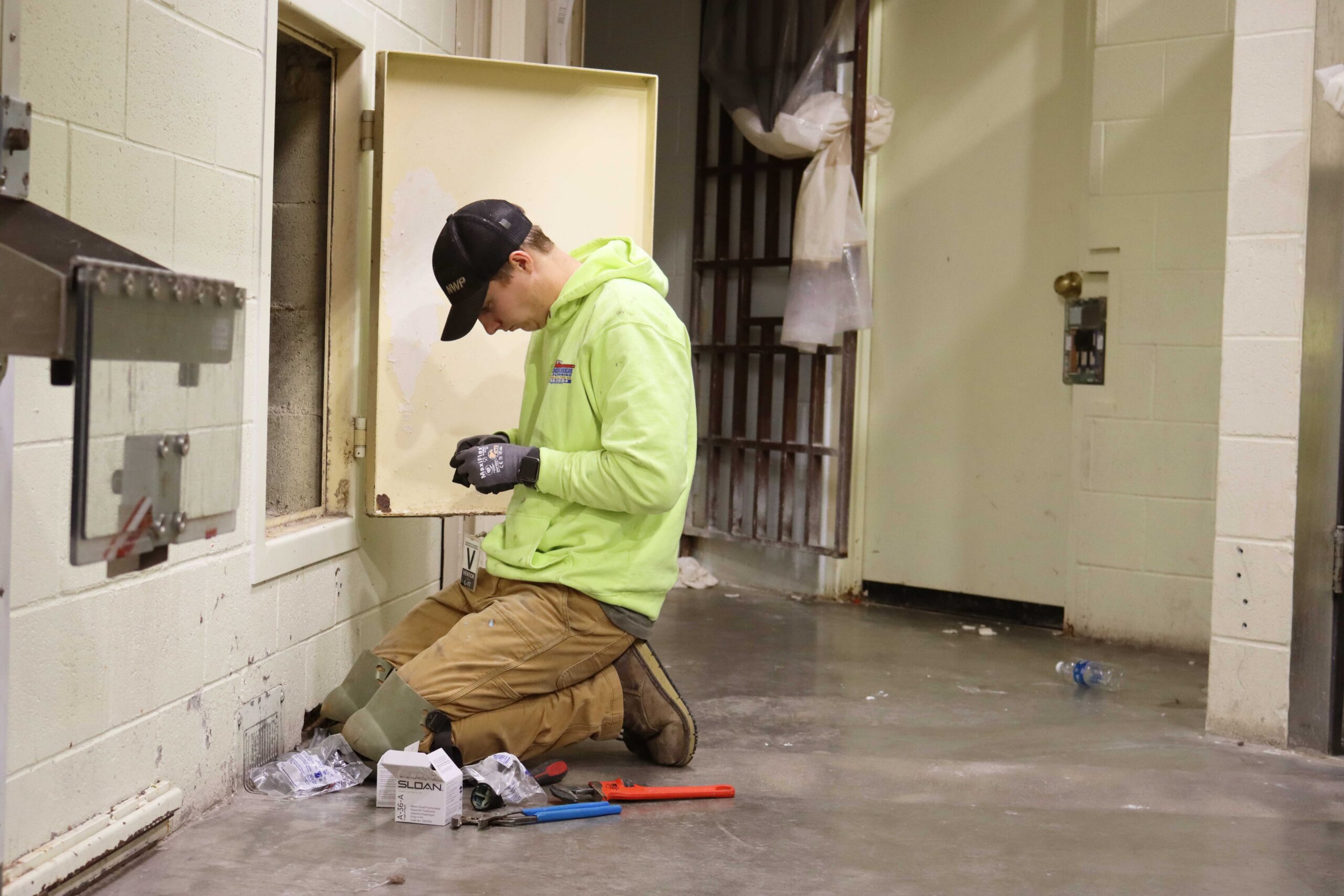
After a water system outage at the Montana State Prison in October 2025, plumbing crews worked around the clock to restore service. | Photo Credit (all): Montana DOC
By Eric Strauss
Imagine being in a town of approximately 2,000 people and, suddenly, you have no water. That’s exactly what it felt like inside the Montana State Prison in October 2025 when the water system failed on a Friday morning before most people had even poured their first cup of coffee.
As the director of a correctional department, you prepare for emergencies, you drill and you run through potential scenarios. However, nothing quite matches the moment that an entire compound loses water and you have 1,600 people depending on you to respond quickly, clearly and decisively.
That Friday, the water levels in the Montana State Prison’s main tank indicated a failure had occurred somewhere in the system. Within minutes, it became clear that this wasn’t a minor issue or an isolated break. The prison’s pipes, some laid more than 50 years ago, began failing in succession. Each attempt to isolate one break simply shifted pressure to the next vulnerable spot. Before long we were looking at a full-scale, system-wide failure. Sinks, toilets, showers and everything else went offline. It felt as though our entire infrastructure had given out all at once — and in a sense, it had.
The Immediate Response
The first challenge wasn’t just technical, it was human. Water isn’t optional in a secure facility. You can work around a lot of things, but not a lack of sanitation and not the inability for people to drink, wash or flush a toilet.
As reports came in from every corner of the compound, we had two responsibilities running in parallel. First, we had to stabilize conditions for the people living and working inside. Second, we had to quickly diagnose exactly what had failed under our feet.
Stabilizing the Situation
Within hours, we activated the department’s emergency operations plan. By the end of the day, Gov. Greg Gianforte authorized the Montana National Guard to assist, and we had convoys hauling tens of thousands of gallons of water into the main tank just to maintain minimum pressure. Inside the fence, portable toilets and mobile showers were brought in and staged across the grounds. We distributed bottled water constantly, ensuring everyone had what they needed for drinking and basic hygiene. It wasn’t ideal, but it was necessary, and our staff handled the situation with resilience and professionalism under immense pressure.
Diagnosing the Problem
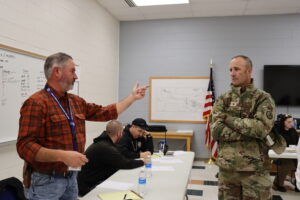
While the immediate response stabilized the compound, the more difficult work was figuring out what exactly had happened underground. Our maintenance teams, alongside leak-detection specialists that were brought in from across the state, mapped out every break and pressure drop. It became clear that the system wasn’t failing at one or two points — it was failing everywhere. It was the kind of cascading failure you hope you never see in your career.
Fortunately, the legislature had previously approved $21 million for water system and infrastructure upgrades. Unfortunately, those projects were only in the design phase at the time of the system failure. We had to find interim solutions to provide some stability for the system as those large projects matured.
Solving the Problem
Over the next two weeks, our crews worked around the clock repairing what they could, isolating sections, disinfecting lines and testing water quality. Every day brought small steps forward. On Oct. 27, about two weeks after the initial failure, we fully restored water to all housing units. Even then, we kept bottled water, portable restrooms and mobile showers available as we monitored water quality and ensured that the system was safe for full use.
Walking through the facility that day, hearing sinks running and seeing showers operating again, was a powerful reminder of just how essential water is to daily life and how hard our people had worked to get us back to normal conditions.
Learning from the Experience
Despite having the issue behind us, the larger lesson was unmistakable. This crisis didn’t happen overnight, and it can’t be fixed overnight. The system we had inherited had finally exceeded its lifespan. We needed not just repairs but a long-term, statewide commitment to maintenance, modernization and proactive planning. At the prison, that means a complete replacement of the underground system, from pipe networks and valves to redundancy features that will isolate future breaks instead of shutting down the entire facility. Statewide, it reinforced the need for regular assessments, emergency drills and realistic funding for maintenance, not just reactive fixes.
When I look back on those two weeks, I’m proud of how our team responded. Everyone, from maintenance crews and corrections officers to engineers, contractors and the National Guard, set aside fatigue, frustration and the strain of operating under public scrutiny to focus on one goal: restoring safe water to the people in our care.
A crisis of this scale and urgency this changes how you think about operations. It sharpens your understanding of vulnerabilities, exposes outdated assumptions and forces clarity about what must be fixed.
In the end, the experience didn’t just push us to rebuild a water system. It pushed us to rethink how we plan, how we maintain critical infrastructure and how we prepare for the unexpected across the entire department. That’s the part of the story I hope others in this field take forward.
Eric Strauss is the Director of the Montana Department of Corrections.
Read more about how correctional agencies plan for preventive maintenance to ensure uninterrupted facility operations in the 2026 Maintenance & Operations edition of Correctional News.