




Beyond Accommodation: Designing for Capability in Trauma-Informed and Neurodiverse Correctional Environments
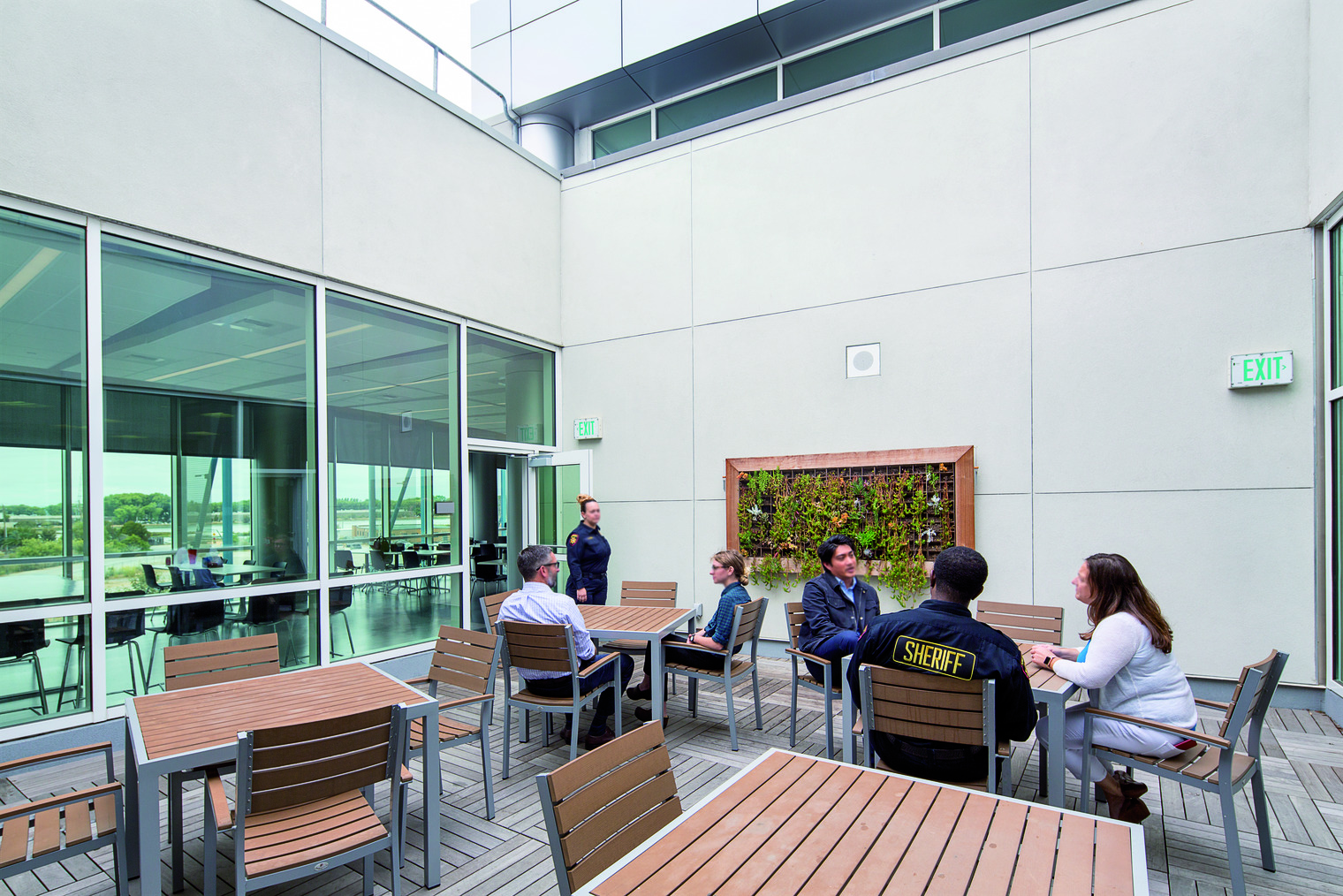
Capability-centered design can improve correctional outcomes through access to daylight and outdoor spaces, balanced sensory environments, and flexible spaces for education, counseling, recreation and vocational training. | Photo Credit (all): HOK
By Jeff Goodale
For decades, correctional design has evolved beyond simply containing incarcerated populations. Correctional leaders, behavioral health professionals, and designers recognize that the built environment influences behavior, well-being, rehabilitation, and institutional safety.
Trauma-informed and neurodiverse design strategies reduce sensory overload, improve predictability, minimize unnecessary stress, and create environments that better support both incarcerated individuals and correctional staff. These advances represent meaningful progress. Yet many of the frameworks guiding correctional design still begin with the same question: What risks need to be controlled?
While that question remains essential, it may no longer be sufficient. A growing body of thinking suggests the next evolution of correctional design should focus not only on accommodation but also on capability. Rather than viewing incarcerated individuals primarily through the lens of vulnerability or security concerns, correctional environments can reinforce responsibility, independence, participation, and personal growth.
In doing so, facilities move beyond managing risk to preparing individuals for successful rehabilitation and reentry. This evolution does not replace trauma-informed or neurodiverse principles. Instead, it expands them.
The goal is no longer to help individuals cope during incarceration. It is to create environments that strengthen the skills, confidence and resilience needed to succeed after release.
Designing Around Potential Rather Than Limitation
Many supportive correctional design strategies begin with a checklist of problems to avoid. Designers work to reduce conflict, limit overstimulation, improve visibility, prevent self-harm, and minimize environmental stressors. These remain essential priorities, particularly in facilities serving individuals with behavioral health needs or histories of trauma.
An exclusive focus on risk management can unintentionally reinforce dependency. When environments are designed primarily around what residents cannot manage or cannot be trusted to do, they may communicate that containment is the only expected outcome. A capability-centered approach instead assumes every individual possesses strengths that can be developed.
This perspective encourages correctional agencies to ask new questions. How does a housing unit encourage responsibility? How does a program space promote participation? How does the environment support decision-making, skill development, and accountability? How does the facility prepare individuals for life beyond incarceration?
The answers often lead to different design strategies. Housing units that provide graduated independence, environments supporting education and vocational training, and spaces dedicated to counseling, creative expression, and peer engagement reinforce competence rather than dependence. Even modest opportunities to make choices within secure boundaries can help rebuild confidence and strengthen executive functioning.
Recognizing the importance of human potential naturally leads to a broader discussion about the role challenge plays in rehabilitation.
Why Comfort Alone Is Not Enough
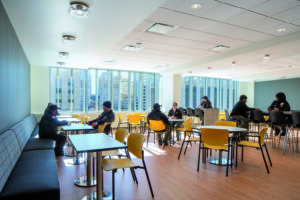
Trauma-informed correctional environments are often associated with comfort, and appropriately so. Reducing unnecessary stress can improve emotional regulation, decrease conflict, and create conditions that support rehabilitation. However, comfort should not be mistaken for the ultimate objective.
Successful rehabilitation requires opportunities to make decisions, solve problems, assume responsibility and develop new skills. Rather than eliminating every challenge, correctional environments can provide opportunities to experience challenges safely and constructively — a concept that can be understood as supported challenge.
Within correctional environments, supported challenge takes many forms. Step-down housing units allow residents to assume greater responsibility as they progress through rehabilitation. Educational and vocational spaces build practical skills while fostering confidence and purpose. Therapeutic environments encourage individuals to practice communication, emotional regulation, and decision-making before applying those skills in the community.
Choice also plays an important role. Allowing residents to make appropriate decisions about movement, programming, learning, or recreation within secure boundaries reinforces personal agency while maintaining institutional safety. These opportunities prepare individuals for greater independence throughout incarceration and during community reentry.
The objective is to prepare people for successful reintegration while maintaining safety and security.
Measuring Human Potential
Correctional agencies routinely track assaults, disciplinary incidents, use-of-force events, self-harm, grievances and staff injuries. These metrics provide valuable operational information, but they tell only part of the story. A facility may successfully reduce conflict while doing little to encourage rehabilitation or personal development.
A facility may successfully lower conflict while doing little to encourage rehabilitation or personal development. If agencies focus exclusively on preventing undesirable outcomes, they risk overlooking the role correctional environments play in long-term success.
Capability-centered environments require broader performance measures. Participation in educational and vocational programs, completion of behavioral health treatment, successful transitions between custody levels, development of life skills, and preparation for reentry all provide valuable insight into individual growth. Staff retention and reduced burnout should also be considered, recognizing that supportive environments improve outcomes for the professionals who operate them.
These broader metrics help correctional leaders evaluate not only whether harm has been reduced but also whether rehabilitation has been strengthened. That distinction matters because the purpose of correctional design extends beyond maintaining order. It involves creating conditions that improve individual outcomes while contributing to safer institutions and communities.
From Specialized Design to Systemwide Practice
Trauma-informed and neurodiverse design is often reserved for behavioral health units, but limiting these principles to specialized settings unnecessarily narrows their impact.
Many capability-centered design strategies improve outcomes across the correctional spectrum. Clear wayfinding reduces stress and confusion. Access to daylight and outdoor spaces supports emotional well-being. Balanced sensory environments reduce unnecessary agitation, while flexible programming spaces accommodate education, counseling, recreation, and vocational training.
Viewed through a capability-centered lens, these strategies shift from specialized accommodation to establishing a higher standard for correctional environments.
This perspective encourages agencies to embed these principles across intake centers, housing units, behavioral health facilities, vocational programs, reentry centers, and staff support areas rather than treating them as isolated interventions.
The result is not simply a more humane correctional facility. It is a correctional system better equipped to support rehabilitation, improve institutional performance, and prepare individuals for successful reintegration.
Building Correctional Environments That Empower
The future of trauma-informed and neurodiverse correctional design may not be defined by how effectively facilities protect people from adversity. Rather, by how successfully they prepare individuals to move beyond it.
This evolution requires moving beyond deficit framing. Trauma, behavioral health challenges and security risks remain important considerations, but the most effective environments acknowledge those realities while also communicating trust, accountability and opportunity.
They provide appropriate choices rather than unnecessary restrictions. They encourage participation rather than passive compliance. They create opportunities for achievement rather than simply preventing failure.
Ultimately, the success of a correctional facility should not be measured solely by the incidents it prevents. It should also be measured by the responsibility it reinforces, the confidence it builds and the potential it helps unlock.
When correctional environments help individuals develop the skills, resilience and purpose needed to succeed after incarceration, they strengthen public safety and redefine correctional design as a catalyst for lasting change.
Jeff Goodale, AIA, ACA, is Director of HOK’s global Justice group and a member of Correctional News’ Editorial Advisory Board.