




Correctional News’ Top Five Stories of 2025
Over the past year, as news on projects, people, products and other developments in the corrections field unfolded, Correctional News was there to cover not only what transpired, but what impacts those events could have the industry as a whole.
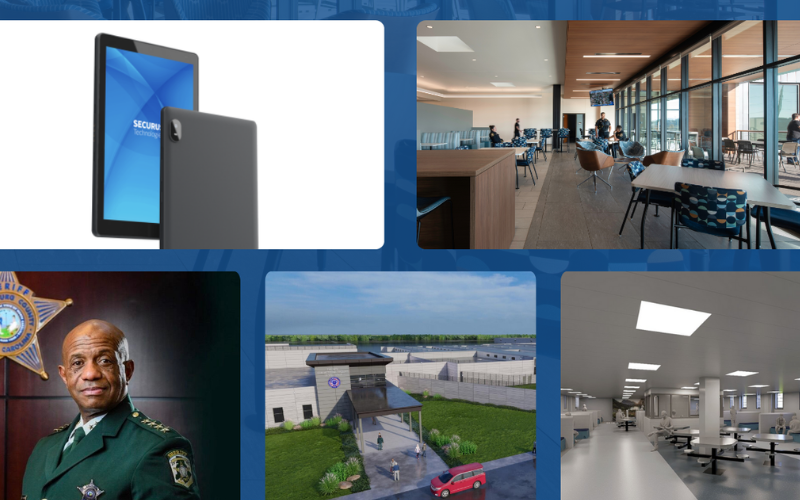
As 2025 comes to a close, let’s look back on the top five most read stories from Correctional News, which touched on some of the emerging trends in the industry, major personnel moves, progress in legislation and funding, and project updates.
5. Ohio Grants $24 Million for Jail Construction, Renovation Projects
In late November, in an effort to support construction and renovation projects at three jails across Ohio, Gov. Mike DeWine and Ohio Department of Rehabilitation and Correction Director Annette Chambers-Smith announced that the state had awarded more than $24 million in grants.
The latest round of funding awarded through the Ohio Jail Safety and Security Program included $13 million to support ongoing renovations at the Montgomery County Jail, $7.5 million to support ongoing construction of a new housing unit at the Stark County Jail, and $4 million to support land acquisition and design work for a new Clark County Jail.
The program, administered through the Ohio Department of Rehabilitation and Correction’s Bureau of Adult Detention, has supplied more than $230 million in funding for nearly 70 jail projects statewide, including 25 new or renovated jails and over three dozen jail security and life-safety projects.
“Security is the foundation on which rehabilitation is possible,” said Chambers-Smith. “If we can ensure these jails have their basic needs addressed, they will be able to better change the lives of the people in their care.”
4. A Visionary Design for Mental Health in Correctional Settings
Published April 8, this feature article outlined the design and construction of the new $1.2 billion Northwest Indiana Correctional Facility in Westville, Ind. —particularly the plans for housing and supporting incarcerated people with mental health and addiction treatment needs.

The new 1.4 million-square-foot facility designed by Elevatus Architecture, along with owner’s representative M-H Group, construction partners Garmong, Granger, and F.A. Wilhelm, and detention equipment and securioty electronics providers Pauly Jail Company and Accurate Controls, reflects a major architectural and cultural shift toward trauma-informed care, dignity and therapeutic correctional design.
Notable features of the project include the creation of specialized mental health units and addiction recovery housing, as well as the use of sensory-friendly materials, dimmable and tunable lighting, acoustic control and nature-inspired colors and murals.
“Mental health has been a subject that has definitely increased in the past decade. Everyone’s becoming more aware of the issues,” said Craig Armstrong, senior project manager at Elevatus Architecture. “With that has come some identification that there are challenges with how to handle those particular individuals.”
Construction of the facility is ongoing, with completion expected in early 2027.
3. National Black Sheriffs’ Association Appoints First President
In September, the National Black Sheriffs’ Association announced that Sheriff Garry L. McFadden of Mecklenburg County, N.C., had been named the Association’s first National President.
The NBSA said in its release that Sheriff McFadden, who has served as the Mecklenburg County Sheriff since 2018 and previously had a 36-year career with the Charlotte-Mecklenburg Police Department, has built strong relationships with leaders in the National Sheriffs’ Association and the Major Counties Sheriffs’ Association, and has held key roles on committees and subcommittees in these organizations.
The Associated also noted Sheriff McFadden’s advocacy for community-based policing and pushes for transparency and reform, innovation and greater visibility for African American sheriffs over his career.
“Sheriff McFadden has been a steady hand and a guiding light for countless sheriffs who now serve communities across America,” said Anthony Amerson, Executive Director of NBSA. “As NBSA scales its reach and prepares for our national conference, his leadership provides the credibility, vision and voice needed to represent our members on the national stage.”
2. Correctional Staff Wellness, An Overlooked Crisis in Corrections
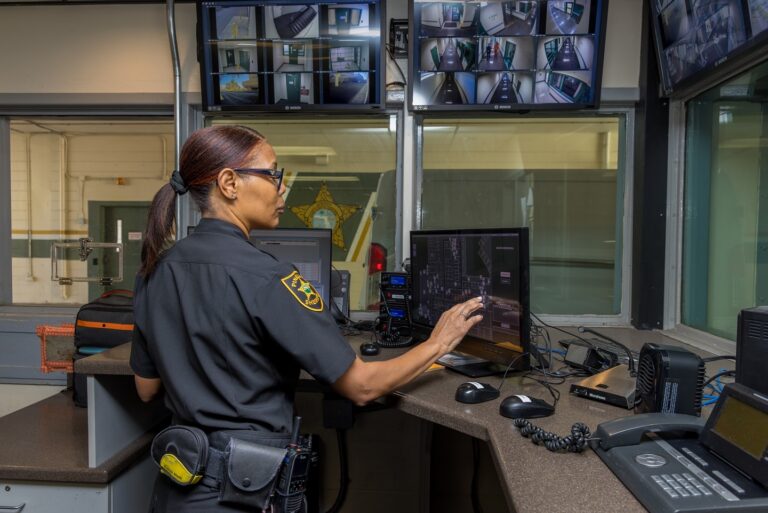
This article from March covered the ongoing crisis facing the U.S. correctional workforce, and the latest efforts in recruitment and retention and increasing staff wellness.
The dire situation was highlighted by workforce shrinkages of 11% in state prisons and 7% in jails since the onset of the COVID-19 pandemic. Burnout related to a number of stressors on the job contributed to high turnover, and existing staff have been forced to take on mandatory overtime, back-to-back shifts and increased workloads. Corrections departments have responded by seeking to transform correctional staff culture through a series of wellness initiatives — based not just higher salaries, but a holistic approach to workplace wellness.
The article also pointed to how facility design can contribute to wellness, and how planners are weaving normative principles that are more conducive to both inmate rehabilitation and staff well-being into facilities.
“We cannot wait until things get worse,” said Caterina Spinaris, Psy.D., founding director of the non-profit Desert Waters Correctional Outreach (DWCO). “If agencies don’t prioritize staff wellness and act proactively, turnover will continue, lawsuits will be filed and the system will become even more unstable.”
1. Modernizing Corrections for a Safer Florida
In this article published in July, Steve Casey, a senior advisor to the National Sheriffs’ Association and former executive director of the Florida Sheriffs Association, outlined some of the challenges facing corrections related to recruitment, staffing, retention, efficiency and safety, and advocated for continued investments in new technology to address these challenges.

Casey mentioned tablets as one of the tools that offer platforms for learning, communication and case management for incarcerated individuals, and empower staff to support safety, structure and engagement and provide real-time access to critical information regarding individuals, incidents and facility operations.
According to Casey, continuing to invest in such technology is fundamental to maintaining a highly effective and dedicated workforce.
“We must continue to strategically invest a portion of this budget into smart technological tools that undeniably improve working conditions for officers and enhance overall facility operations,” wrote Casey. “These targeted investments are crucial for creating safer correctional environments that ultimately benefit everyone by fostering greater stability and productivity within our communities.”
Stay tuned to Correctional News in 2026 for updates on these stories and more ongoing coverage of the top issues in the corrections industry!