




New Mexico Corrections Department’s Tablet-Based Programming is Paying Off
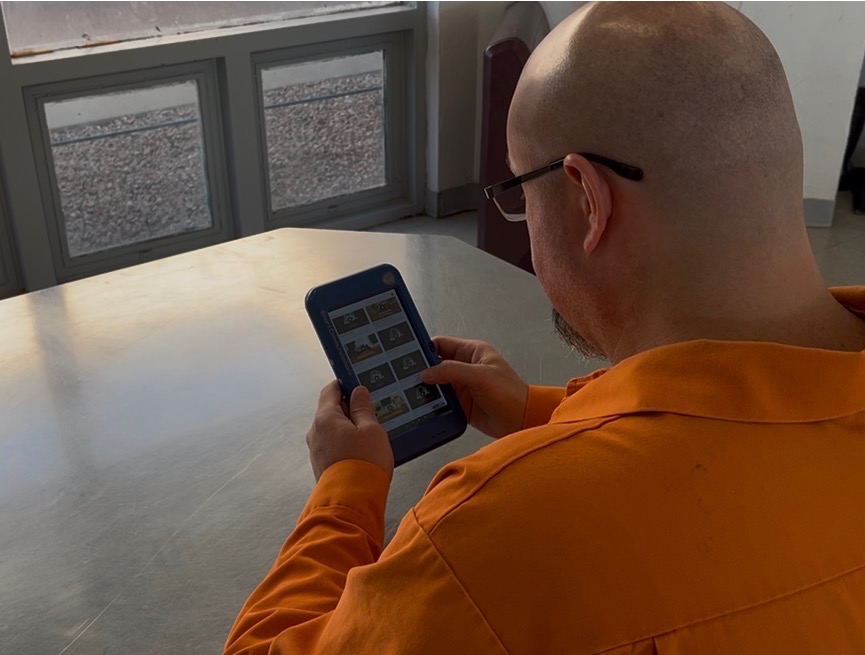
Tablet-based programming employed by the New Mexico Corrections Department offers a wide-ranging curricula to aid incarcerated New Mexicans with rehabilitation and reentry. | Photo Credit: New Mexico Corrections Department
By Charlie Lange
In recent years, correctional systems across the country have expanded the use of digital tablets to increase access to rehabilitative and educational programming, strengthen connections with the outside world, reduce idleness among incarcerated populations, and as a result, more agencies are recognizing the significant benefits this technology can provide.
Within the New Mexico Corrections Department (NMCD), a newly implemented digital behavioral health platform, Atlas, is already demonstrating positive outcomes just months after its introduction in December. In partnership with The Change Companies, a national publishing, consulting, training and multimedia organization, the NMCD deployed Atlas across its eight facilities, providing access to more than 5,500 incarcerated individuals through secure smart tablets.
Through Atlas, individuals can engage with more than 23 evidence-based curricula and a robust multimedia library. The platform combines an interactive journaling model with video and audio content to cover topics such as job readiness, financial literacy, family reunification, substance use education, mental health awareness, parenting, anger management and trauma recovery.
The initiative reflects Cabinet Secretary Alisha Tafoya Lucero’s broader vision to expand reentry-focused programming and ensure that meaningful, evidence-based services are accessible.
“Our goal is to make meaningful programming and treatment accessible to everyone in our custody, regardless of facility, custody level or schedule,” she said. “When we remove barriers and provide free, accessible resources, we create opportunities for individuals to build skills, address underlying issues and prepare for successful reentry. This work strengthens families, improves communities, and ultimately enhances public safety.”
Under Secretary Tafoya Lucero’s leadership, the NMCD has prioritized eliminating barriers to programming by offering free, self-paced resources that support individualized growth and long-term behavioral change. Since the launch of Atlas, more than 13,113 hours of programming have been logged, totaling more than 48,000 completed sessions.
“Atlas knocks it out of the park with its ability to reach every individual and provide services they need prior to reentry,” said Byron Brown, director of NMCD’s Reentry Division. “It’s adding remarkable value to our organization.”
Flexible Programming and Support
One of Atlas’ most impactful features is its flexibility. Individuals can participate in programming on their own time, including early mornings and evenings, which is something traditional in-person programming cannot always accommodate.
“We’re engaging people who have never participated in services before by meeting them where they are,” said Haven Scogin, deputy director of NMCD’s Reentry Division.
Gavin Simpson, a current NMCD inmate, is among those now participating in programs he previously would not have considered.
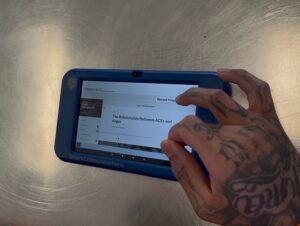
“Prior to using Atlas, I wasn’t involved in any in-person programs,” Simpson said. “They’re very structured, and if you miss one session, it’s easy to fall off completely. With Atlas, you can engage on your own time, which makes a big difference and allows for more inclusivity.”
Simpson said he is taking advantage of Atlas’ motivational and character-building content and actively applying what he has learned.
The tablet-based platform also helps reduce staffing demands associated with in-person programming while enhancing safety. In one instance, concerning content flagged within the system allowed staff to quickly intervene and connect an individual with clinical services.
“That ability to respond quickly and provide direct services, is priceless,” Scogin said.
Early Results
Beyond usage data, NMCD is already seeing meaningful outcomes tied to the Atlas platform.
A 30-day satisfaction survey conducted in January found that 100% of participants reported the platform was helpful. Additionally, 89% said it helped them work toward their goals, and 89% reported gaining greater self-awareness.
“The data coming back shows that Atlas really is increasing people’s motivation and confidence to make important changes, take better care of their health and improve their social supports,” said Valerie Bagley, chief program officer with The Change Companies. “I recently heard a participant compare Atlas to planting a garden. They said, ‘Atlas is actually planting things in your mind … How are we to change the way we think if we don’t plant anything in the mind?’”
Pamela Smith, NMCD’s Behavioral Health Authority, echoed that sentiment, noting that Atlas contributes to meaningful cognitive and behavioral change, even among individuals serving long sentences.
“Those who may never leave our system still need engagement, services, and programming,” Smith said. “We’ve seen individuals become peer supporters, tutors, and facilitators. When they champion these programs, it encourages others to participate. It becomes a force multiplier in our efforts to expand programming across the department.”
Platform Evolution
The Atlas platform is one part of the NMCD’s broader strategy to expand access to treatment, programming, and reentry services. Historically, high recidivism rates have driven the department’s focus on strengthening reentry efforts, including the establishment of the Reentry Division in 2019, under Secretary Tafoya Lucero’s leadership.
The introduction of smart tablets has played a key role in that effort by improving communication, while expanding equitable access to programming and self-improvement resources. Through these devices, inmates can access free programming, live classes, religious materials, books, library services, legal resources, and education and career development tools. Tablets also support services such as video visitation, commissary, and mail.
The department is taking a thoughtful, measured approach to expanding offerings to ensure participants not only engage with meaningful content but also complete programs and achieve purposeful outcomes.
“We’re always evaluating what can be added to better engage individuals and improve outcomes,” said Secretary Tafoya Lucero. “We’re eager to see how Atlas continues to evolve and the positive impacts it will have on the individuals in our custody.”